I love space facts because they make me feel both smarter and deeply unserious at the same time. One minute you’re learning that space is totally silent, and the next you’re imagining Saturn as a giant bath toy or wondering why the Milky Way apparently smells like a cosmic cocktail garnish.

This cosmic dump is for anyone who loves astronomy facts, space trivia, and facts about space that make your everyday problems feel wonderfully tiny. Whether you’re thinking about neutron stars, liquid iron rain, moon footprints, or ancient Big Bang leftovers hiding in TV static, the universe has a real talent for making reality sound completely made up.

Sci-fi movie explosions lied to us—space is completely, eerily quiet because sound waves literally can't travel through a vacuum.
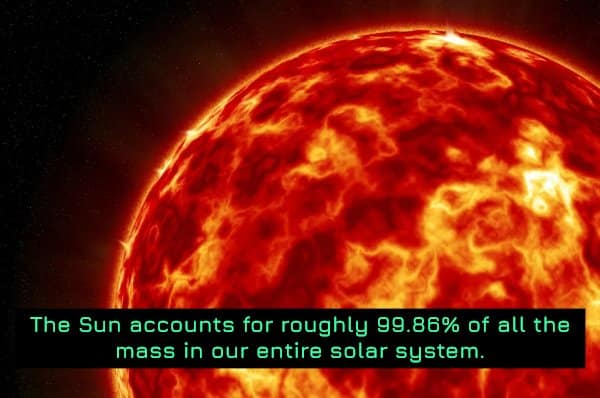
Every planet, moon, and asteroid in our solar system combined is essentially just a tiny rounding error to the Sun.

Dropping a single spoonful of neutron star material in your kitchen would instantly punch a hole directly to the center of the Earth.


The ultimate cosmic jackpot for hydration enthusiasts holds enough water vapor to refill every ocean on Earth 140 trillion times.


Good luck building an ocean-sized bathtub big enough to test if Saturn actually floats like a cosmic bath toy.


Trying to comprehend a number bigger than every grain of sand on every beach on Earth while sitting on a beach towel.


Discovering the center of our galaxy smells like a tropical cocktail bar serving raspberry-flavored rum drinks.






The best space facts are the ones that sound like a science teacher lost a bet. A teaspoon of neutron star material weighing billions of tons? A planet where a day lasts longer than its year? A volcano on Mars that makes Everest look like it’s standing politely in the corner? That’s not trivia. That’s the universe showing off.
A lot of these astronomy facts also hit because they turn enormous concepts into something your brain can almost hold. The Sun owning basically the whole solar system’s mass. Voyager 1 drifting impossibly far from home. More stars in the observable universe than grains of sand on Earth. Space trivia has a way of making awe feel casual, which is rude but effective.
And honestly, facts about space are best when they leave you staring at the ceiling like you just overheard a secret. The Moon preserves footprints because there’s no wind. Some metals can cold-weld in a vacuum. Somewhere out there, a world may rain molten iron. Suddenly your inbox feels less powerful, and I think that’s healthy.
If you want to keep drifting, try 40 Weird Science Facts That Sound Fake But Aren’t, 40 Astrology Memes For People Who Overthink The Moon, and 19 Creepy Facts That Made Earth Feel Suspicious.
Jake Parker writes about the internet like it’s a telescope pointed at the weirdest possible corner of the sky, and he refuses to stop zooming in.
Read Memes
Get Paid


Jake Parker, known around the web as "Jay," is a digital writer with over 10 years of experience covering internet humor, meme trends, and viral content. Before joining Thunder Dungeon, Jay was the lead editor at MemeWire, where he helped curate memes that broke the internet, including coverage on trends like Distracted Boyfriend, Kombucha Girl, and Bernie Sanders’ Mittens. A self-proclaimed "professional procrastinator," Jay spends his downtime scrolling Reddit and Twitter to stay ahead of what's about to break the internet next.