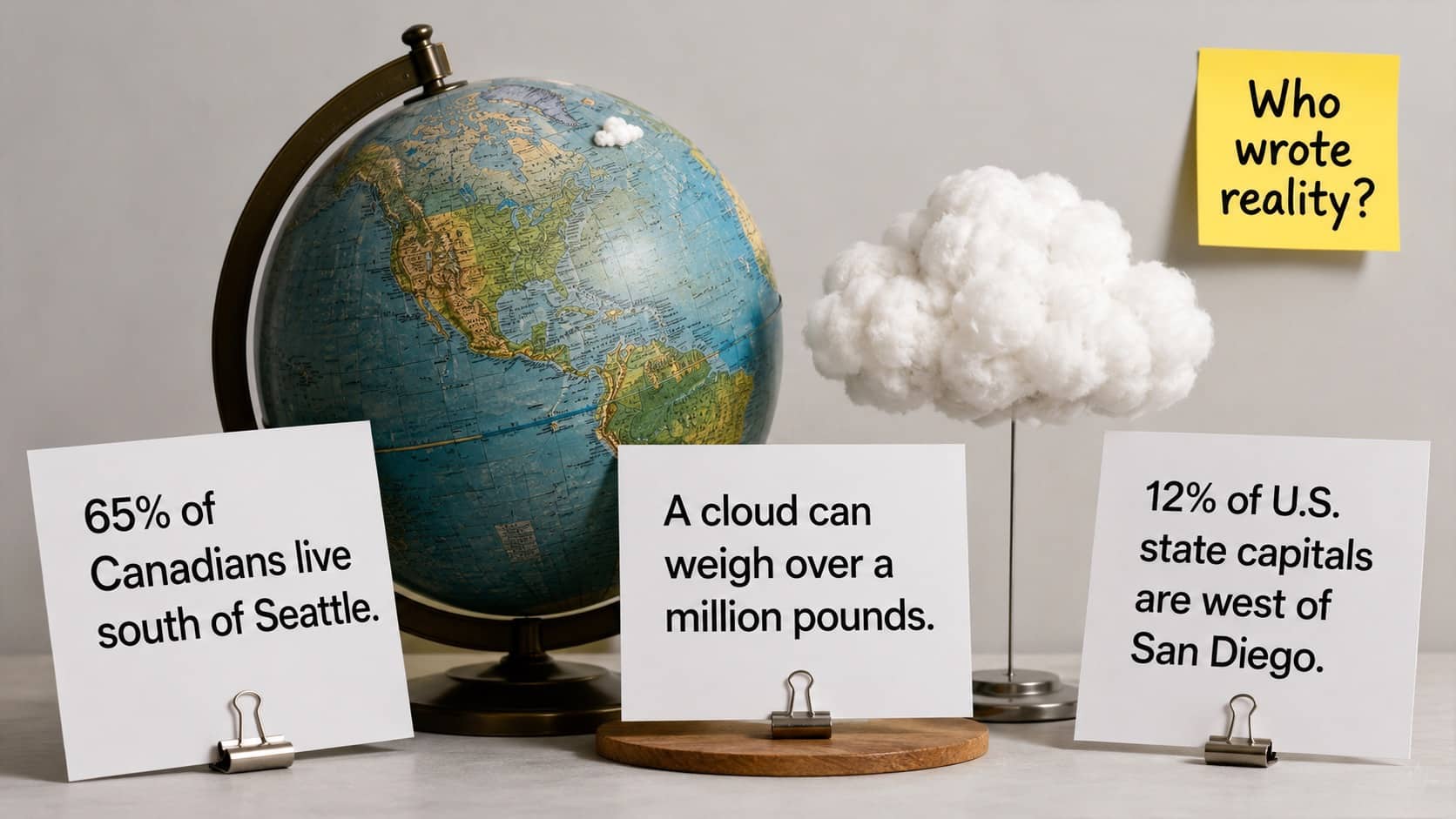

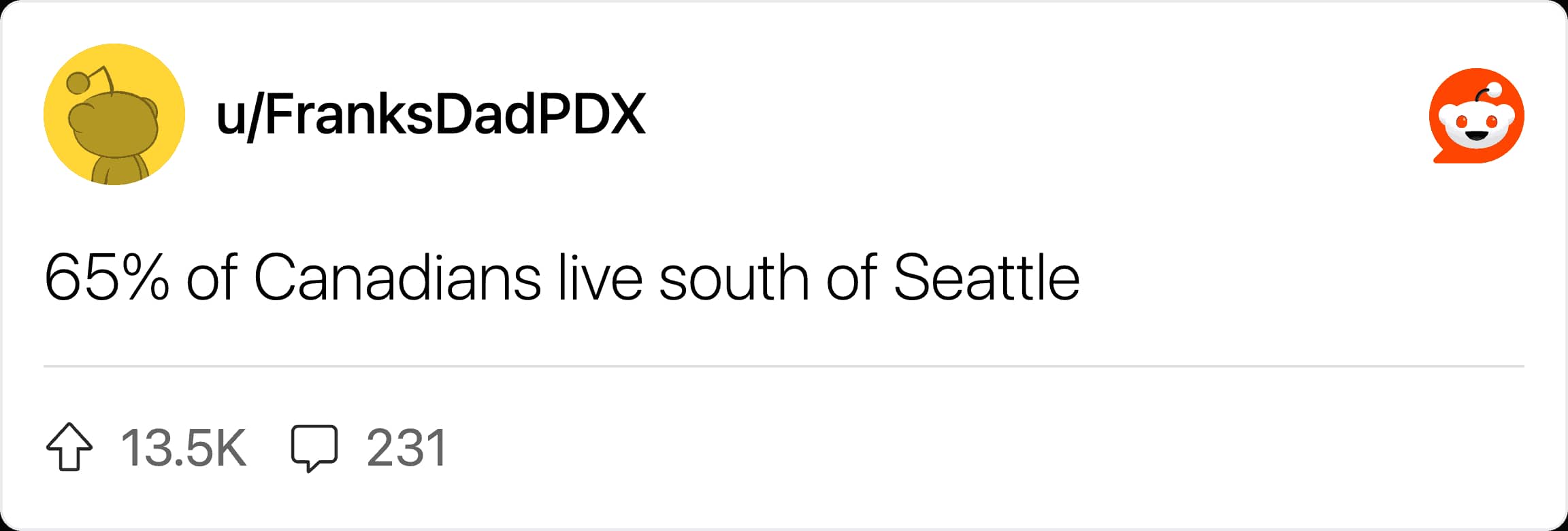
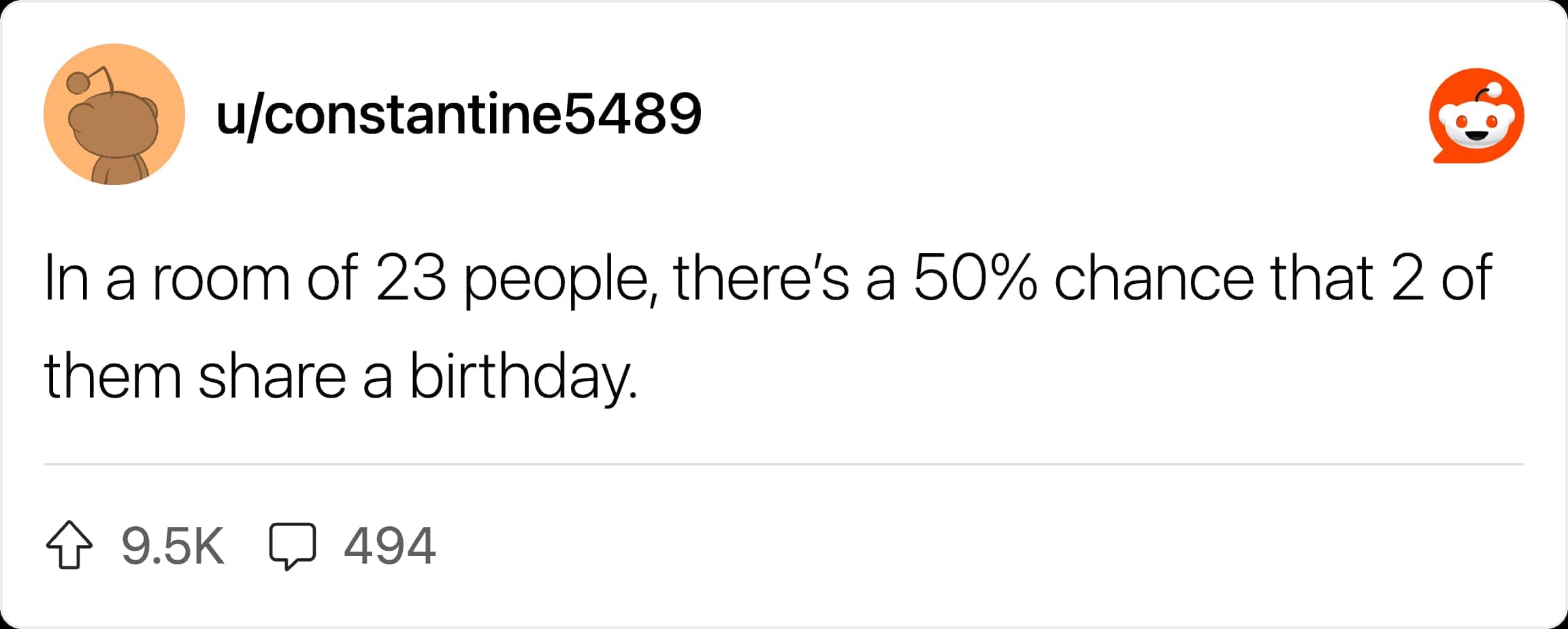
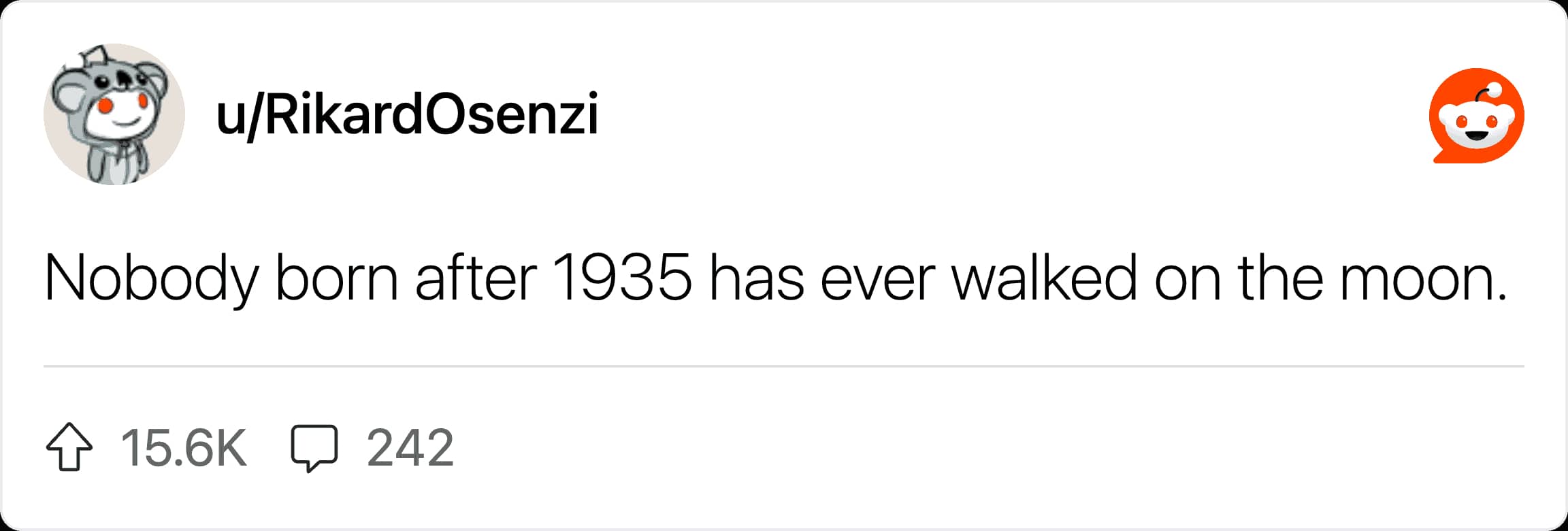
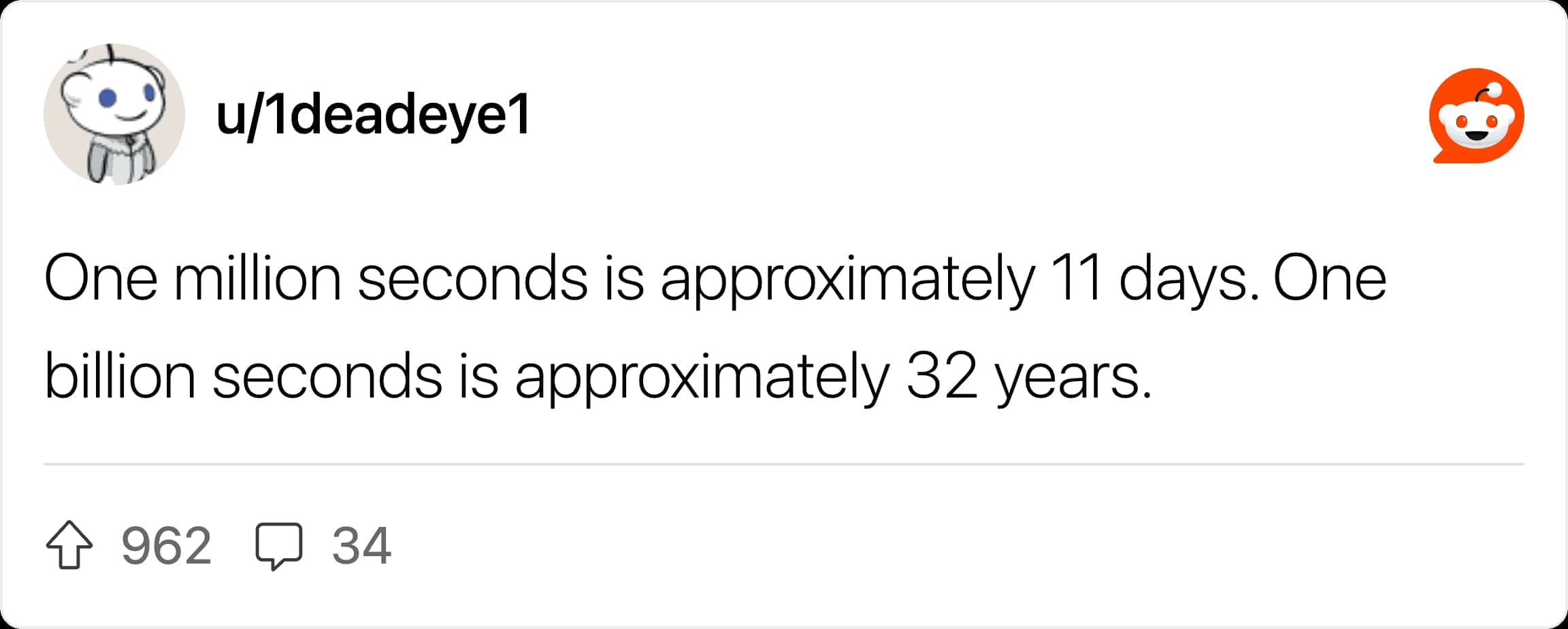
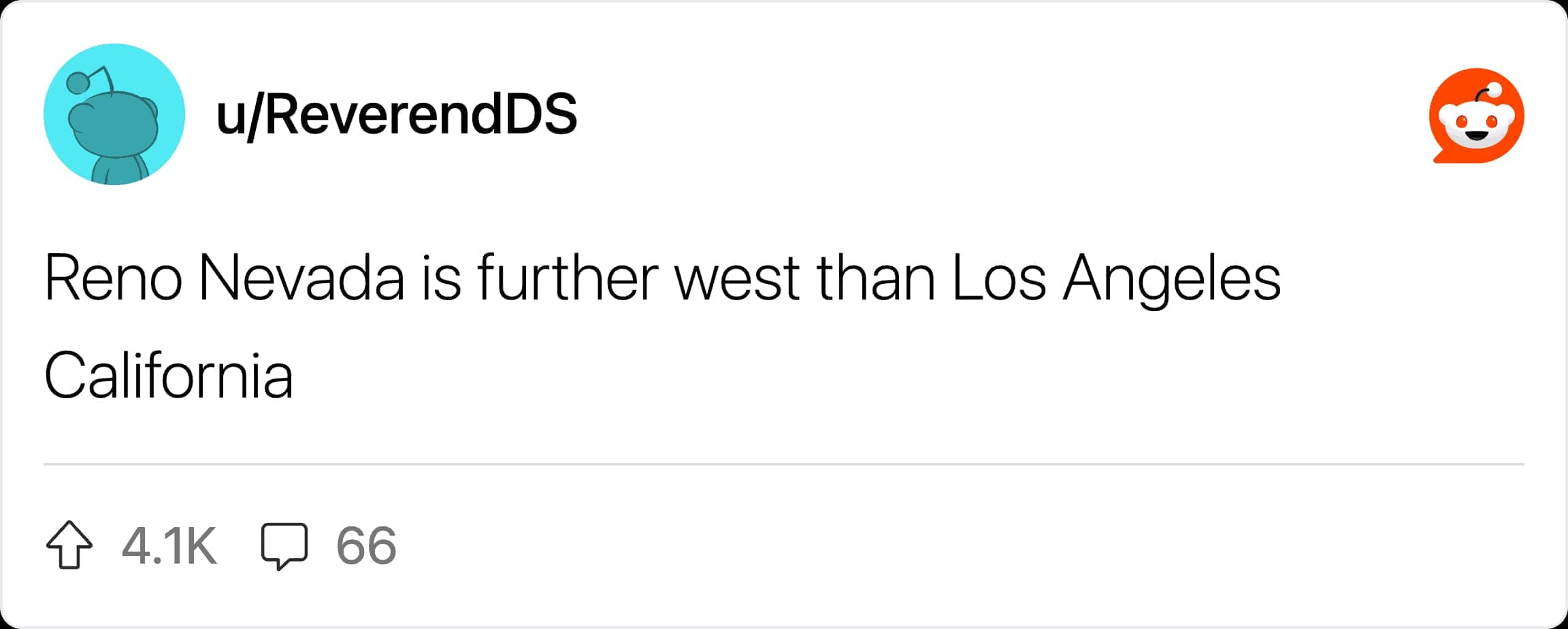
Somebody on the internet recently established that 65% of Canadians live south of Seattle, and the entire concept of a sensible map has been destroyed for everybody who has read that sentence. These facts that sound fake are the small ongoing internet project where the universe gets caught doing something completely counterintuitive, and the catching gets shared with everybody who happens to be online that day. The truth is stranger than fiction. The fiction had a lower bar than we thought.
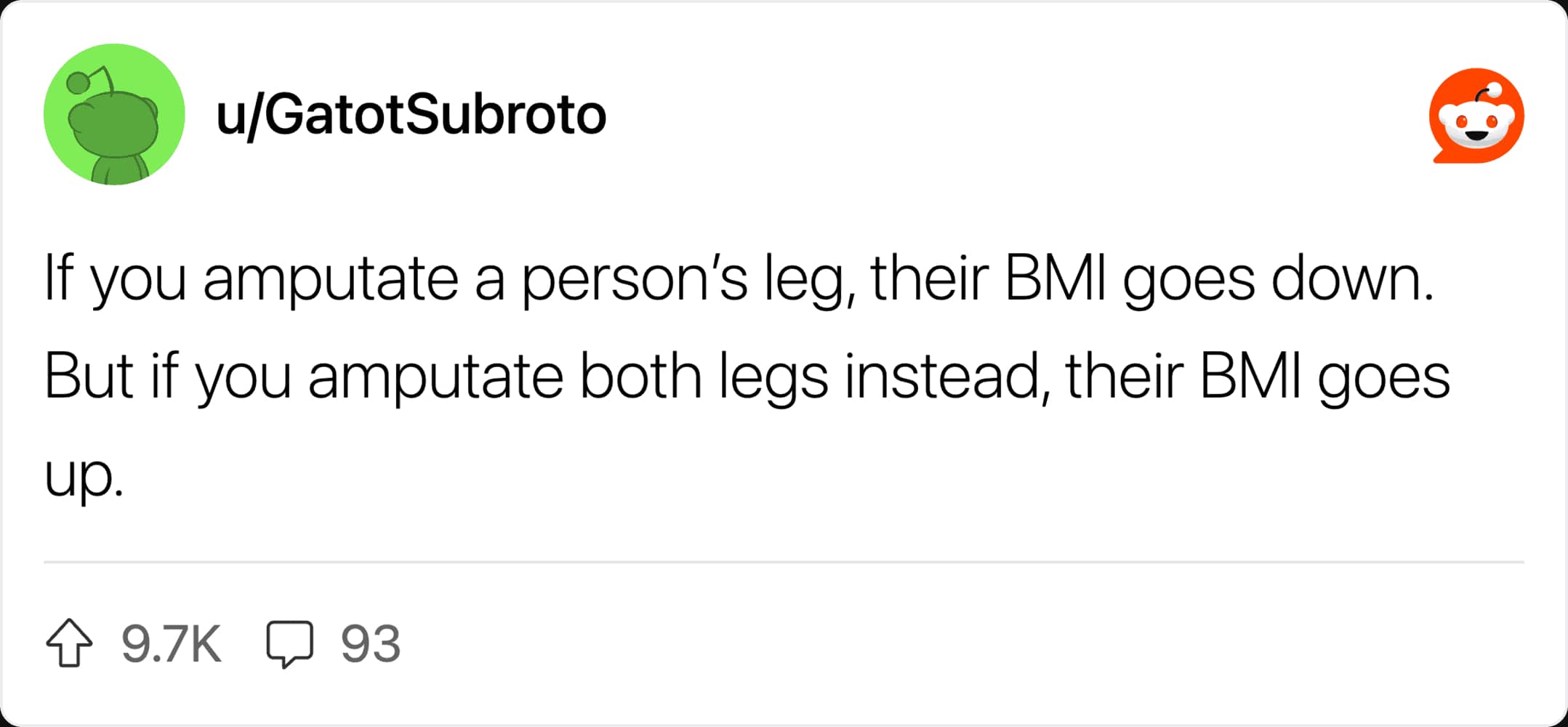
This is exactly why doctors use charts and the rest of us just use vibes.
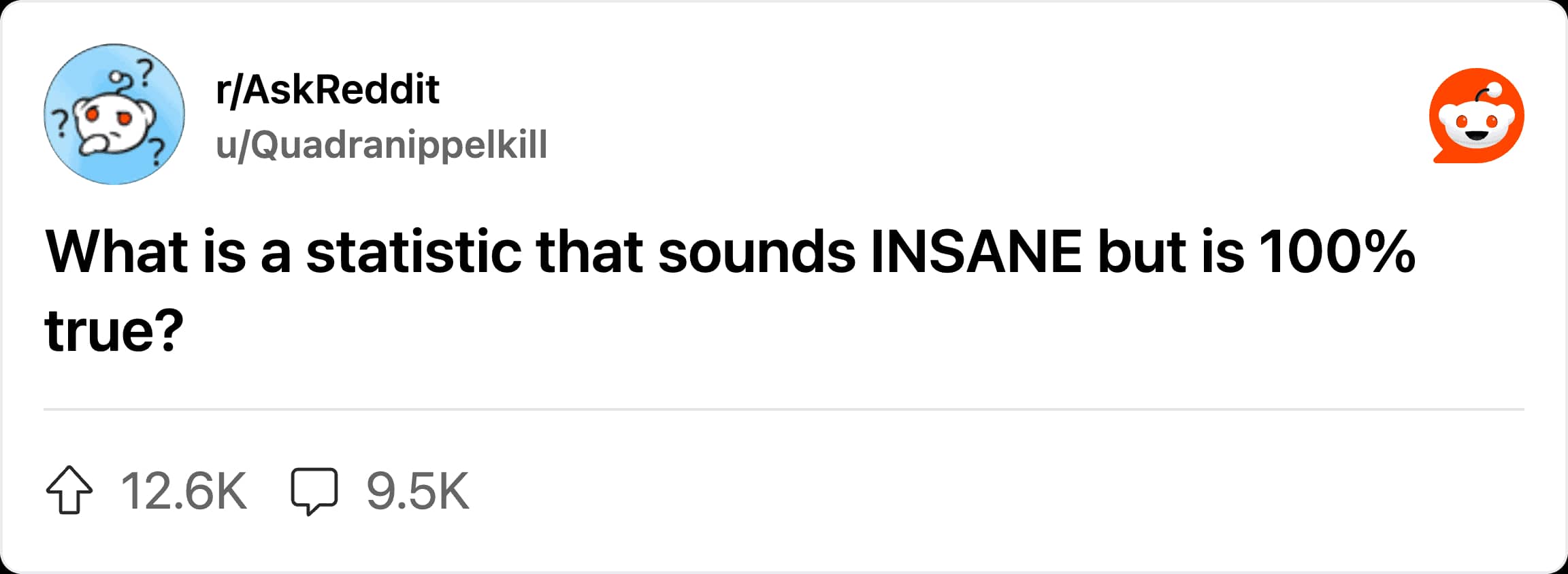
The birthplace of things you will uncomfortably bring up at your next family dinner.
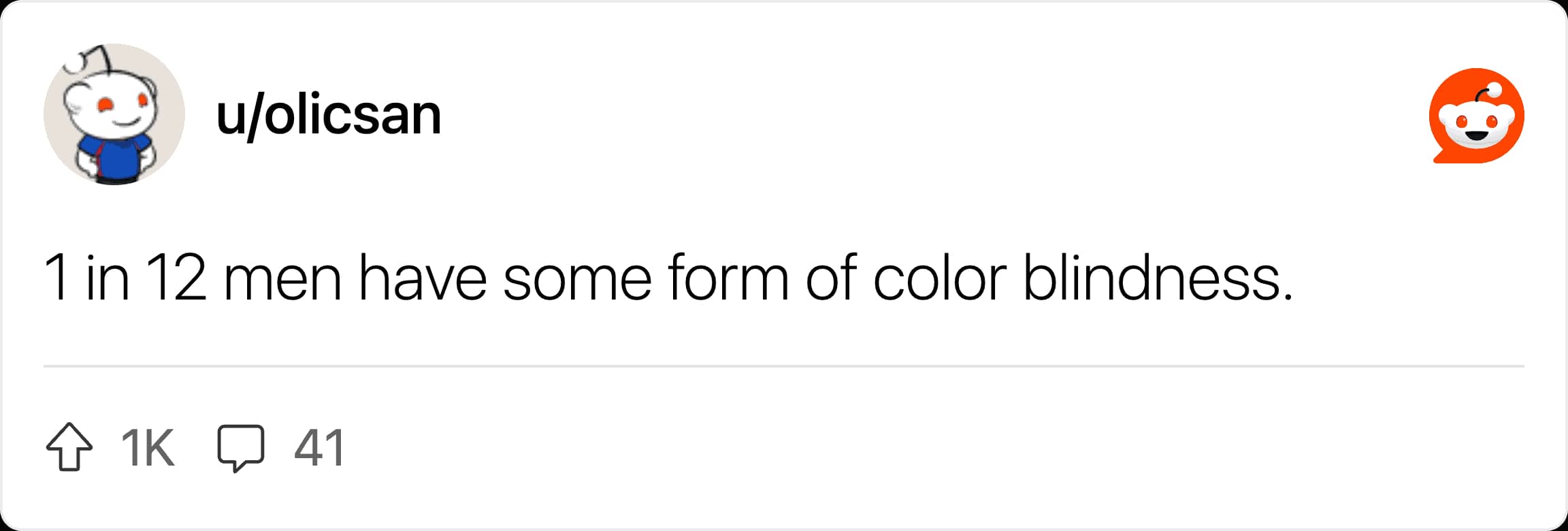
That is a staggering number of guys who are completely guessing at traffic lights.
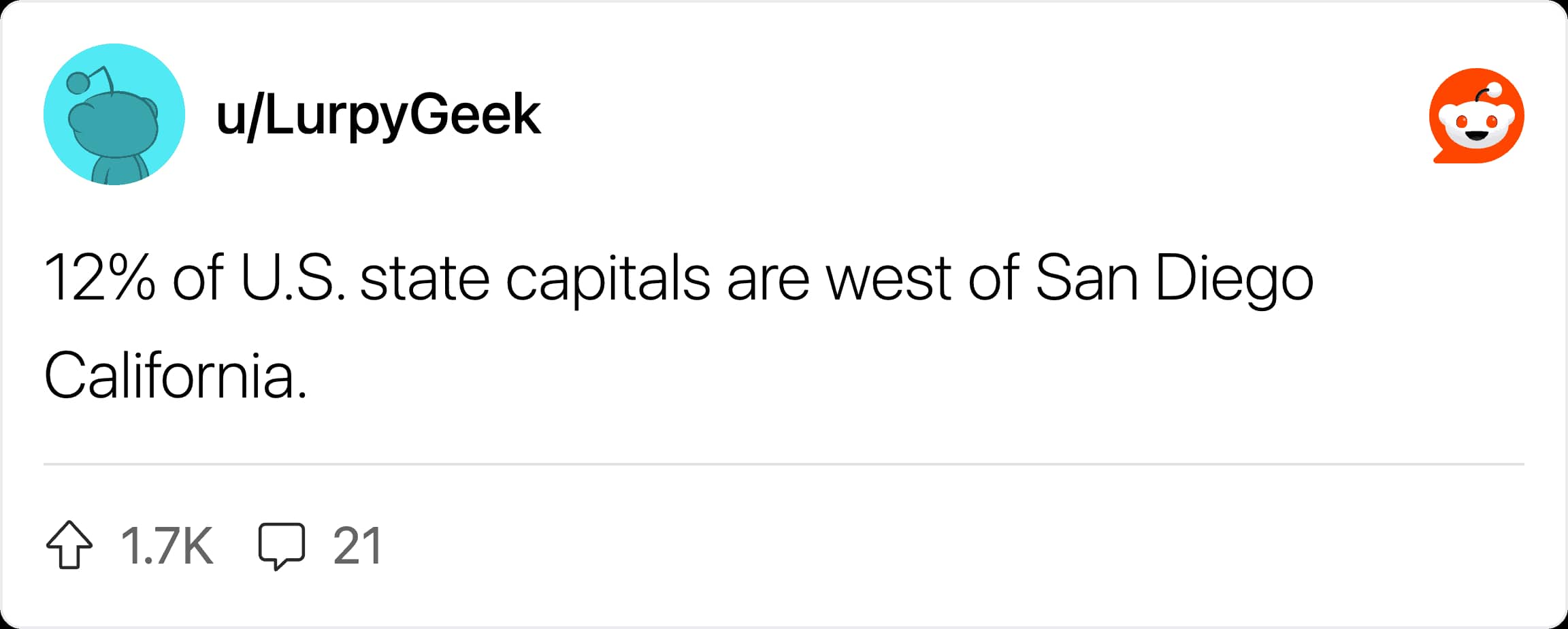
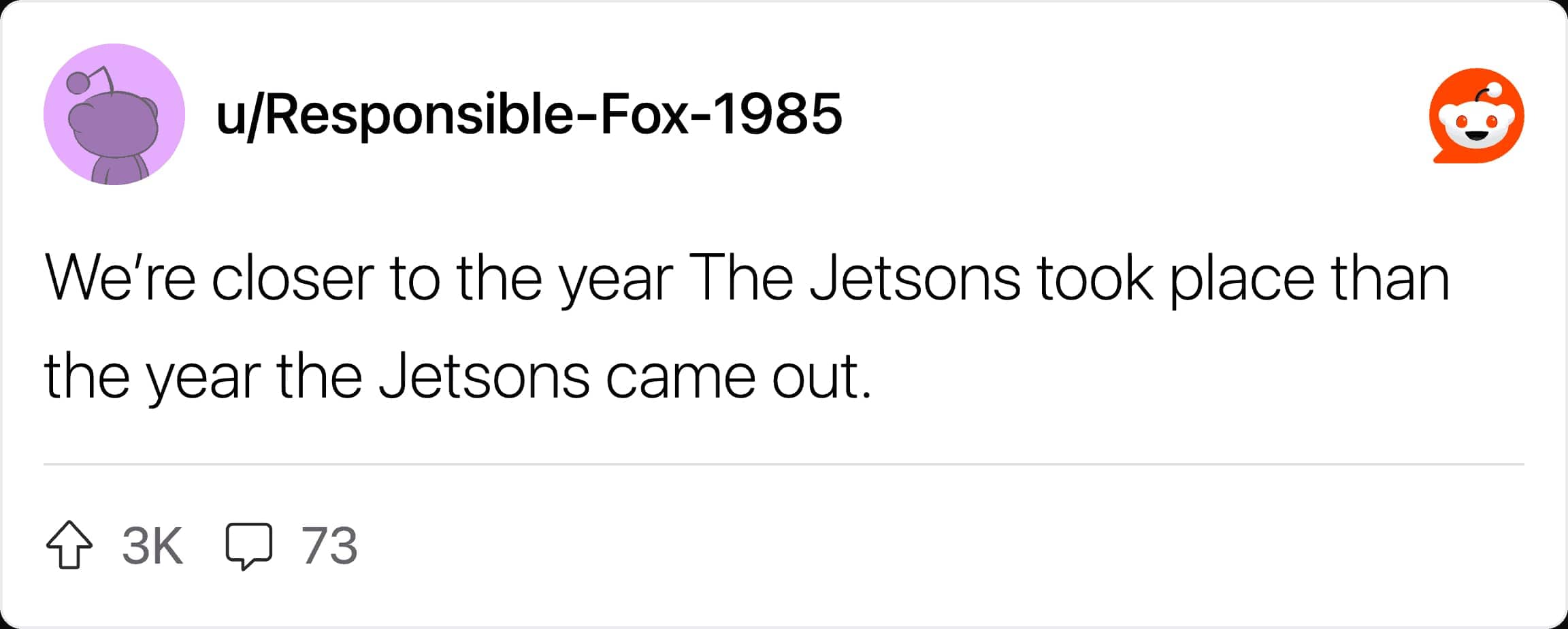
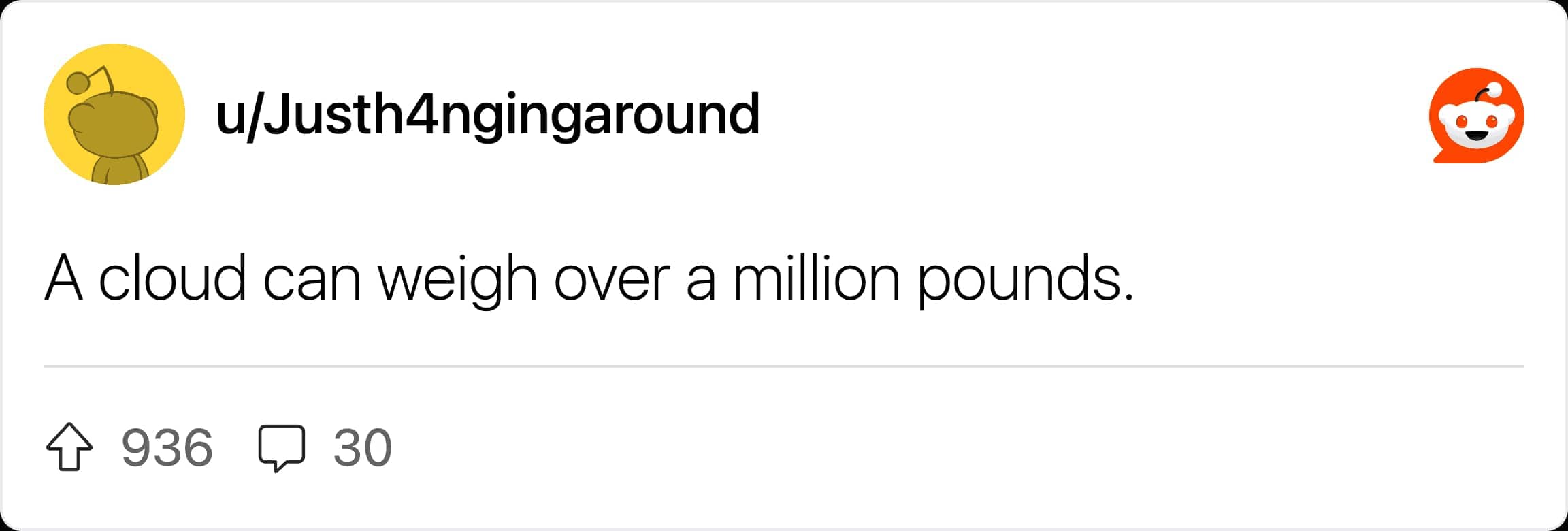
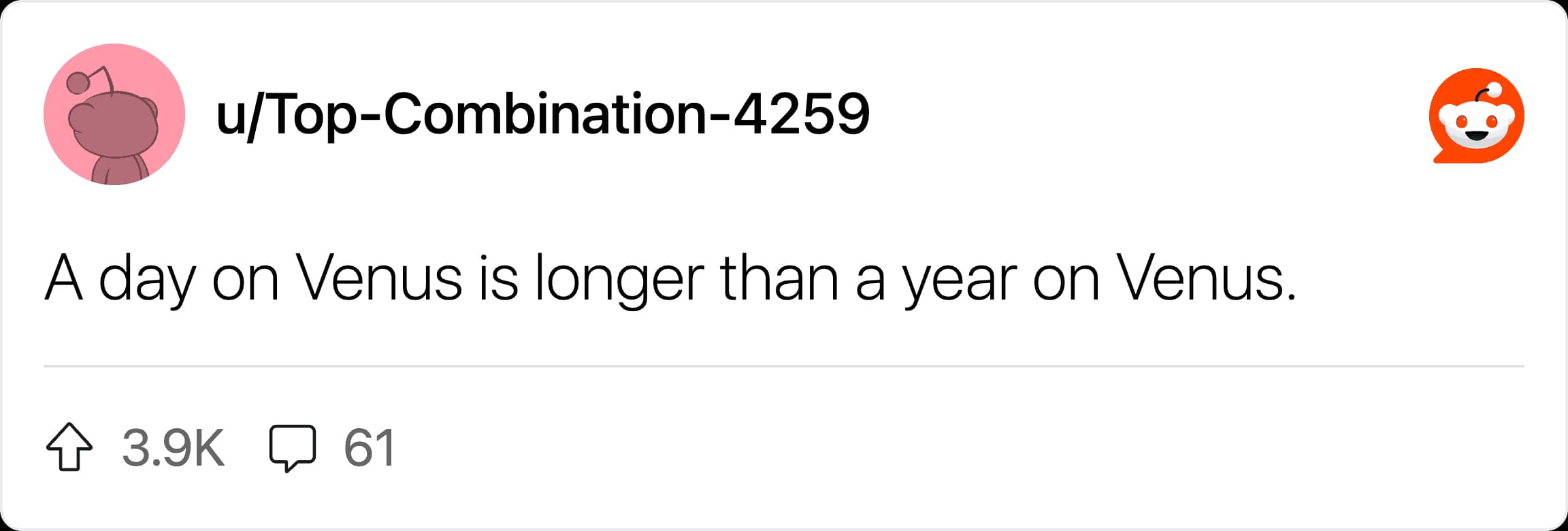
enus is just doing whatever it wants out there, logic be damned.
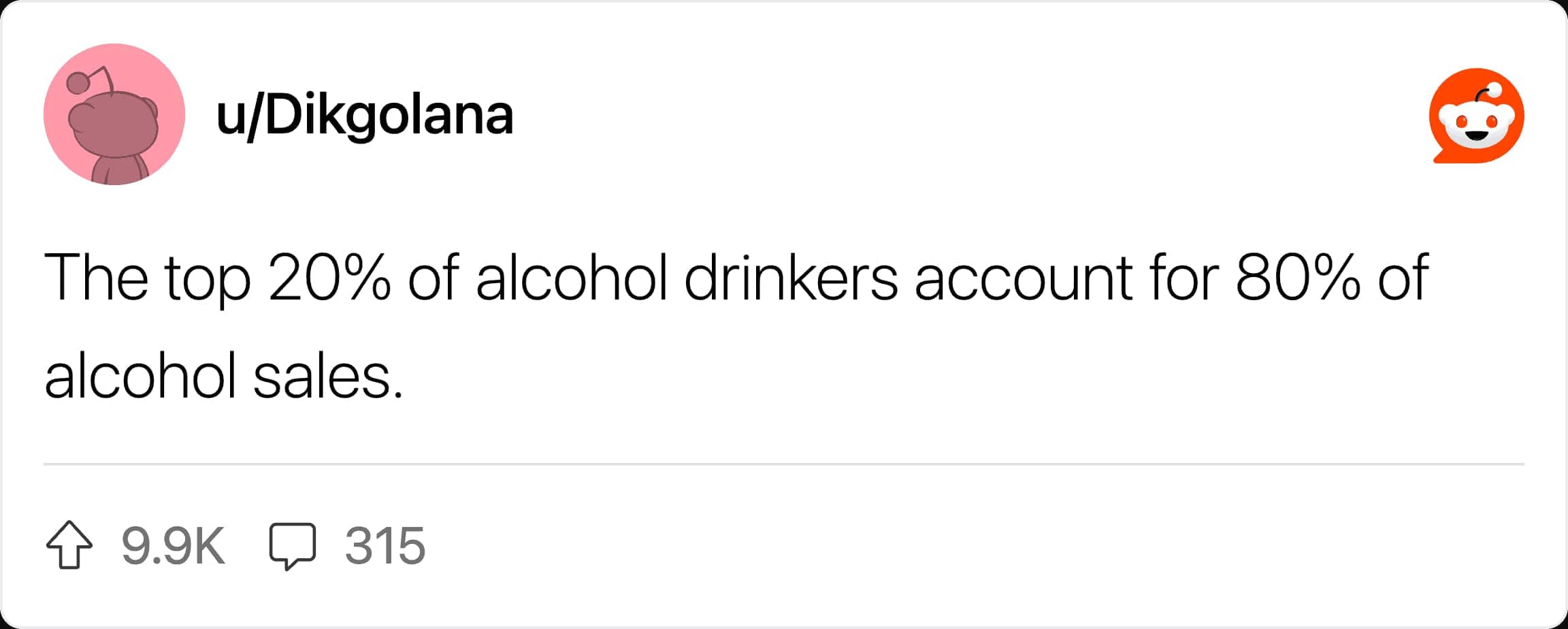
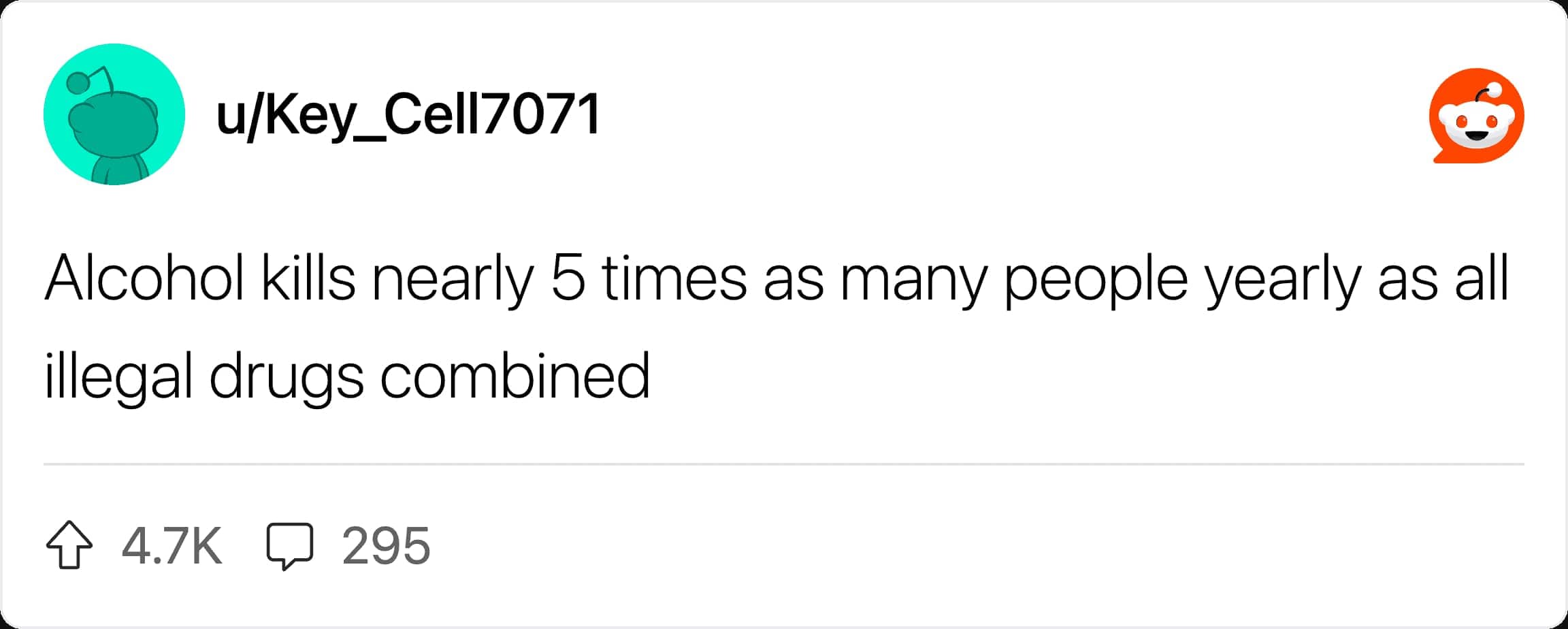
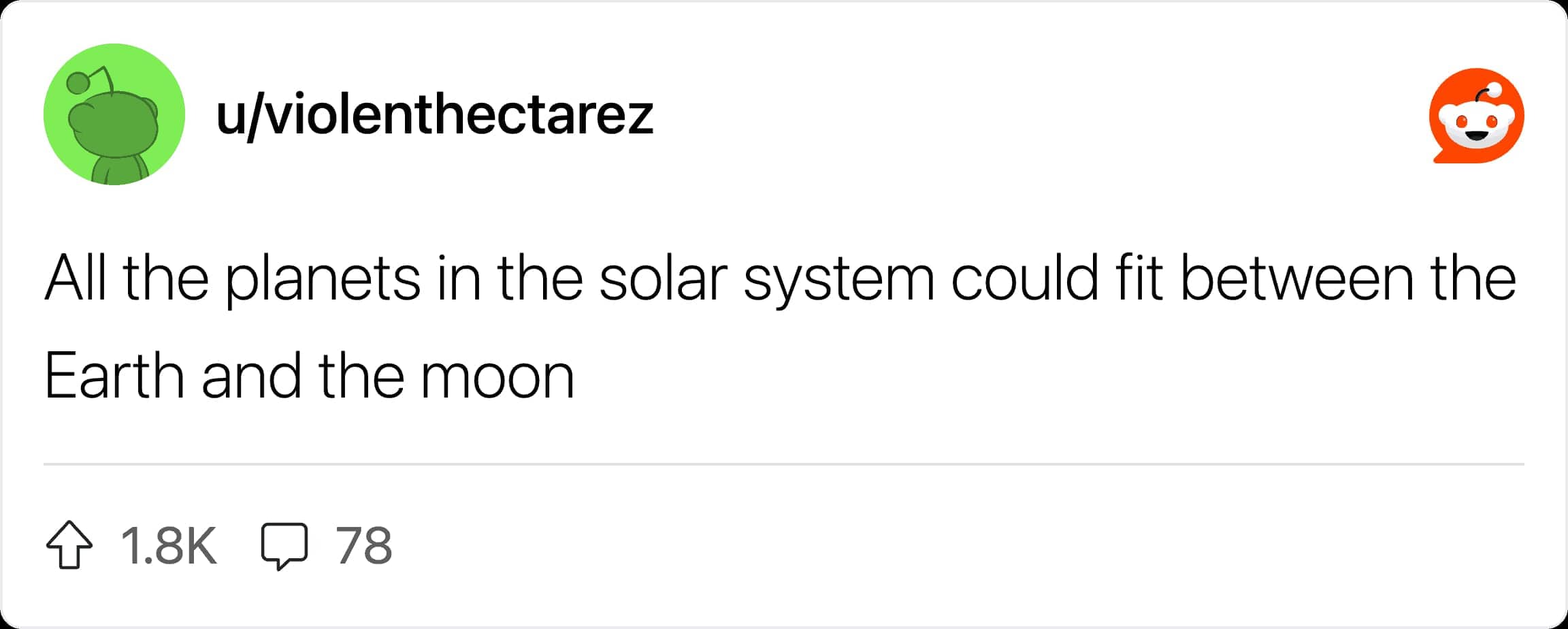
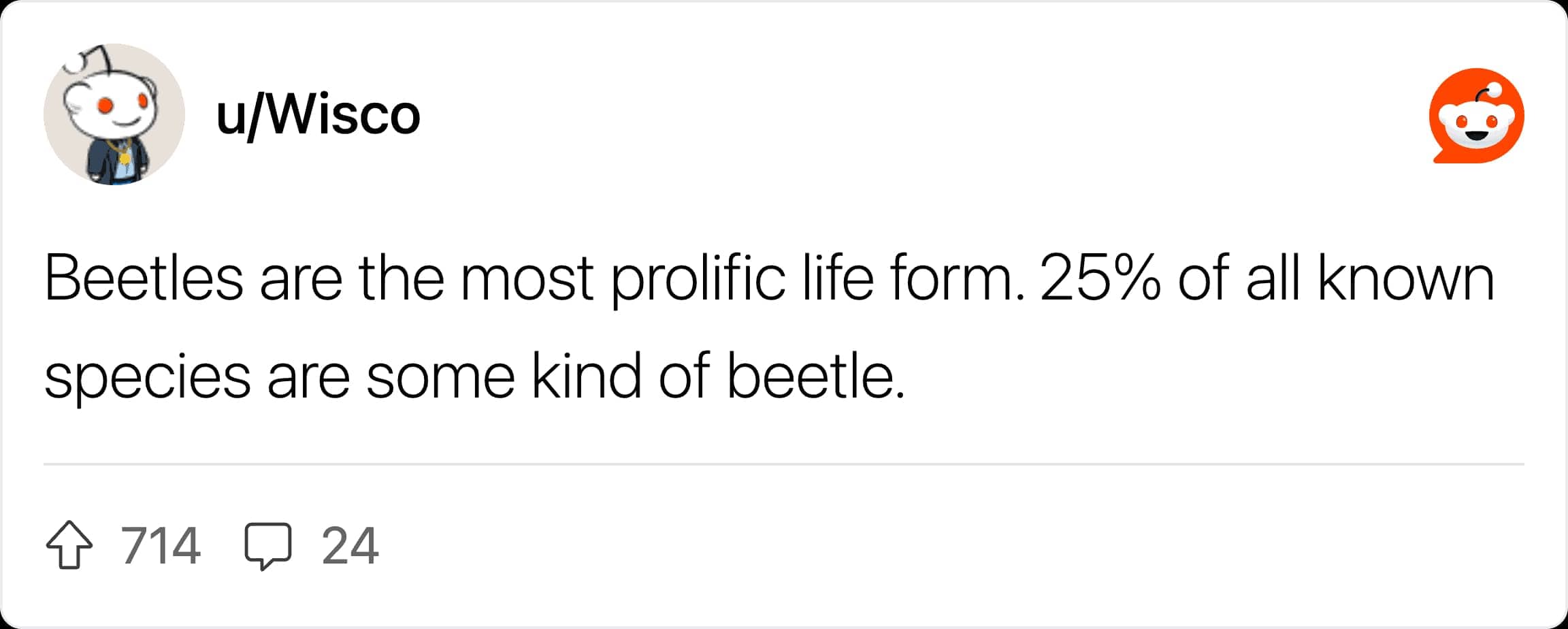
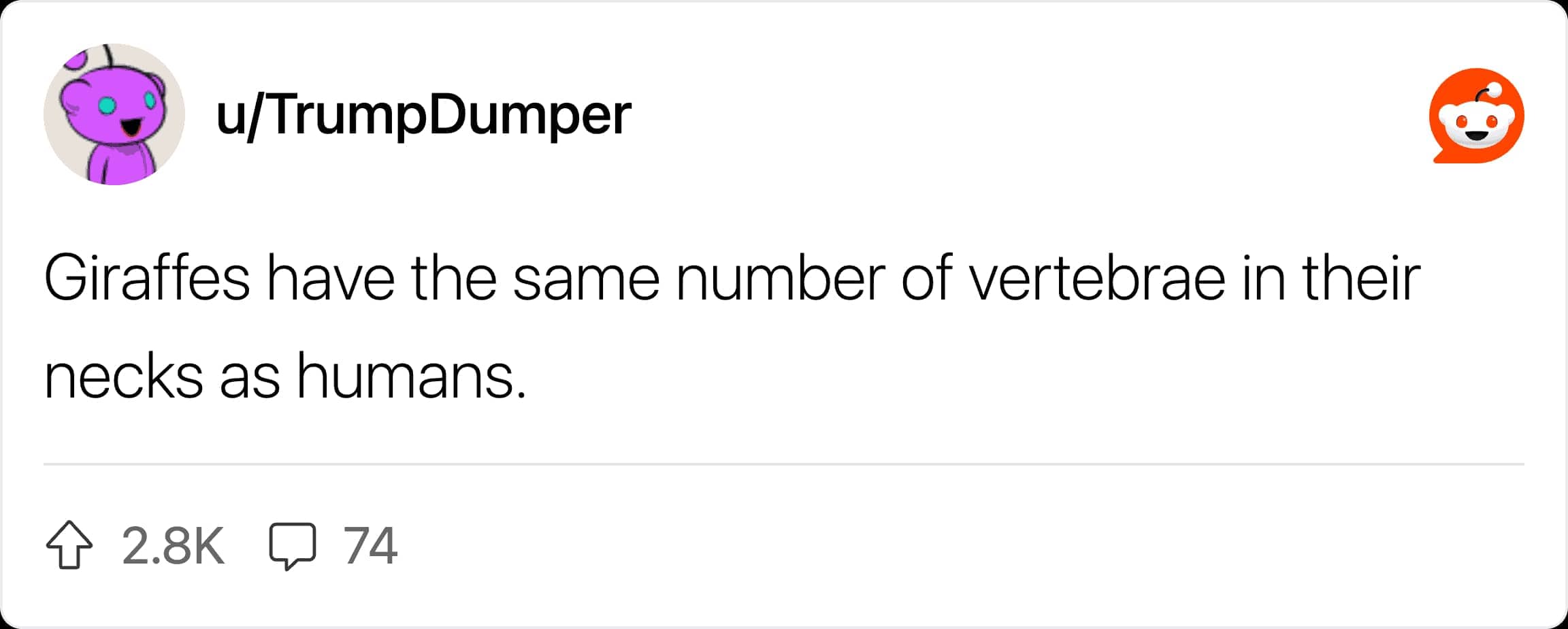
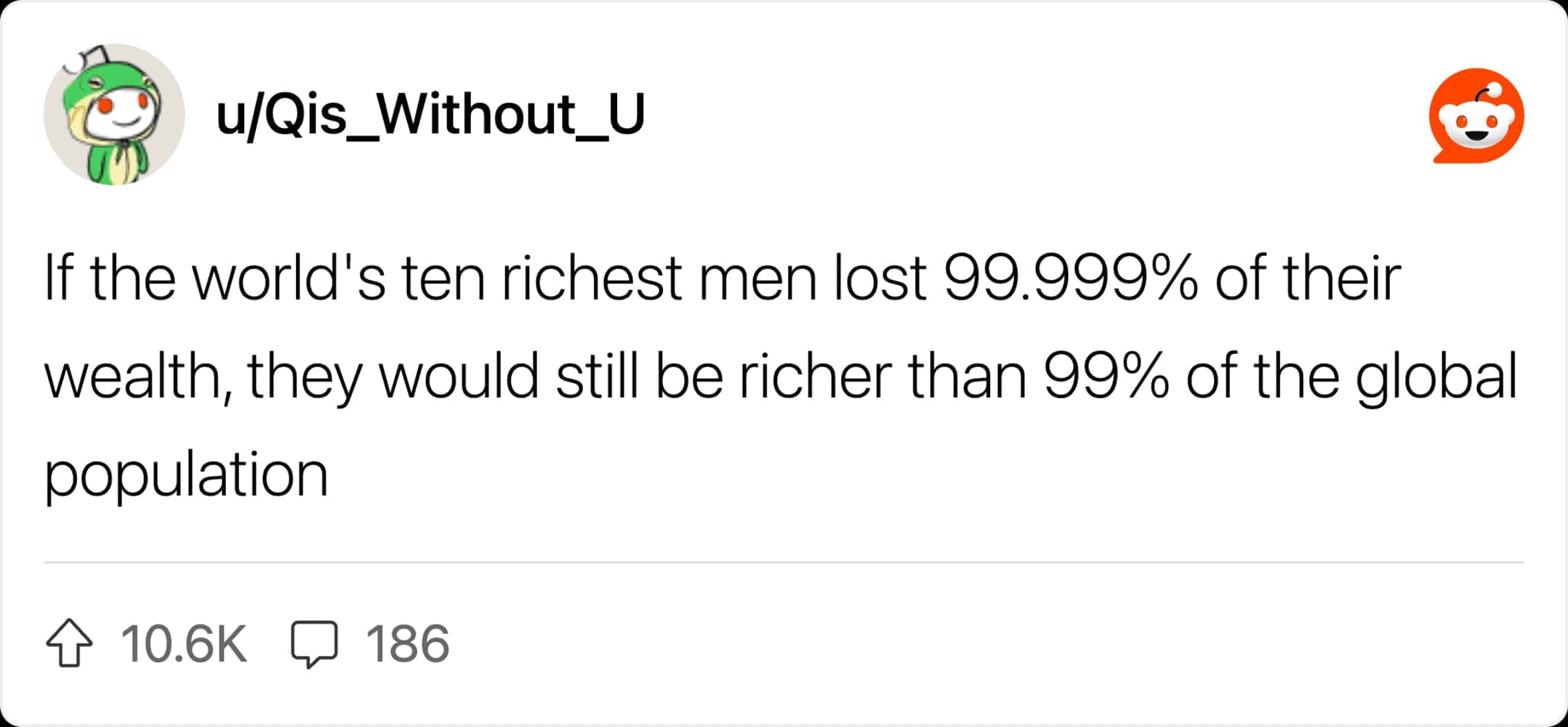
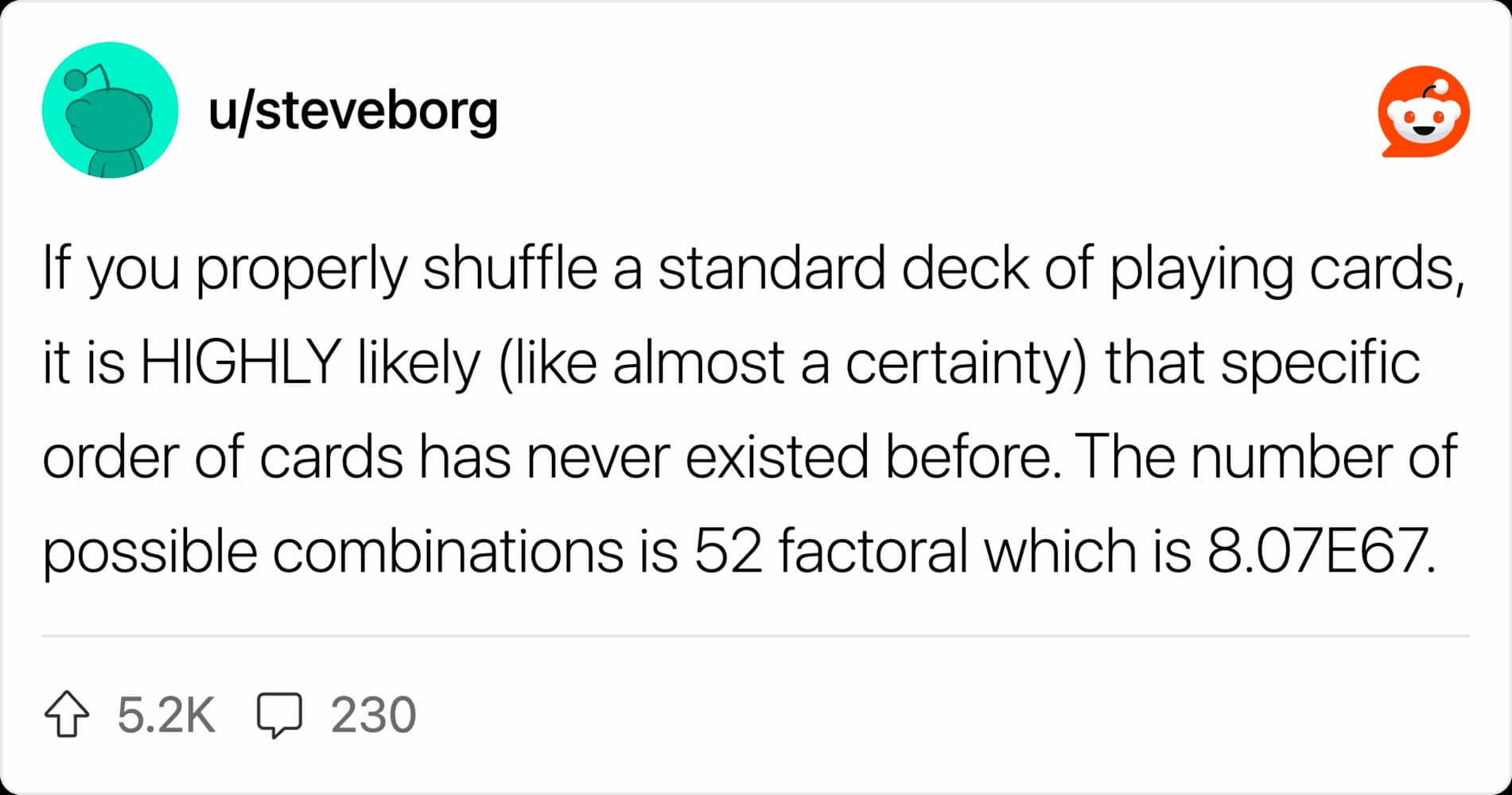
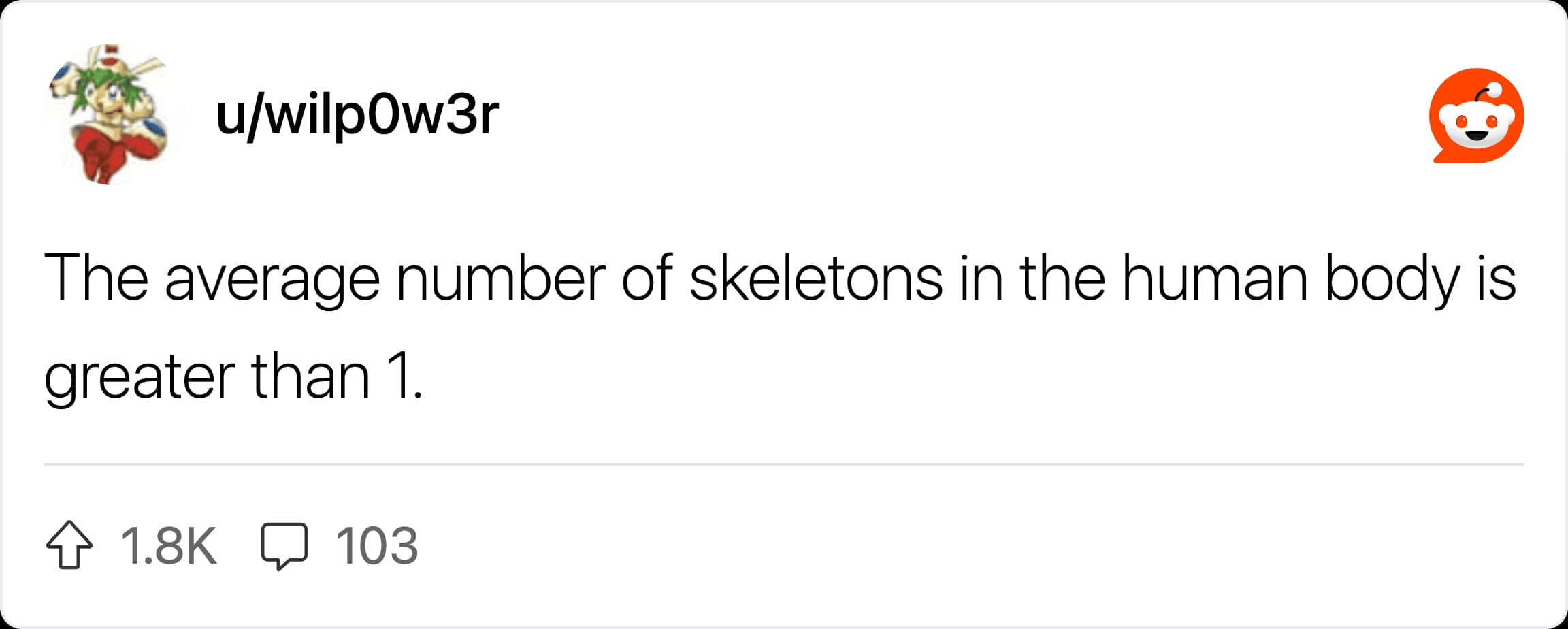
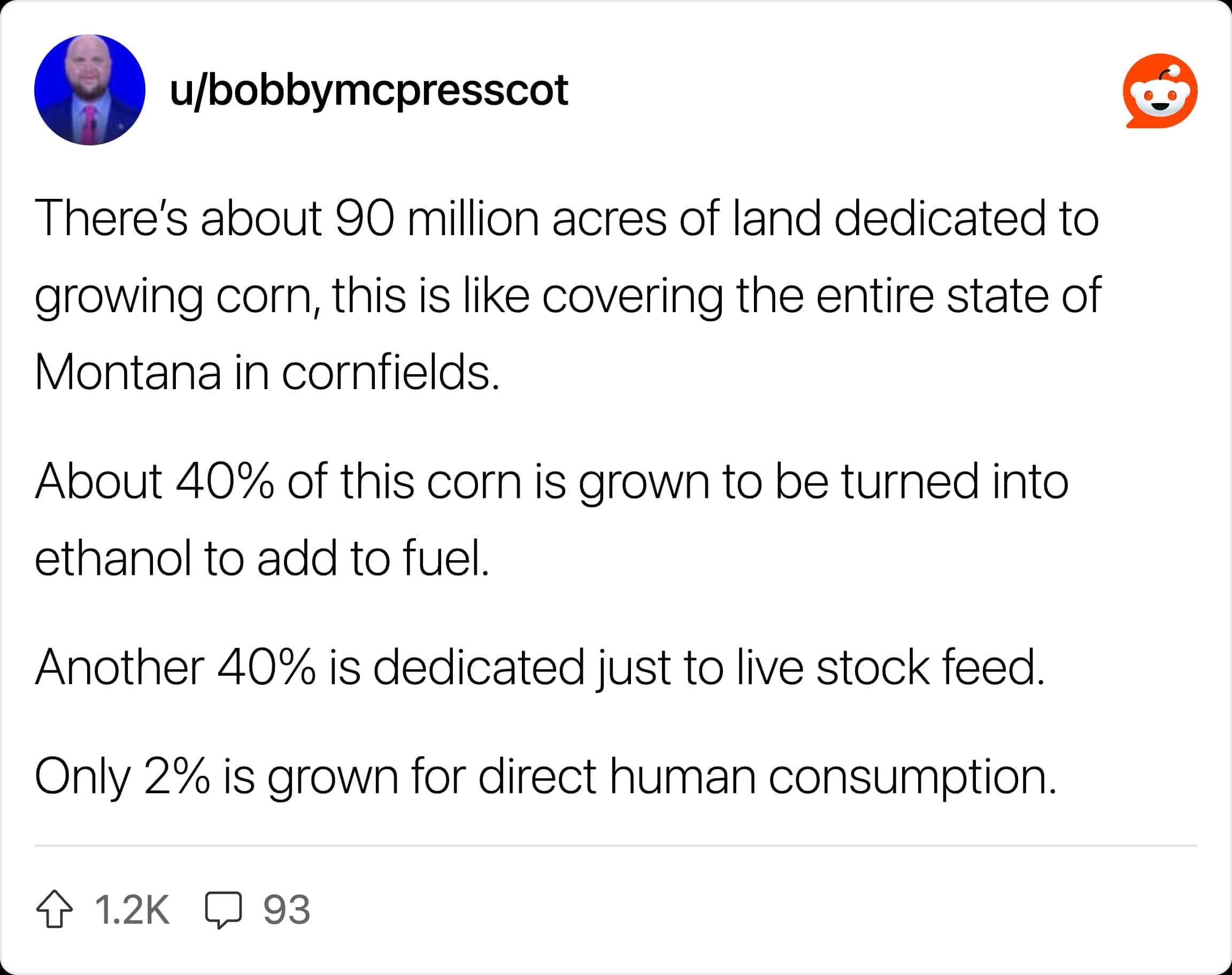
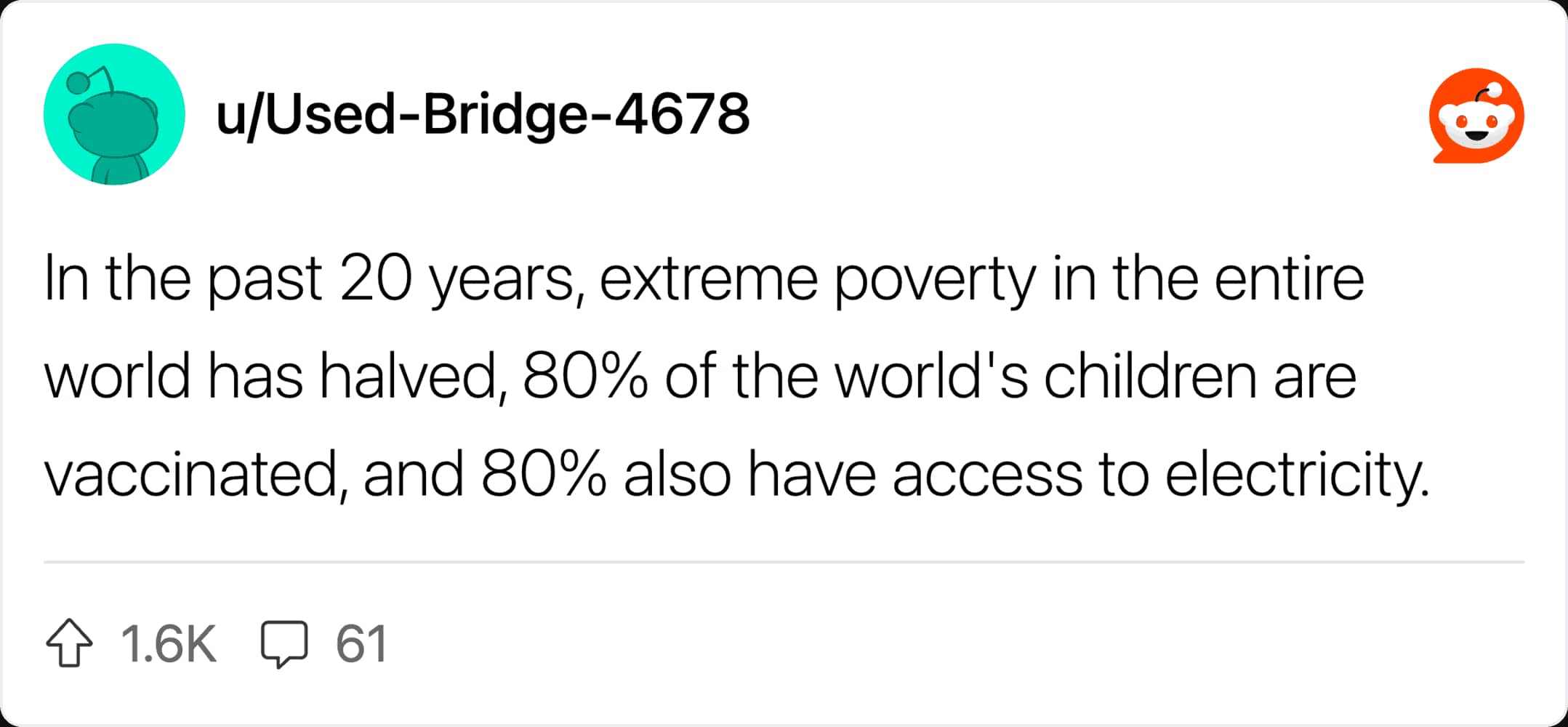
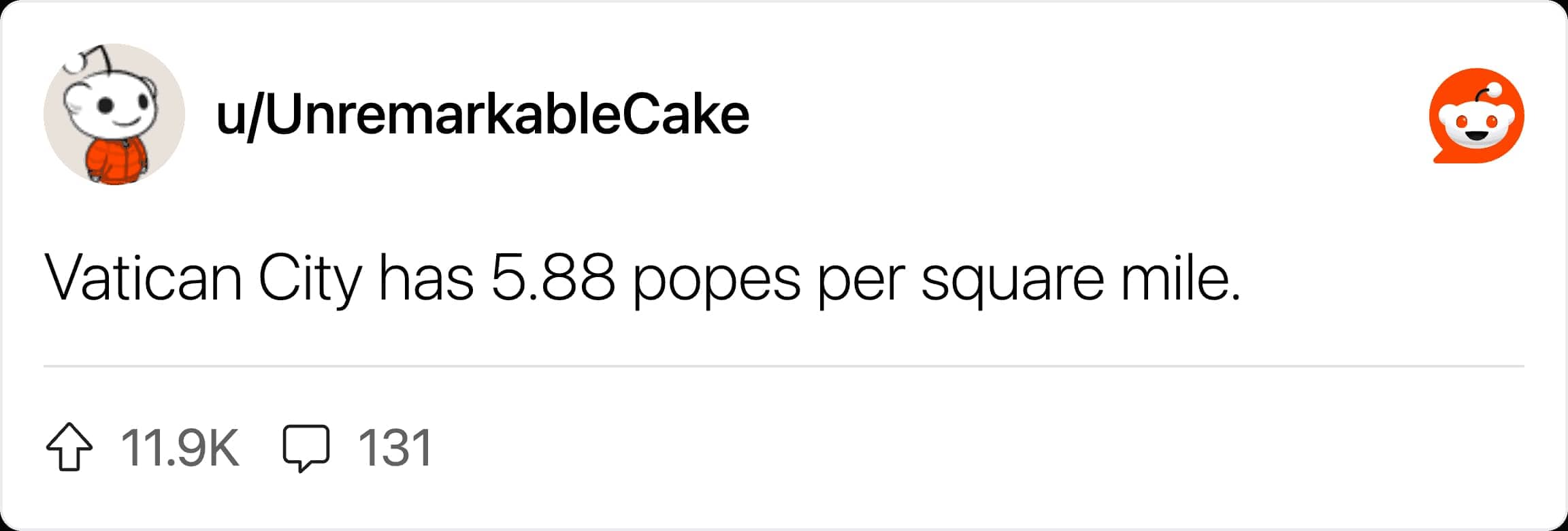

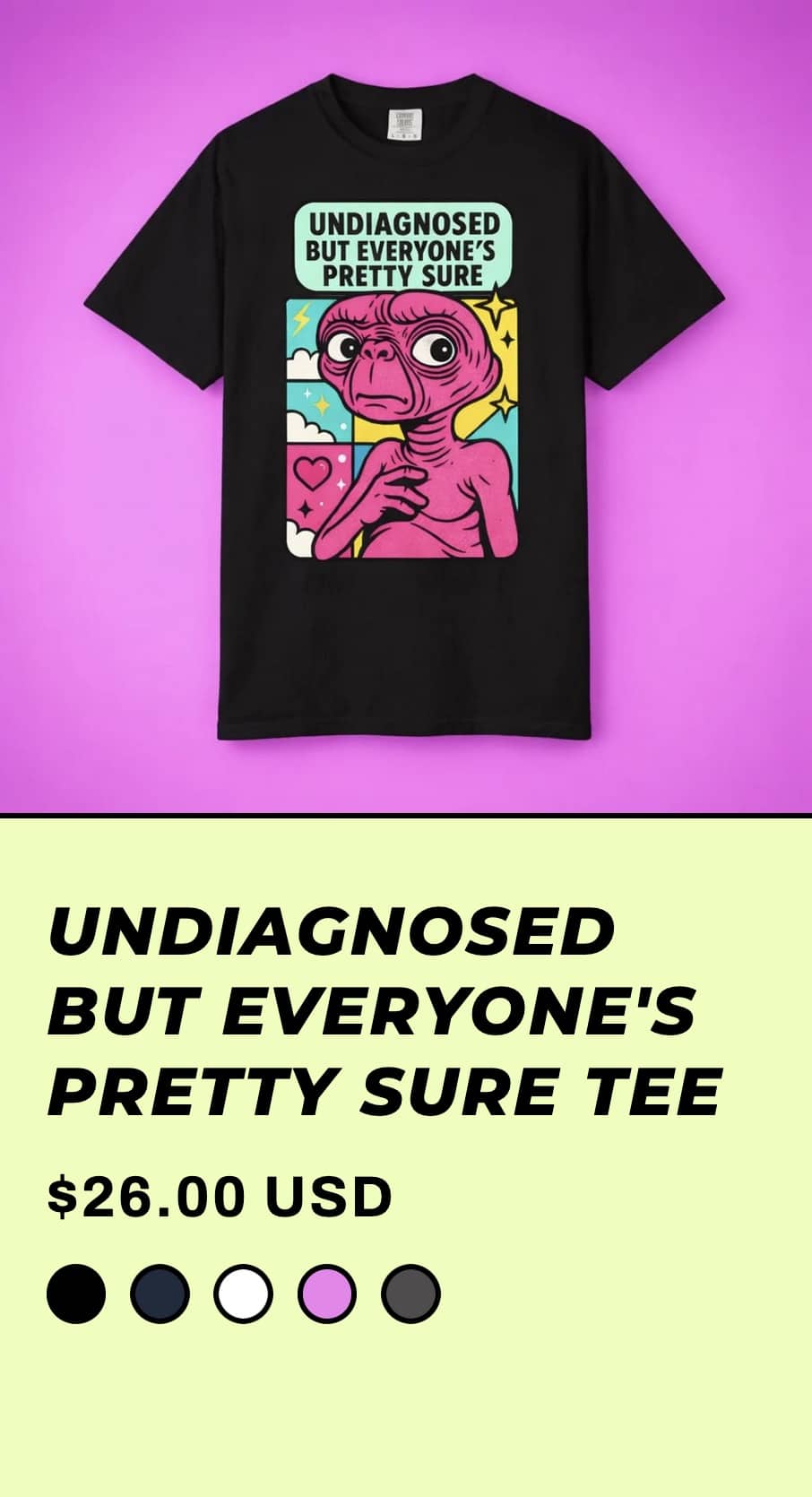
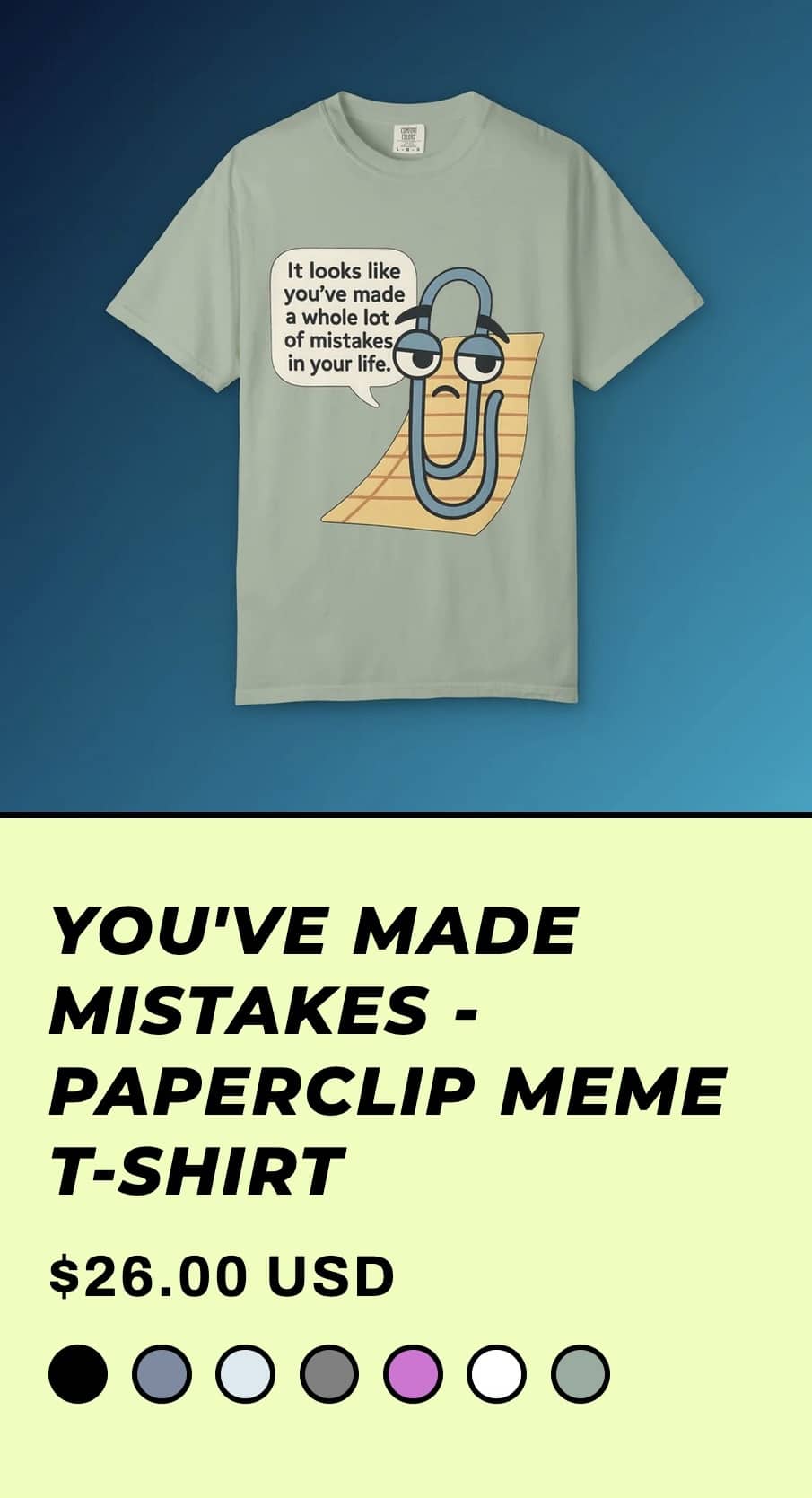

Facts that sound fake
Read More
The facts-that-sound-fake genre exists because the human brain is, by its nature, a terrible instrument for estimating large quantities, geographic distances, statistical distributions, and basically anything else that involves comparing numbers above the size of an average family. We have evolved to navigate small groups, short distances, and immediate threats. The mind-blowing facts filling galleries like this are essentially the result of taking that limited evolutionary equipment and applying it to a universe that is, structurally, much weirder than the equipment was designed to handle.
What makes the genre particularly satisfying is the very specific feeling that arrives when one of these facts hits. There is a brief moment of disbelief. Then a moment of mental verification. Then the slow realization that the fact is, against all instinct, true, and that everything the brain previously believed about that particular subject was based on a series of estimates that were quietly wrong for years. The crazy true facts in this gallery are essentially the documented points at which everybody’s mental model of reality gets a small but permanent correction.
There is also a strong recurring subgenre of facts that involve geography or scale, because geography and scale are the areas where the human brain is most consistently wrong. We assume the map looks the way it does in our memory. We assume distances are roughly proportional to how often we think about a place. The unbelievable statistics in this category exist mainly to demonstrate that our mental geography is, structurally, fiction, and that the actual geography is something we have, mostly, never bothered to learn properly.
The broader thing this whole genre captures, beyond the easy “did you know” thrill, is how much of everyday reasoning is based on instinct rather than verified information. We move through the world making constant small assumptions about what is likely, what is normal, what is roughly true. The fact-checking that the internet has made possible has, accidentally, exposed how often those assumptions are wrong, and the exposure has produced one of the most consistently engaging content categories online.
There is also a small humility embedded in how this content gets received. People reading these facts are not, mostly, defending their previous beliefs. They are updating. The shocking facts that go viral the furthest are the ones that the audience finds genuinely surprising, and the surprise produces a kind of momentary intellectual honesty that the rest of the internet rarely provides.
The world is older than we think. The world is bigger than we think. The world is weirder than we think. The internet, occasionally, lets us know.
If the trivia spiral was your kind of fun, our random knowledge content is right where you’d want to land next, and we’ve got plenty of science fact archives, history surprises, and weird-but-true posts for anyone who needs more material for their next dinner party. Save the chart.
Read Memes
Get Paid


Jake Parker, known around the web as "Jay," is a digital writer with over 10 years of experience covering internet humor, meme trends, and viral content. Before joining Thunder Dungeon, Jay was the lead editor at MemeWire, where he helped curate memes that broke the internet, including coverage on trends like Distracted Boyfriend, Kombucha Girl, and Bernie Sanders’ Mittens. A self-proclaimed "professional procrastinator," Jay spends his downtime scrolling Reddit and Twitter to stay ahead of what's about to break the internet next.