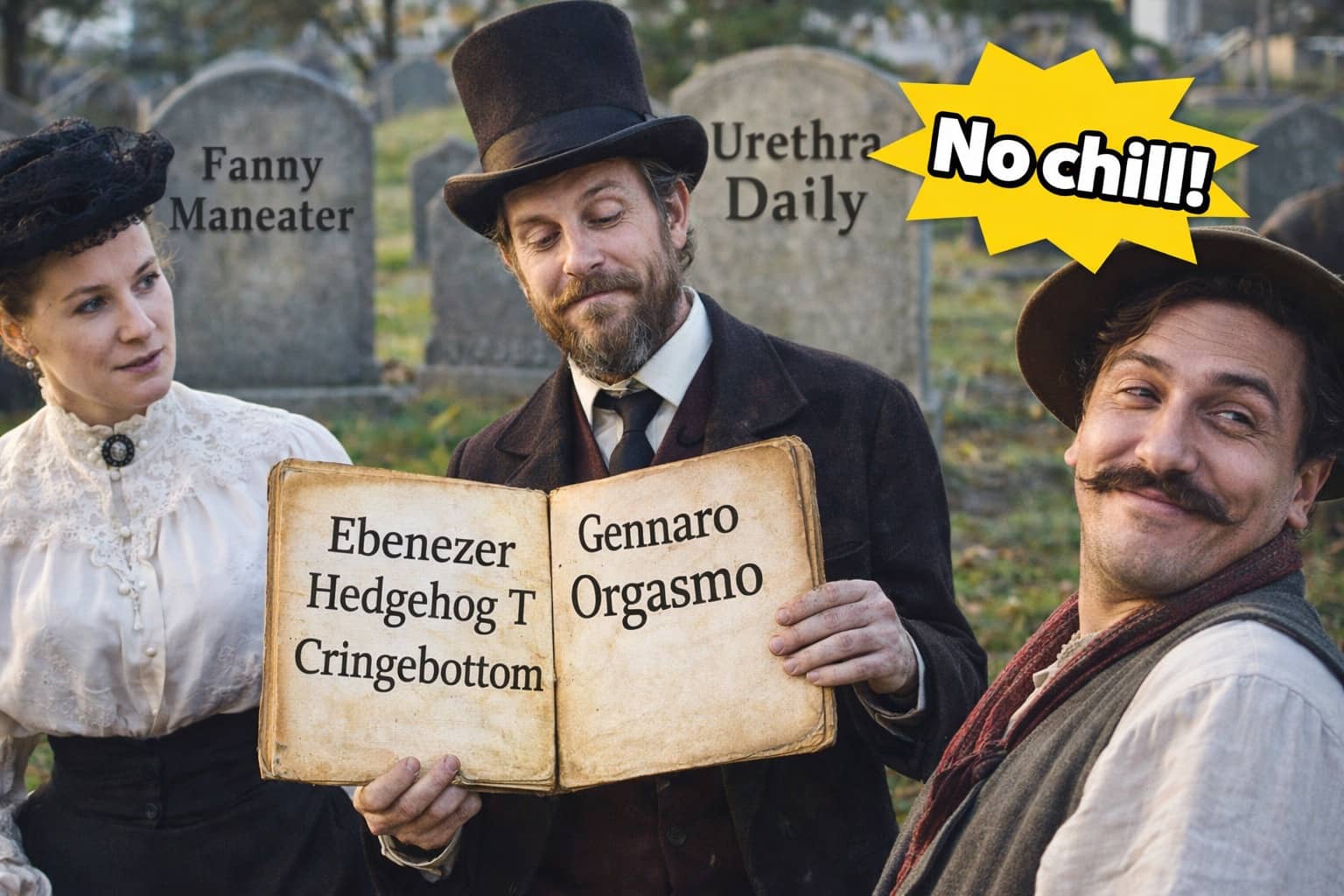

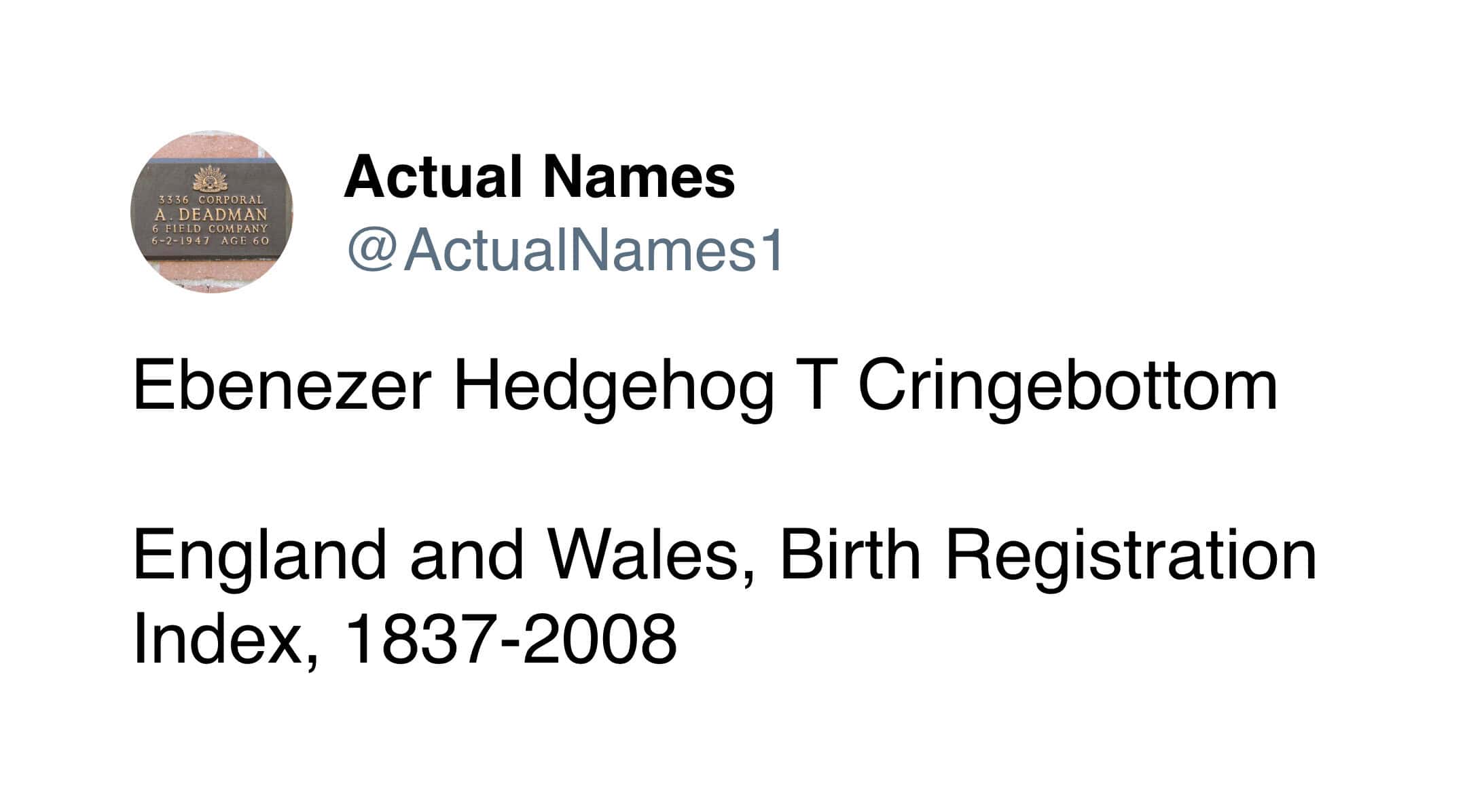
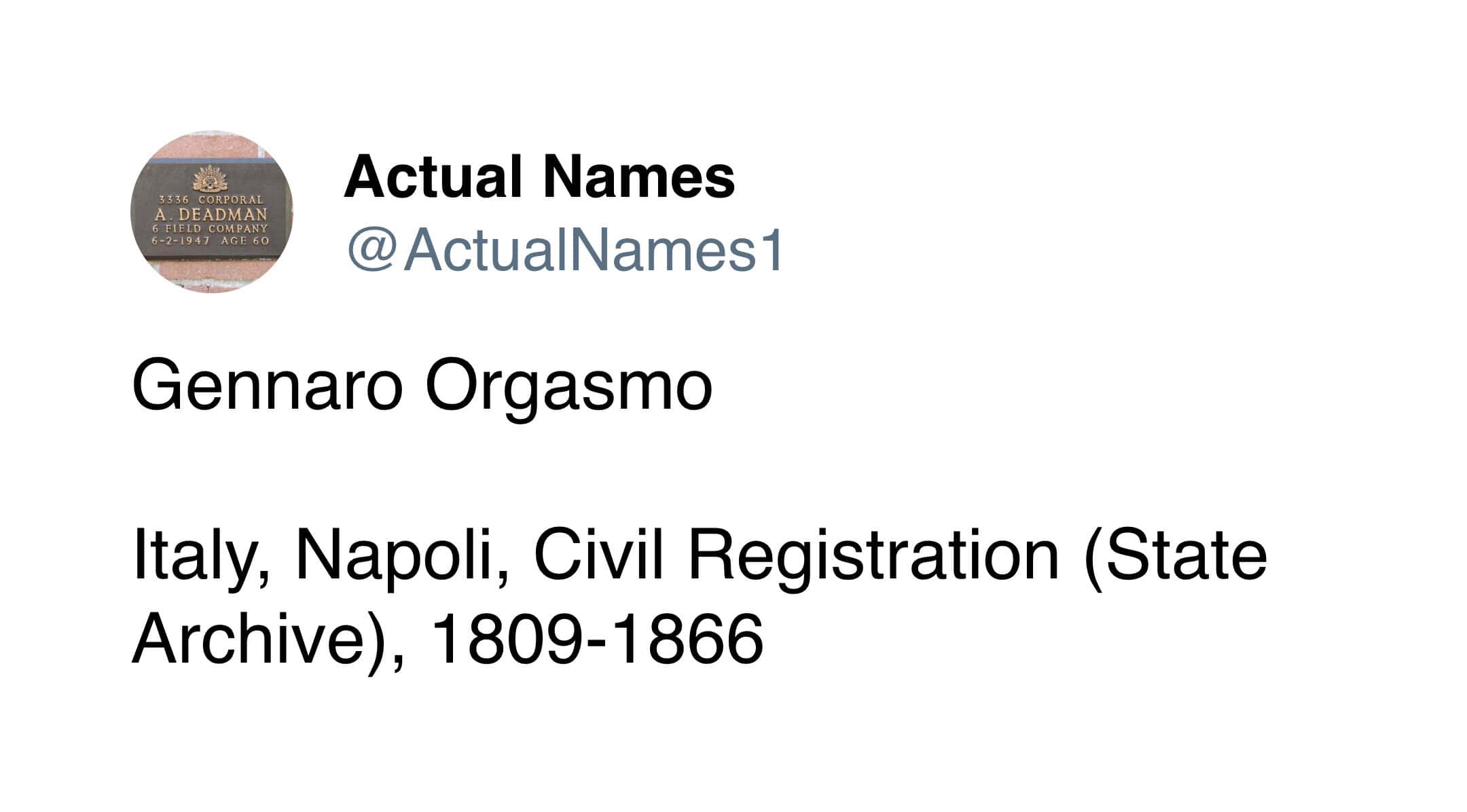
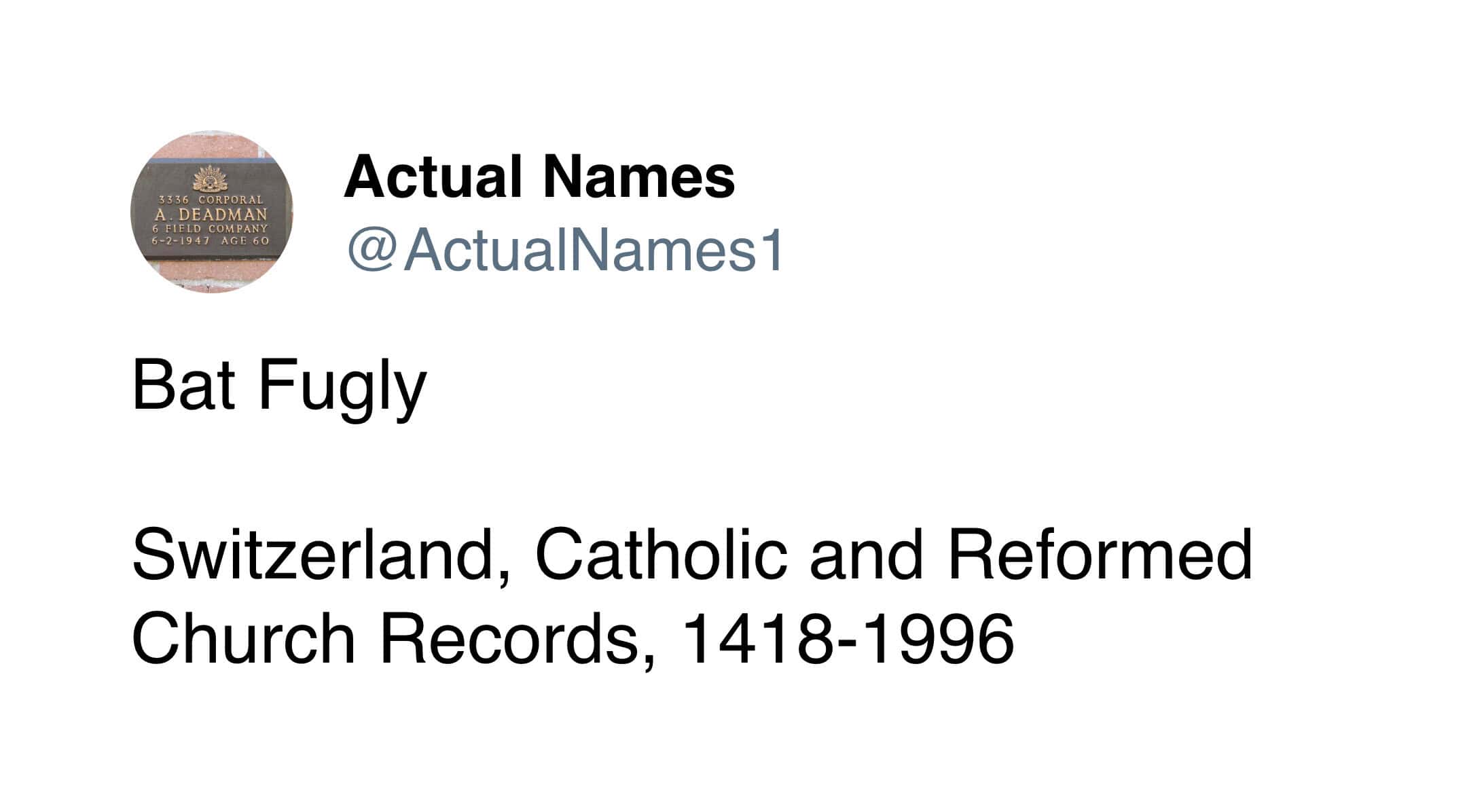
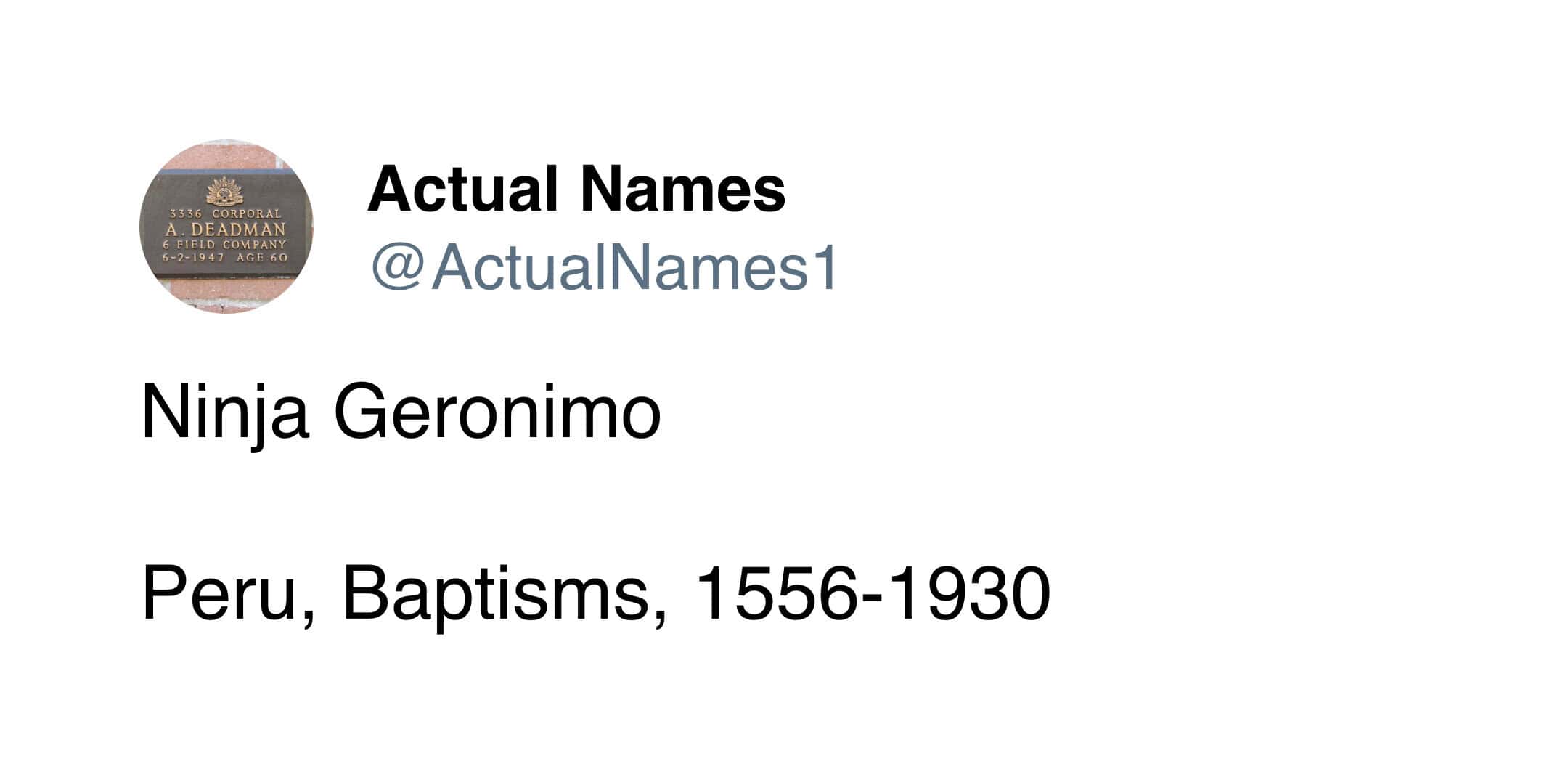
There is a theory about historical naming conventions that attributes most unusual names to regional dialects, occupational surnames, or the simple phonetic drift of language across centuries. That theory does not account for Bat Fugly appearing in Swiss Catholic church records. It does not account for Ninja Geronimo being baptized in Peru. It does not explain how Karl Gropes Youngermen made it into the 1920 United States Census without a single notation from the recorder, who presumably had a pen and an opinion. The theory is doing its best. The historical record has been making it very difficult.
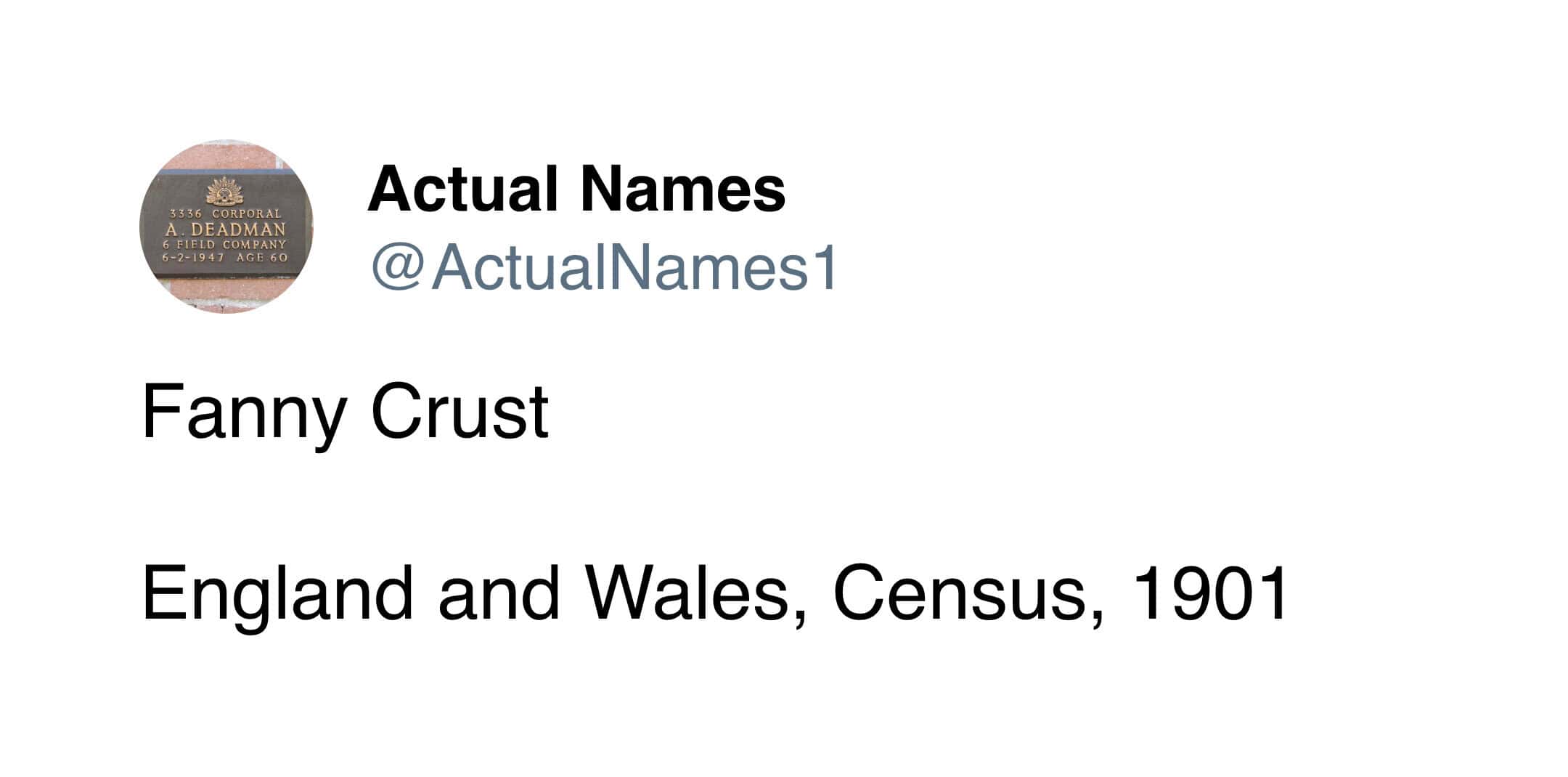
Fanny Crust. England. 1901. No notes.
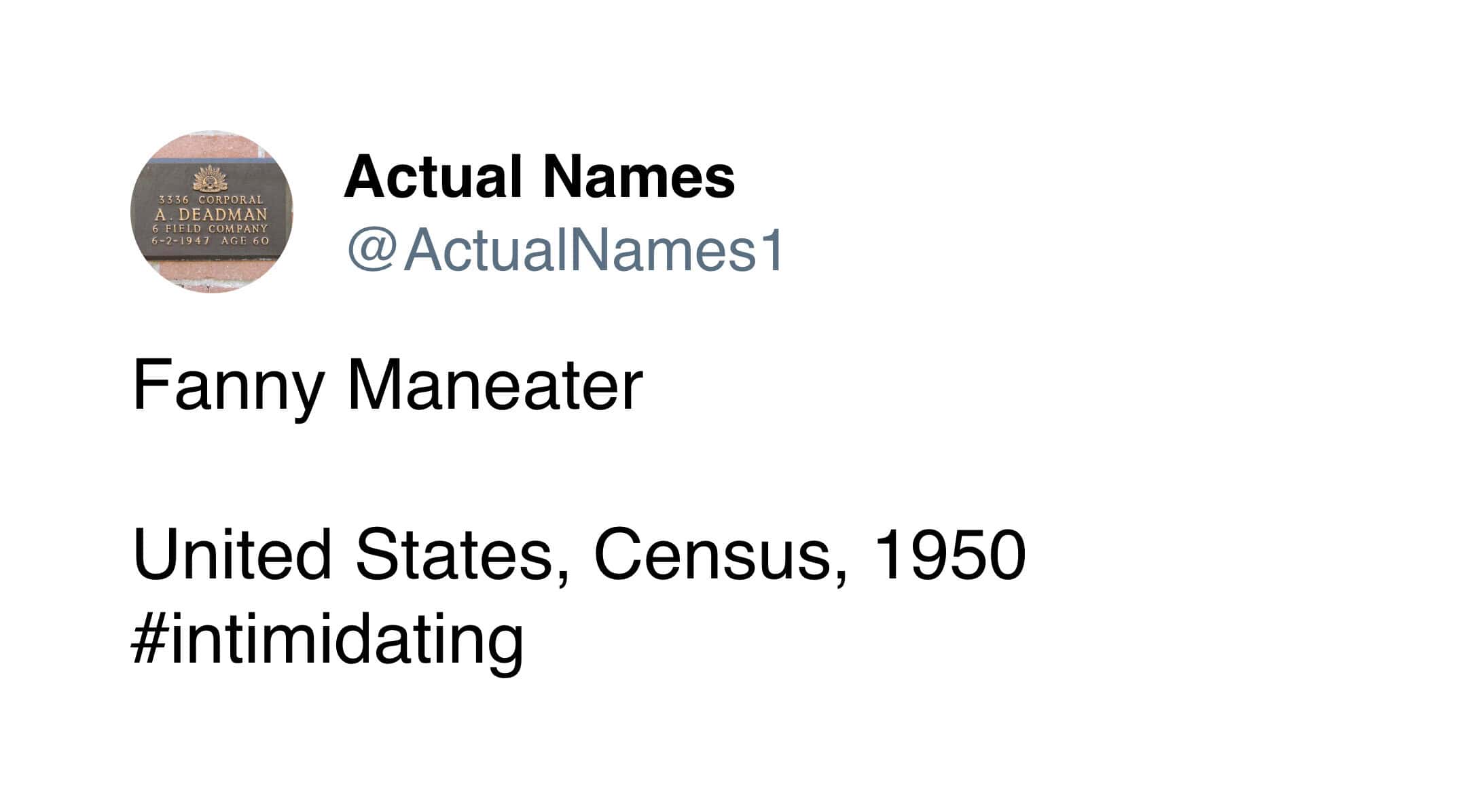
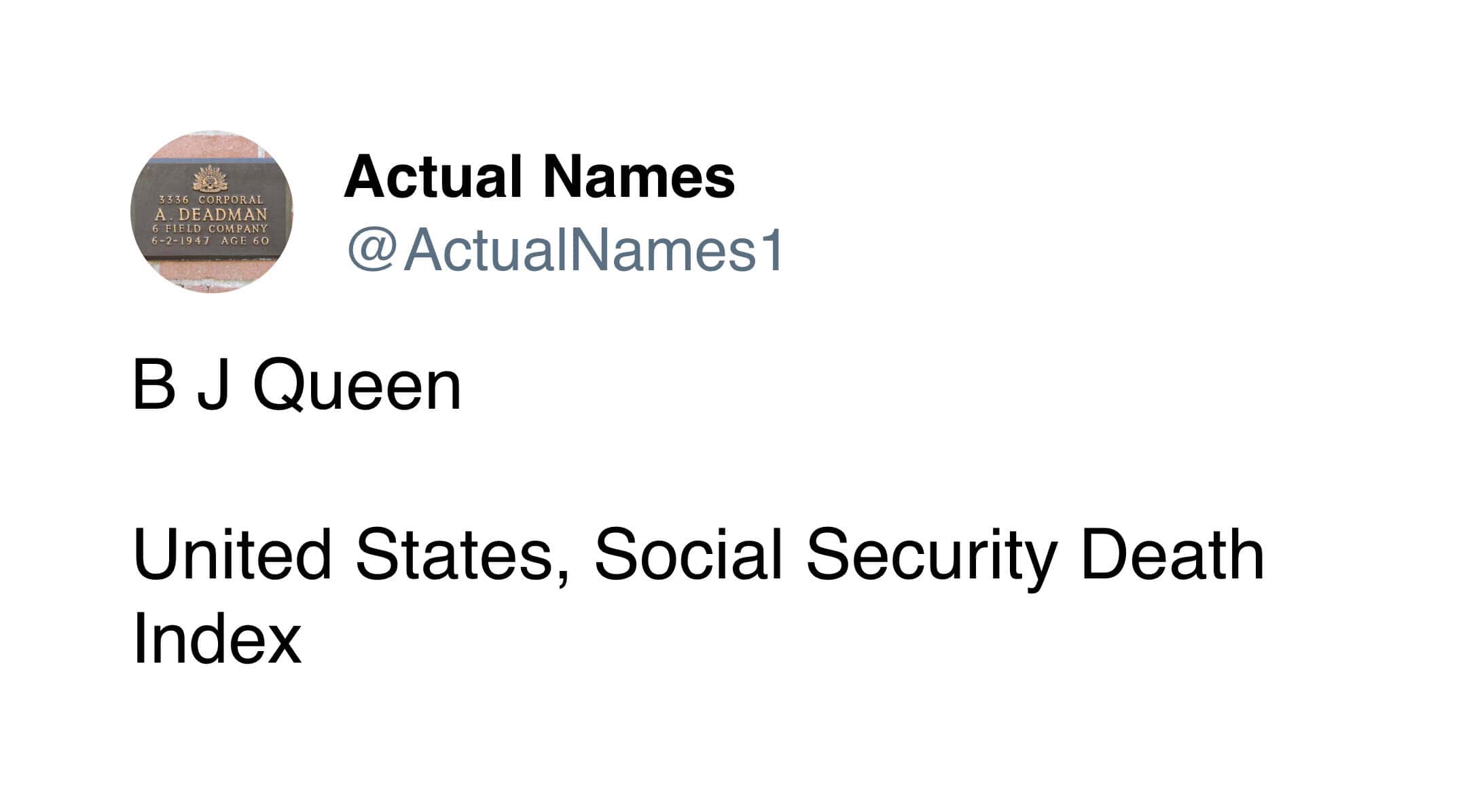
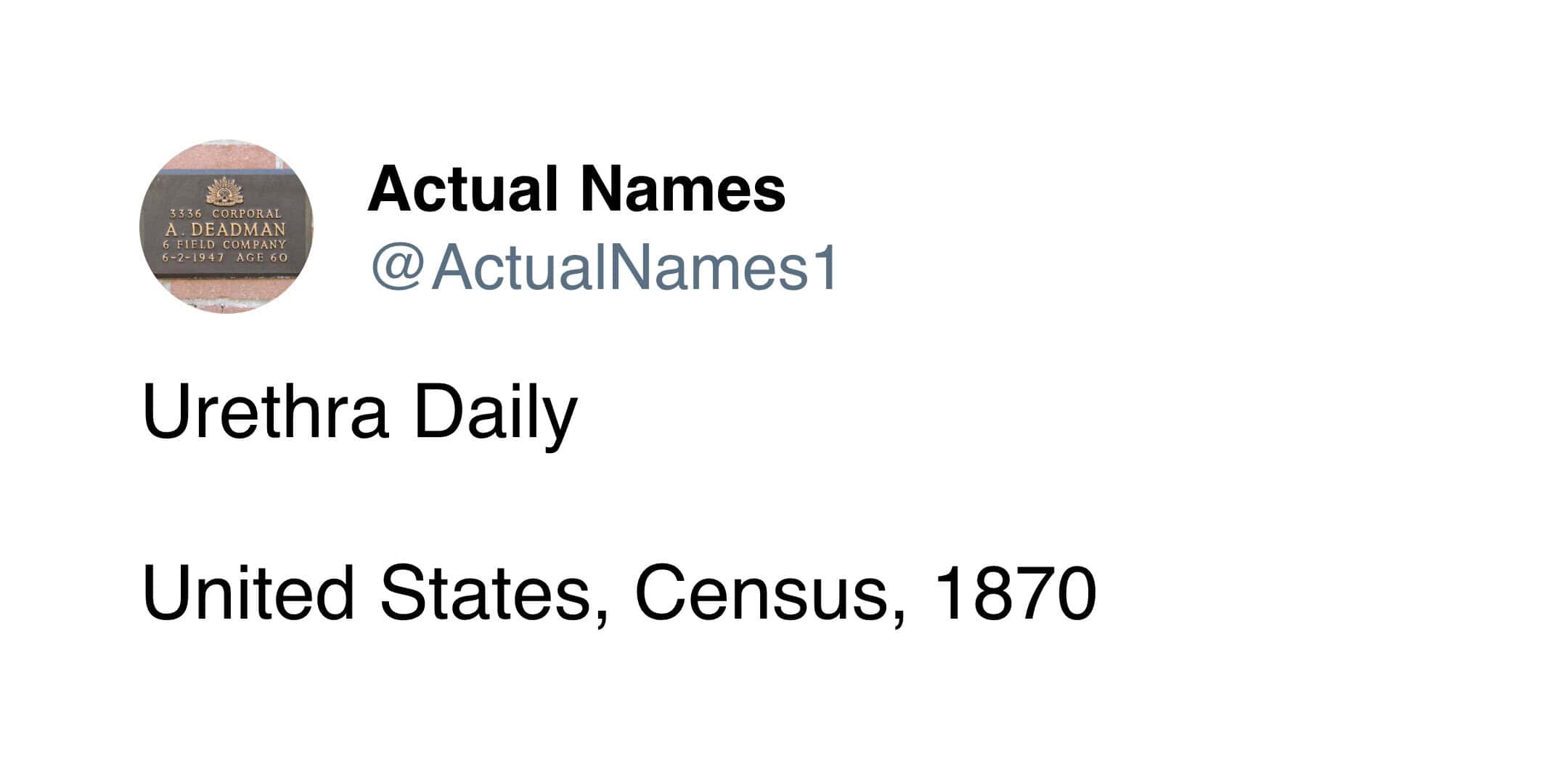
Someone in 1870 named their child after a body part they definitely couldn't spell. Commitment respected.
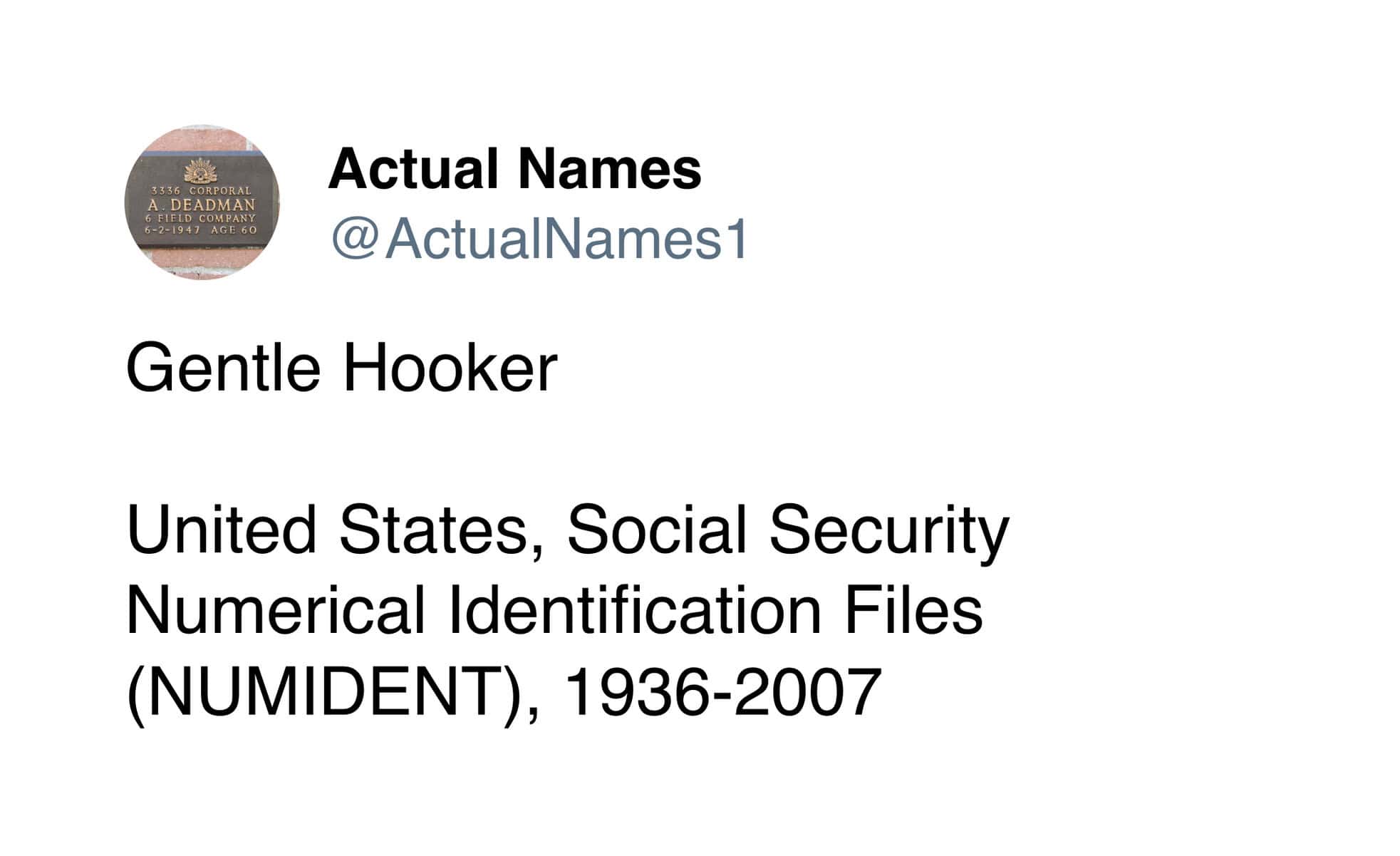
Gentle Hooker sounds like a Yelp review category that doesn't exist yet.
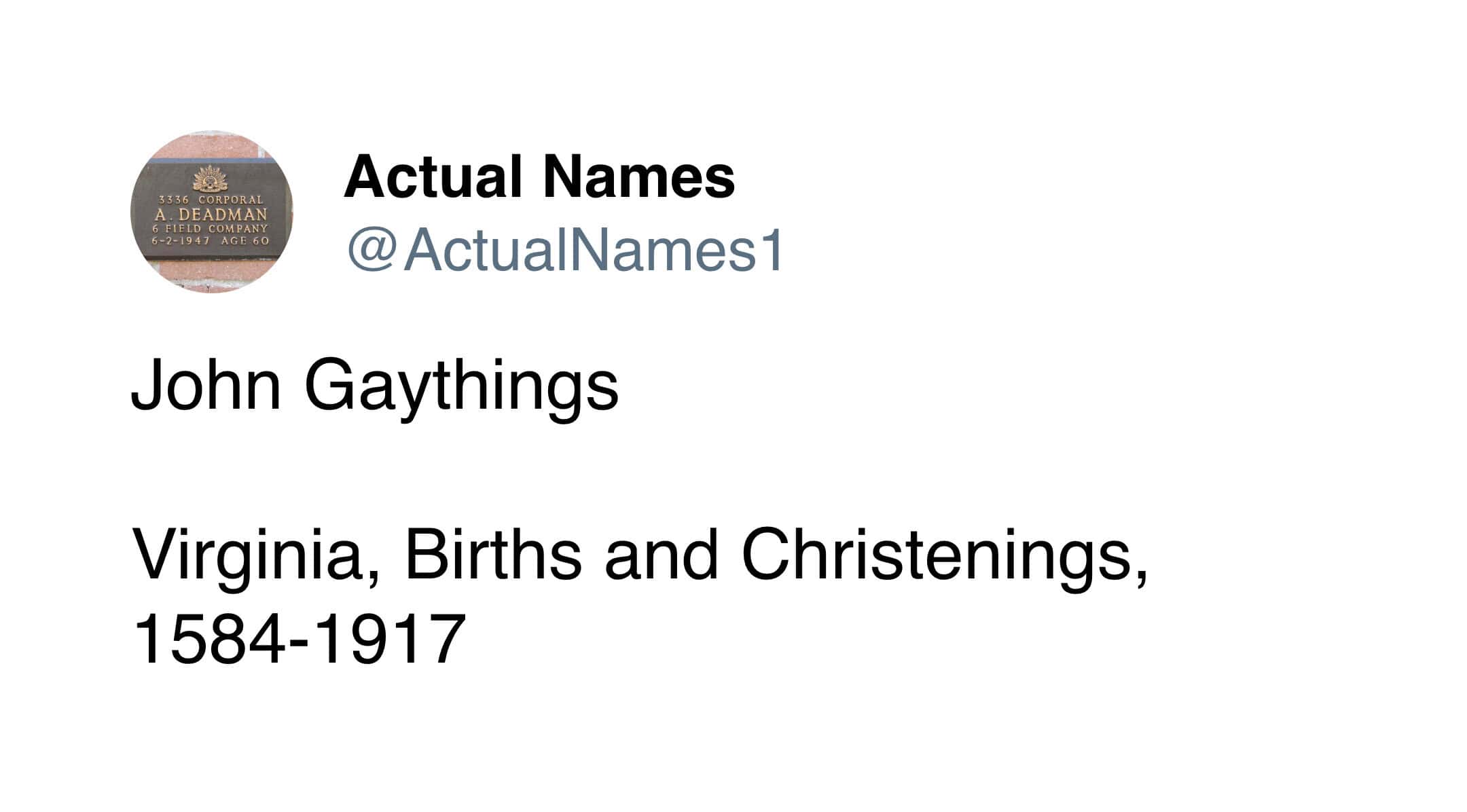
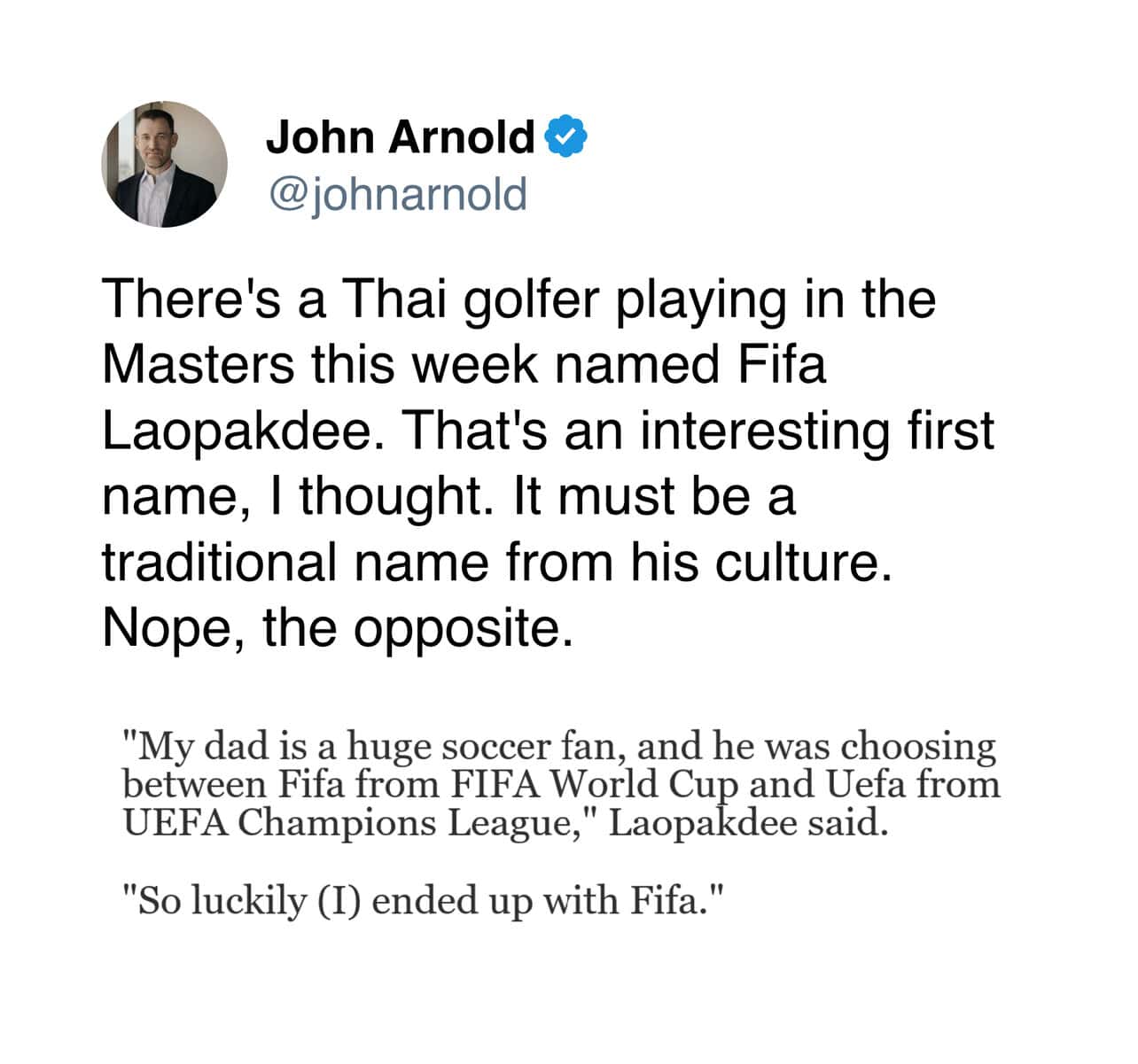
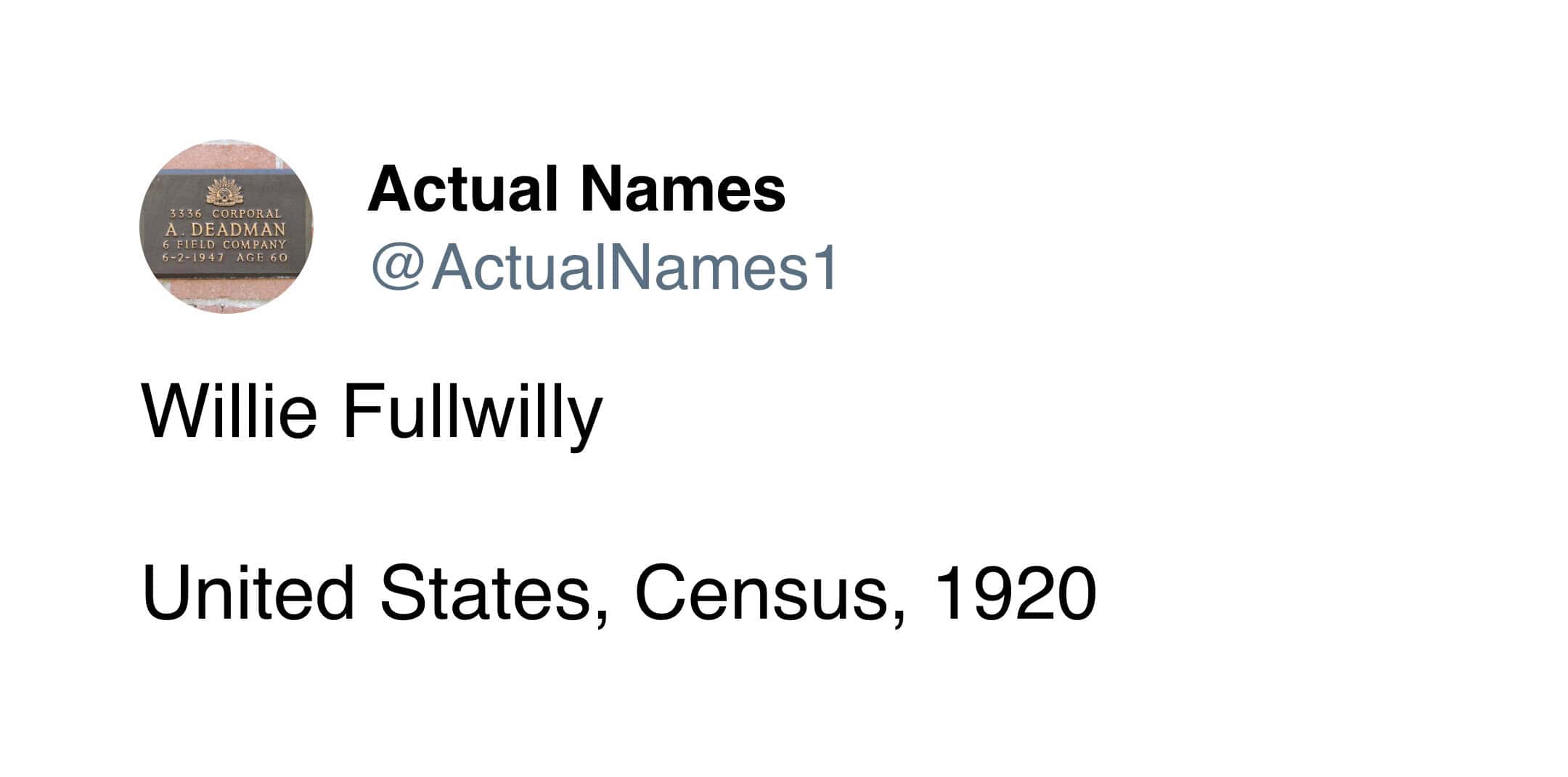
A man walked this earth named Willie Fullwilly and apparently no one stopped it.
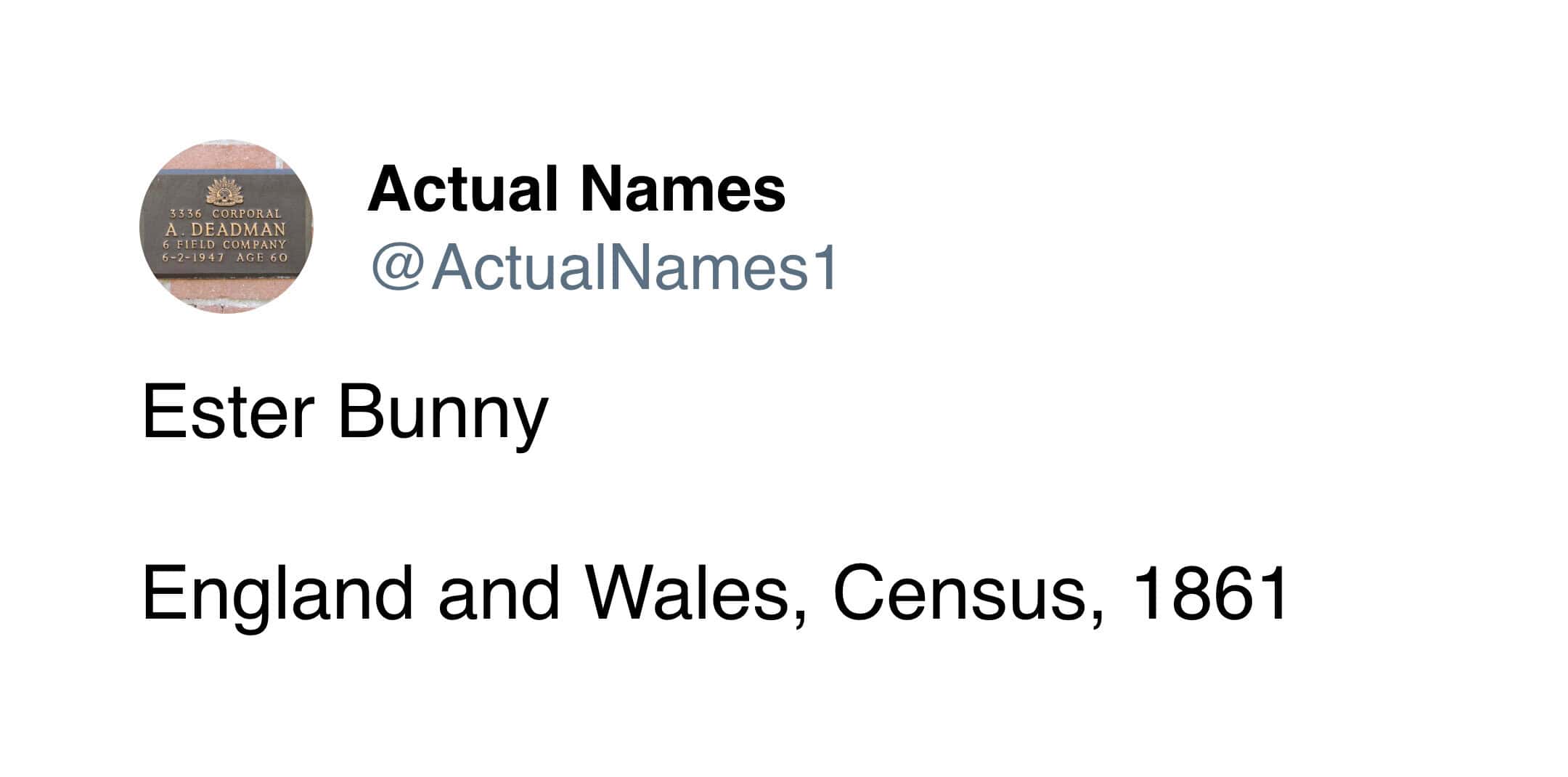
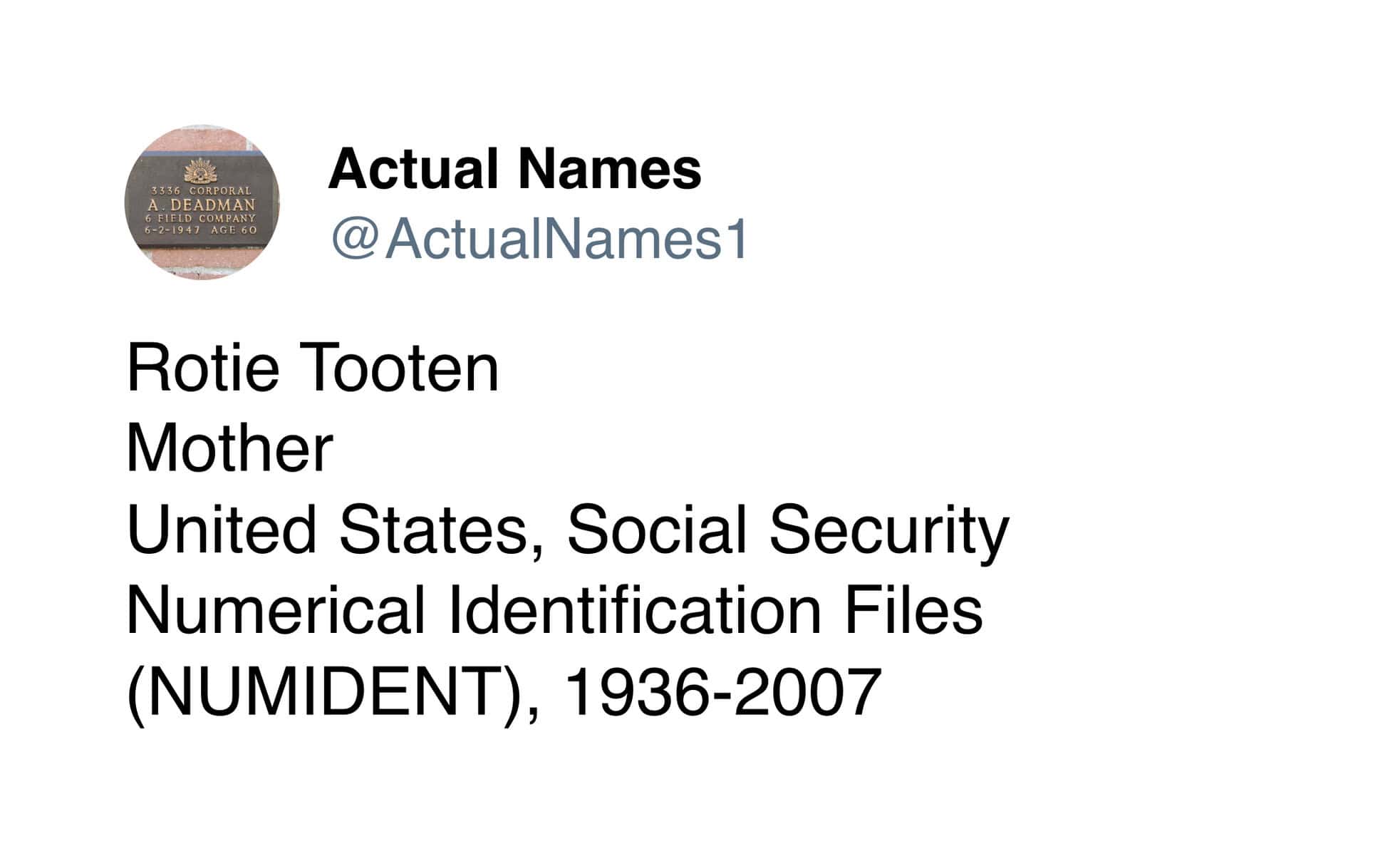
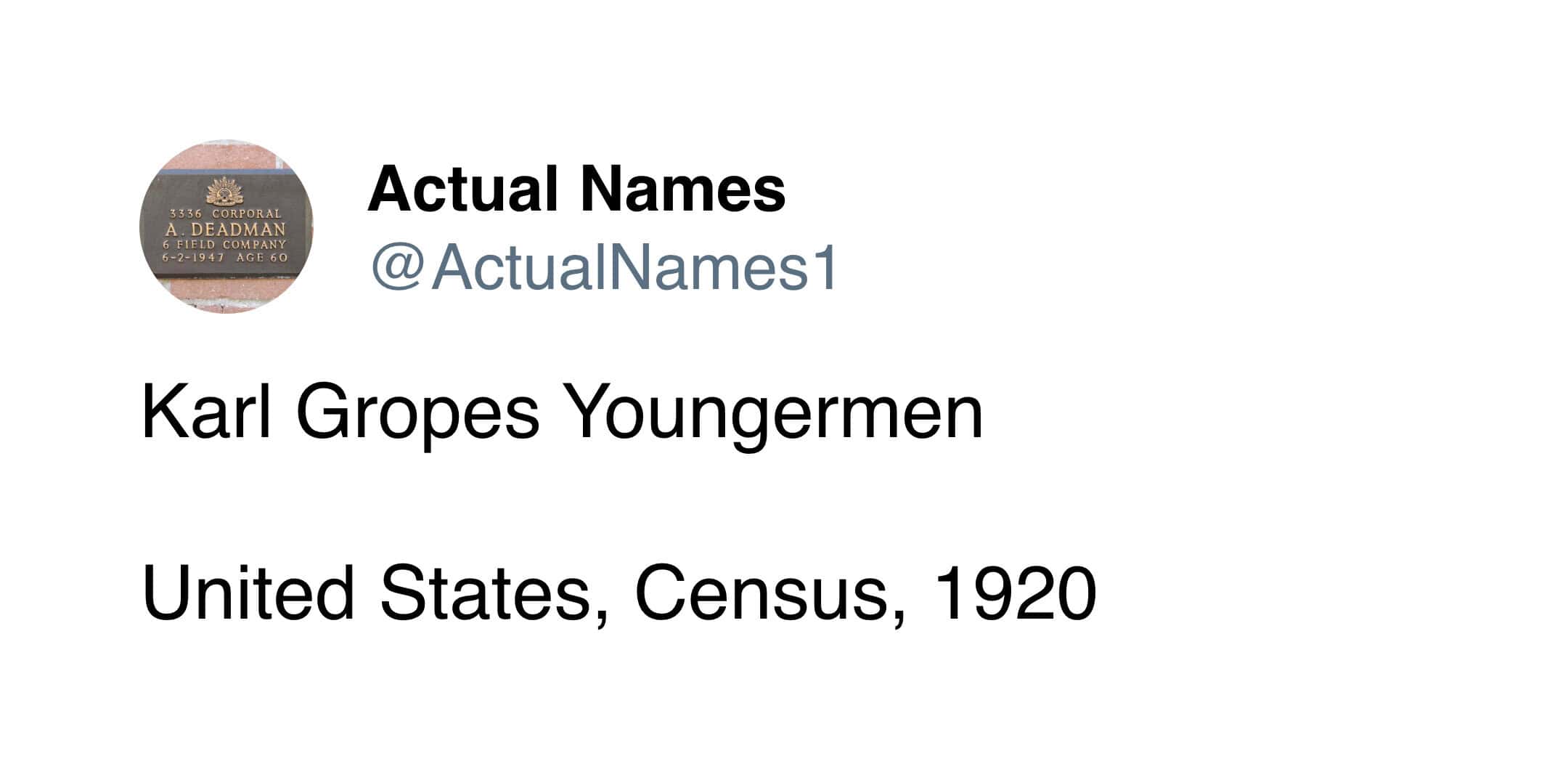
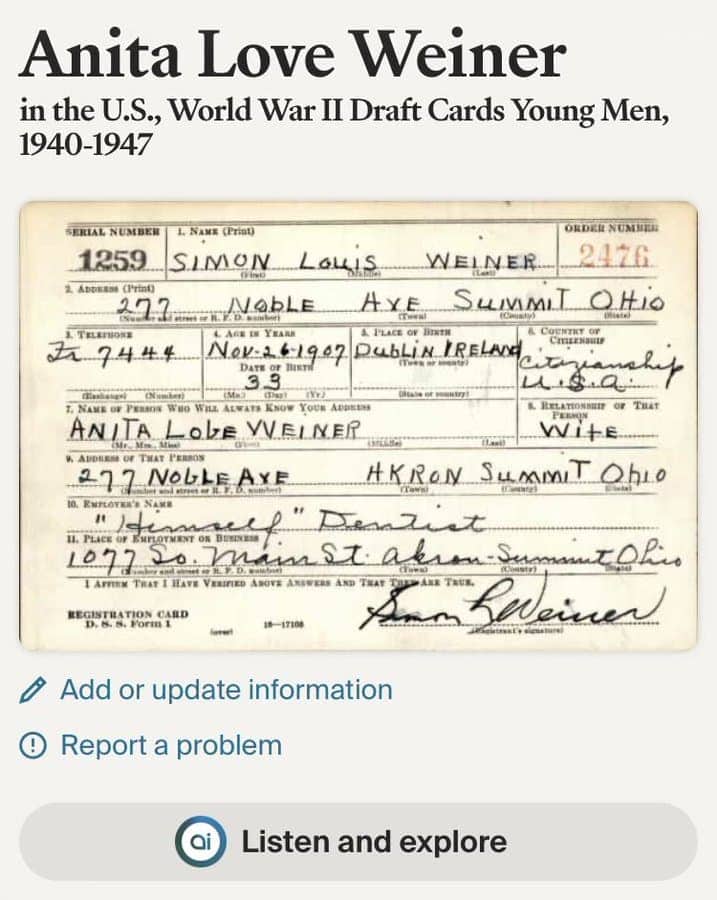
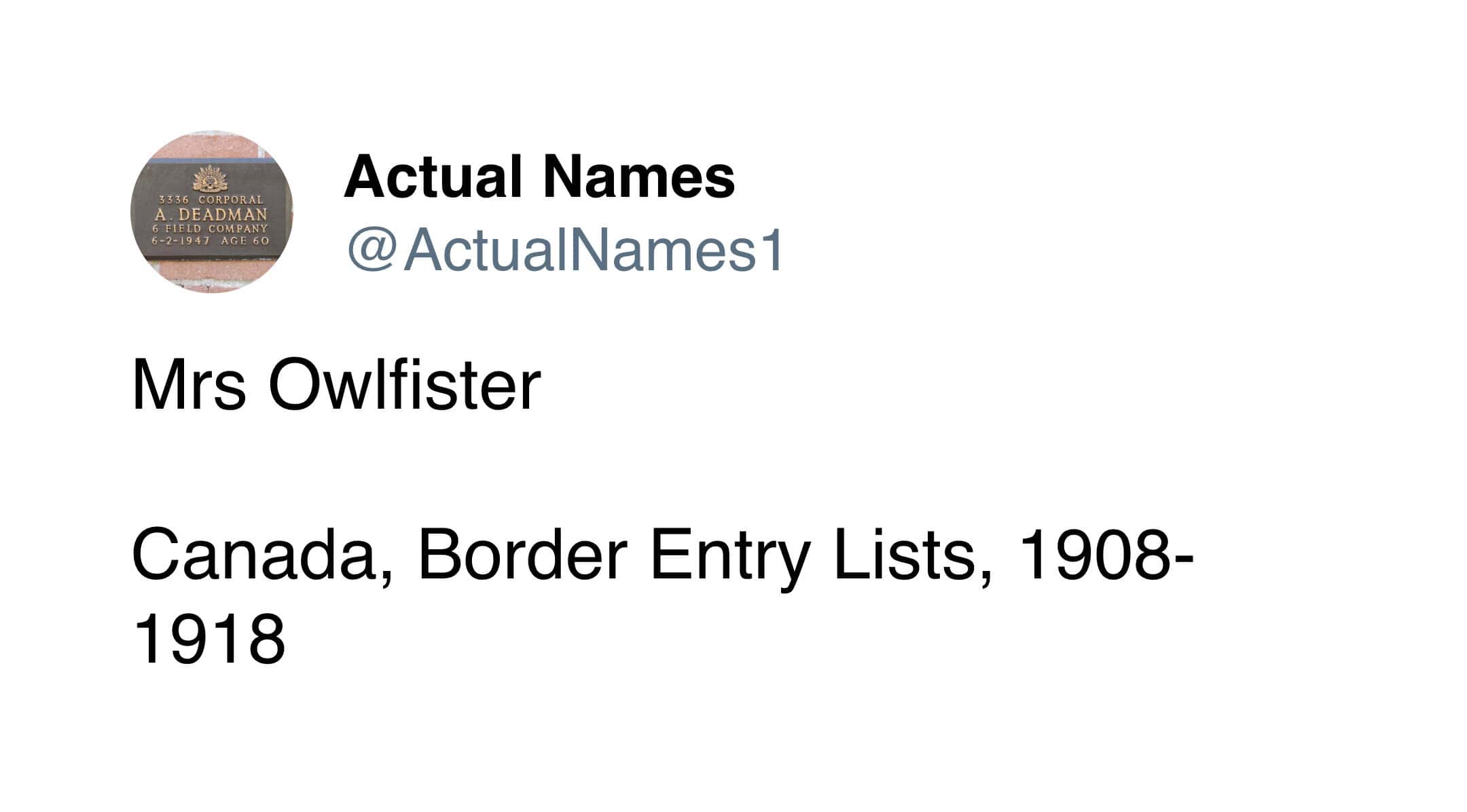
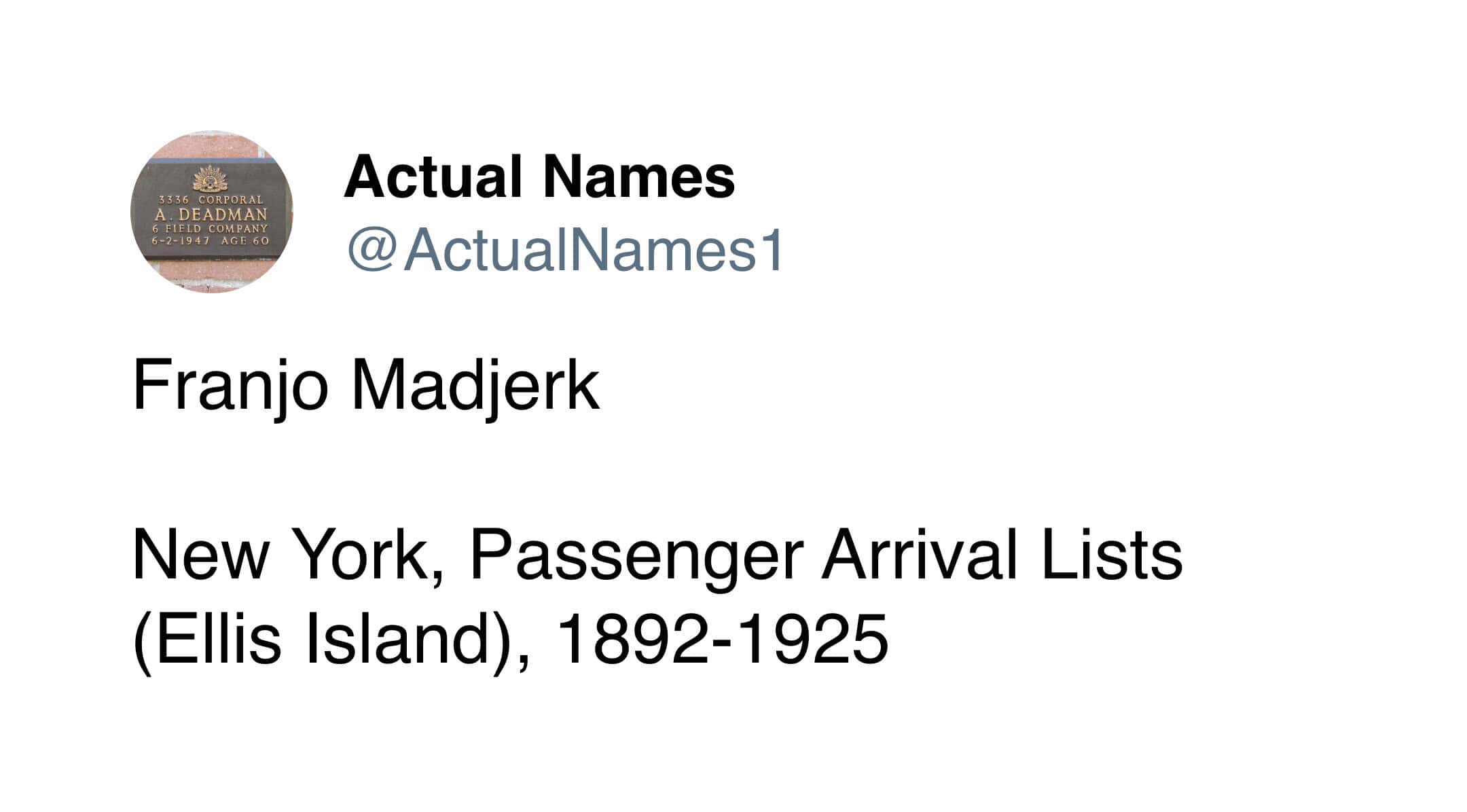
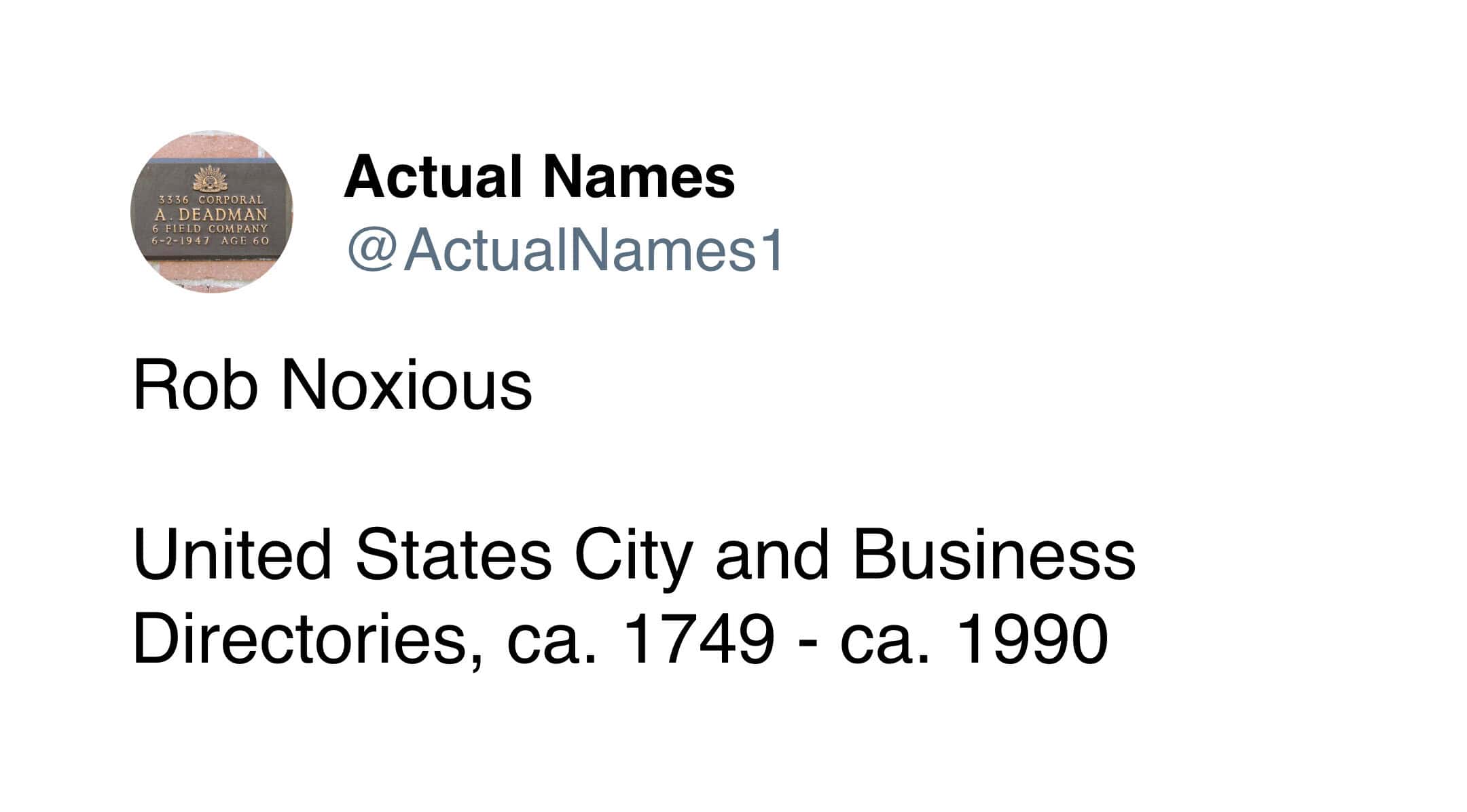
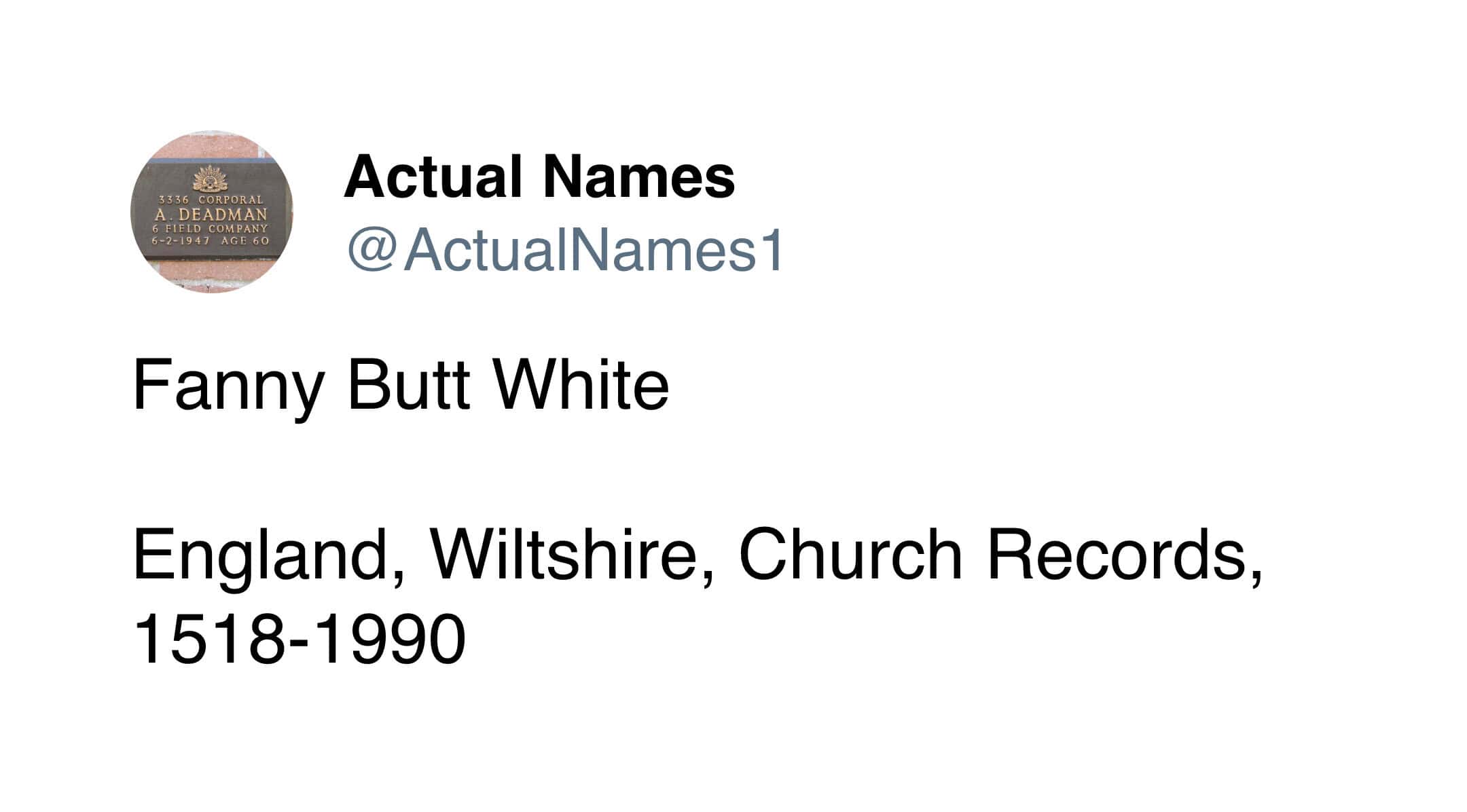
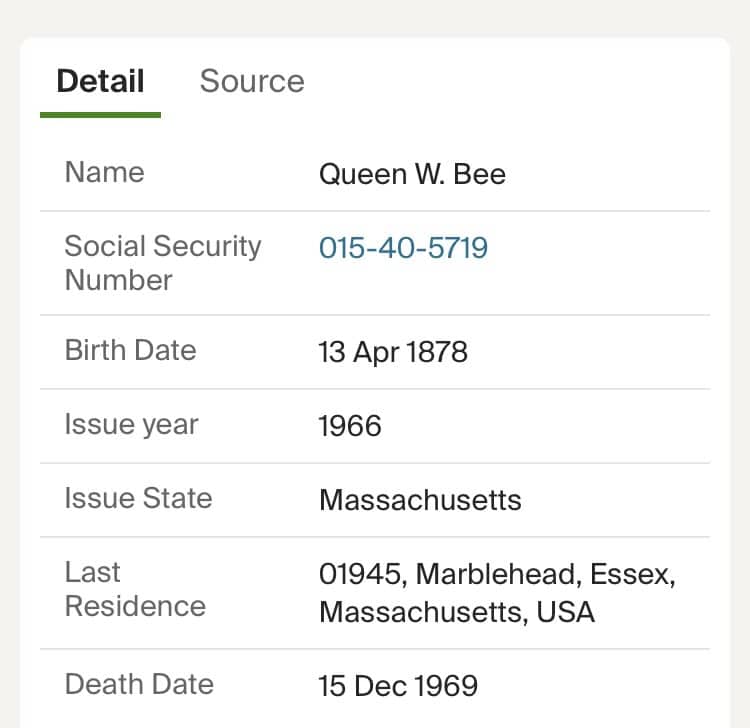
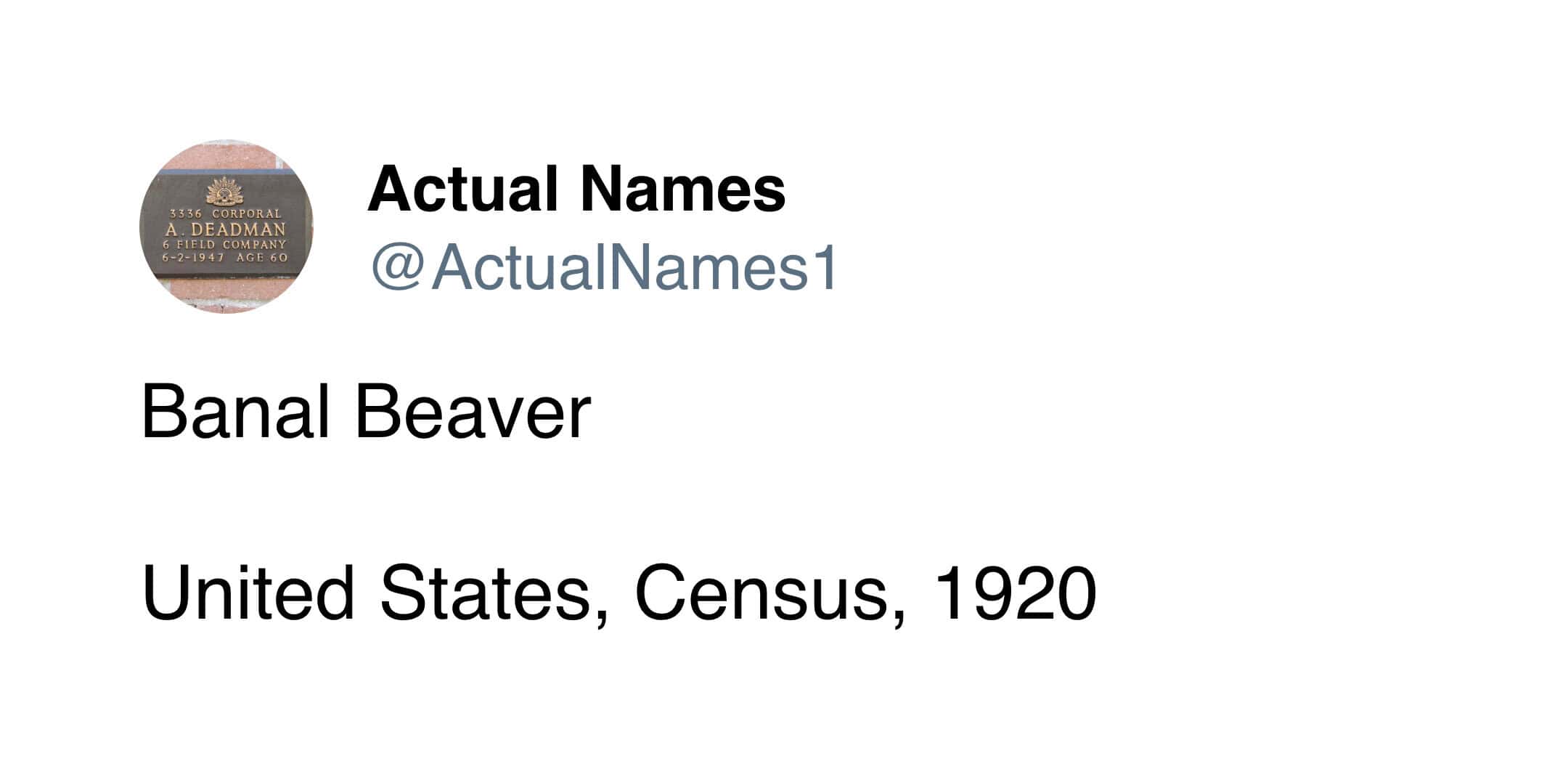
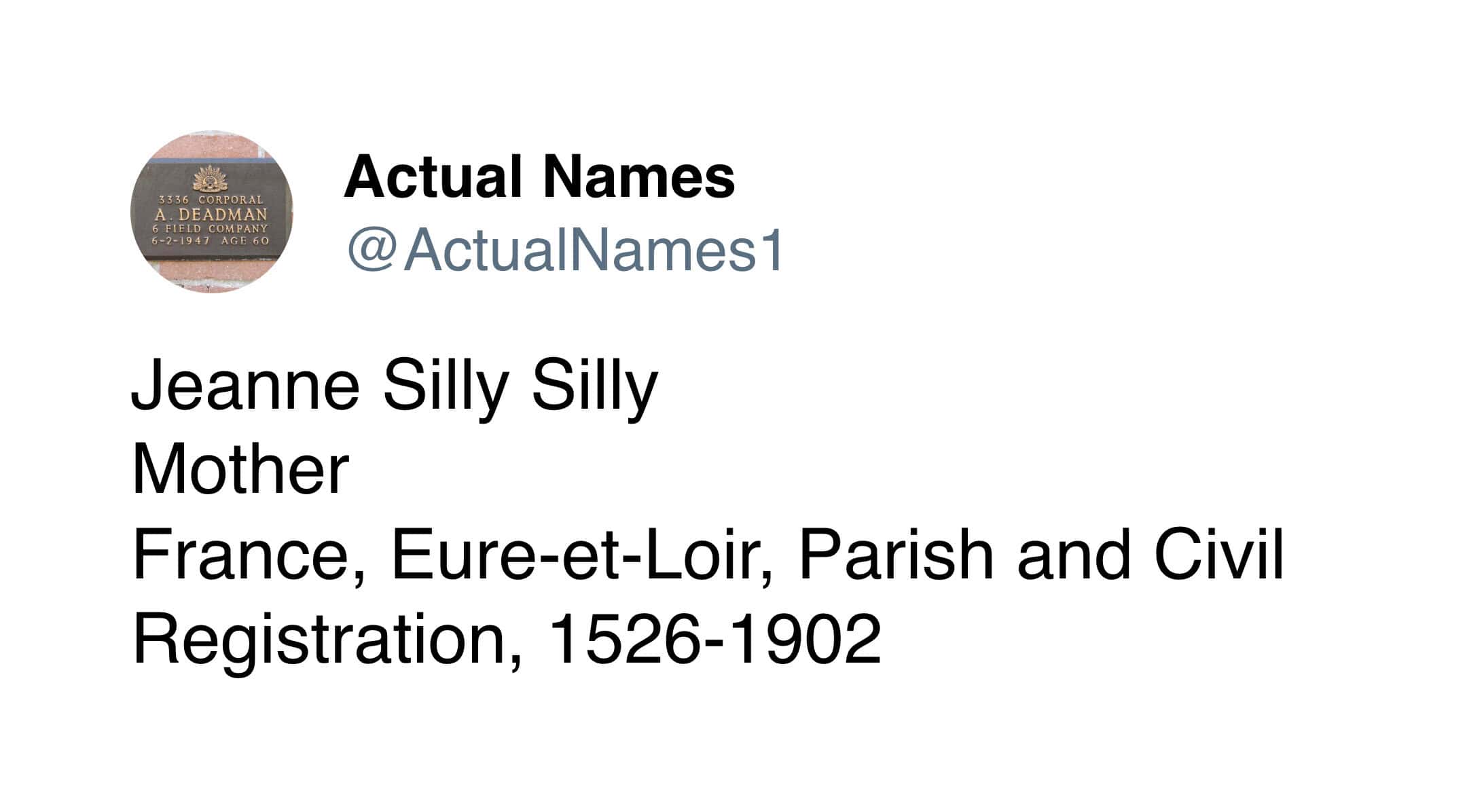
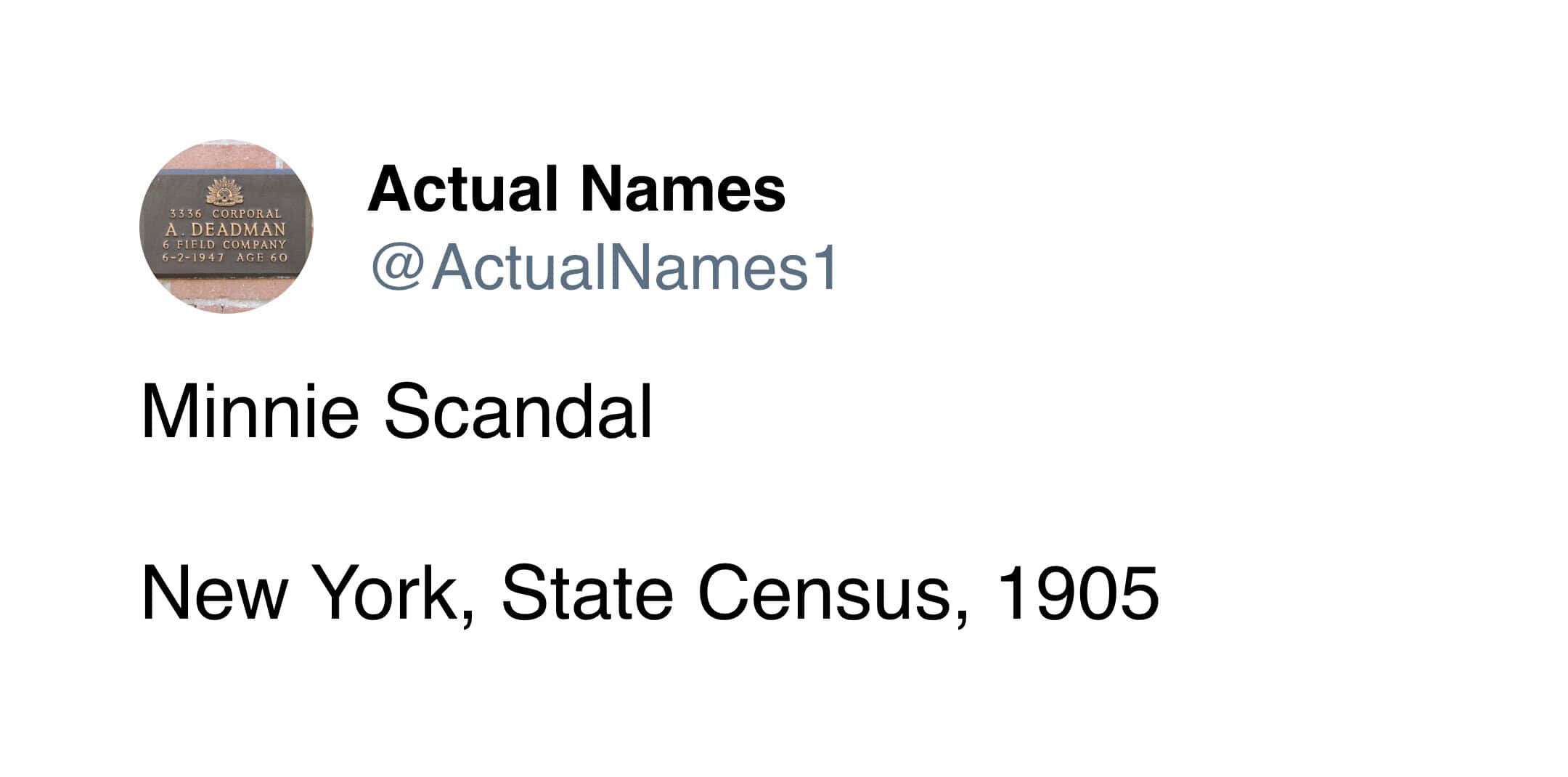
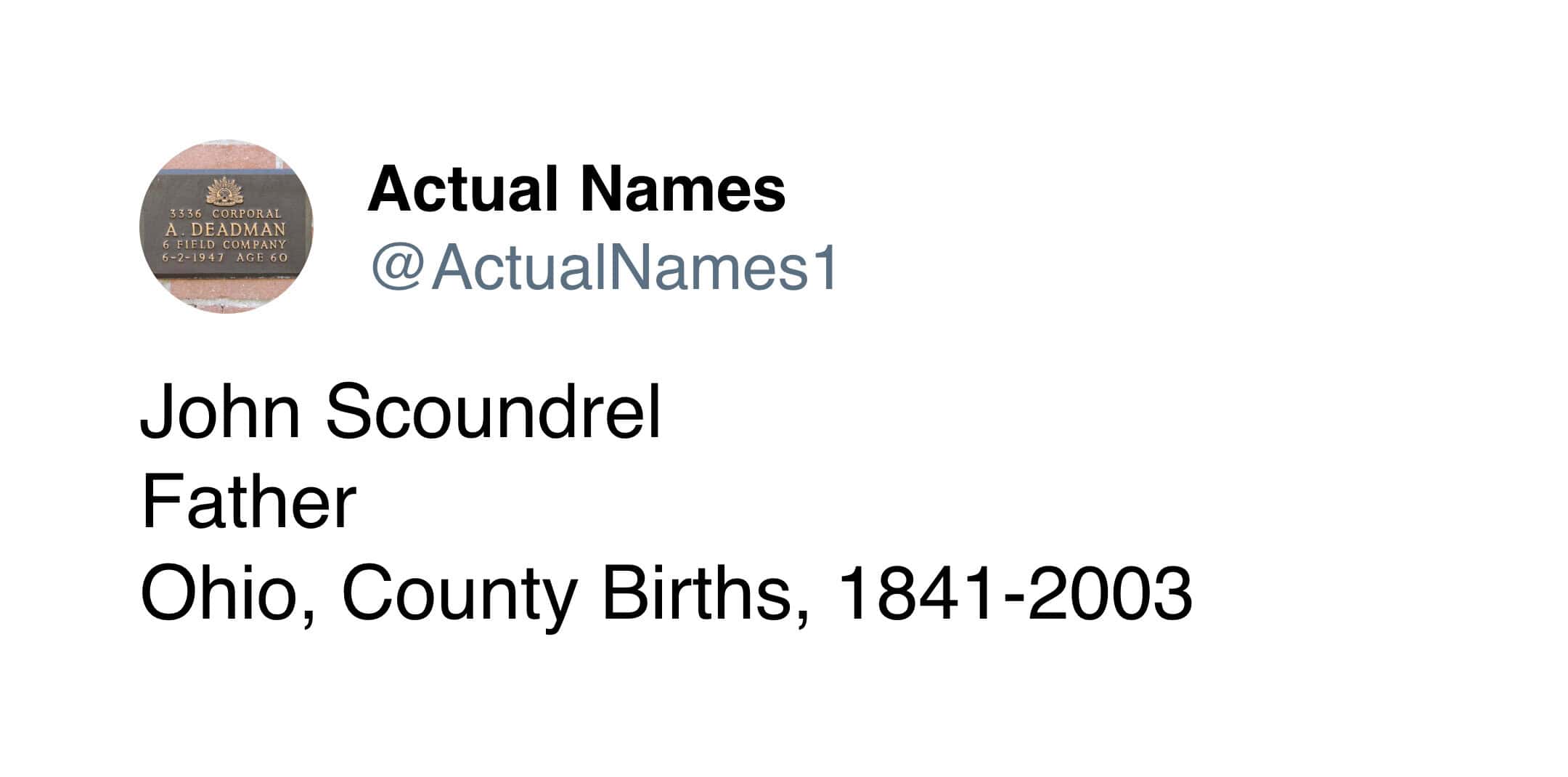
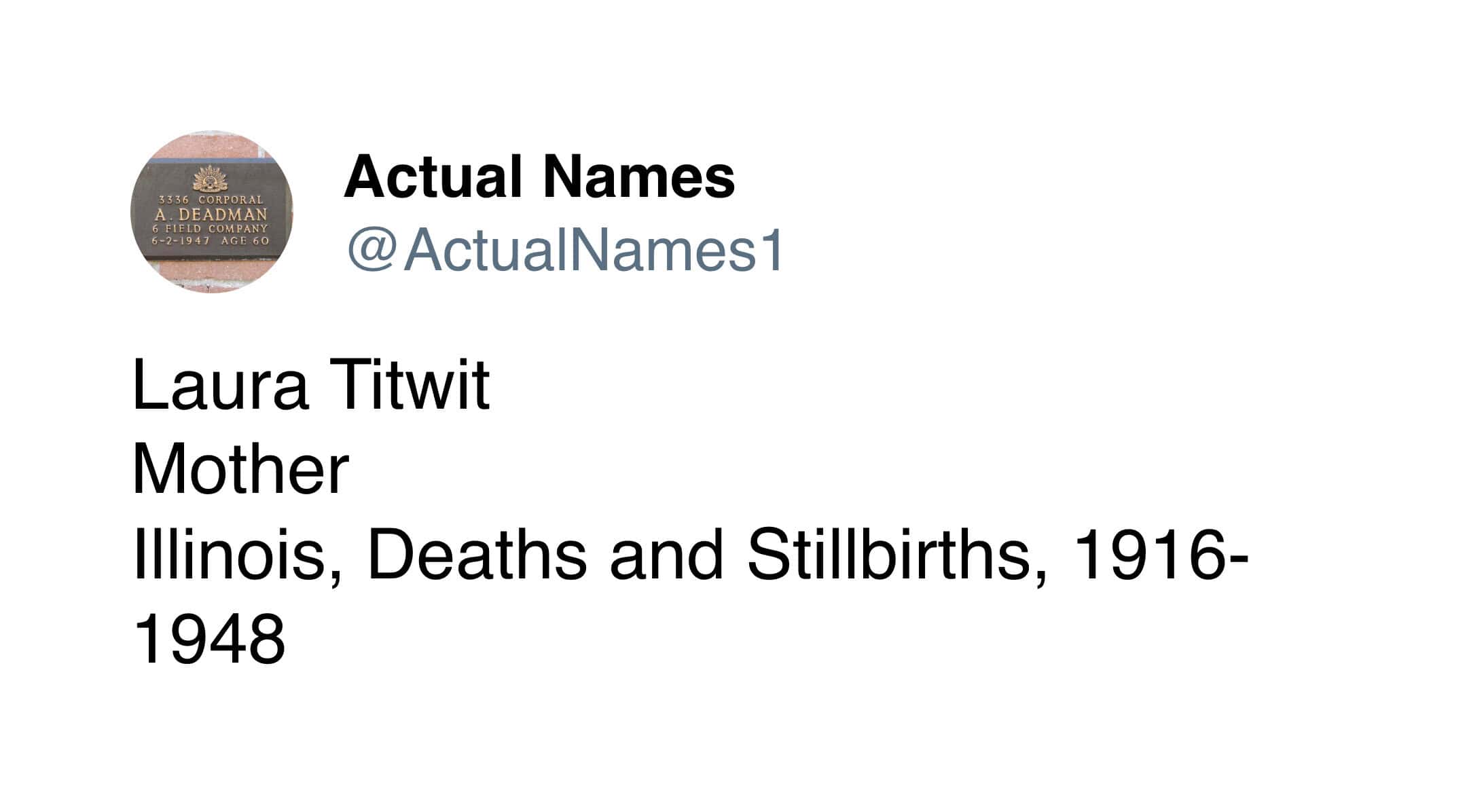
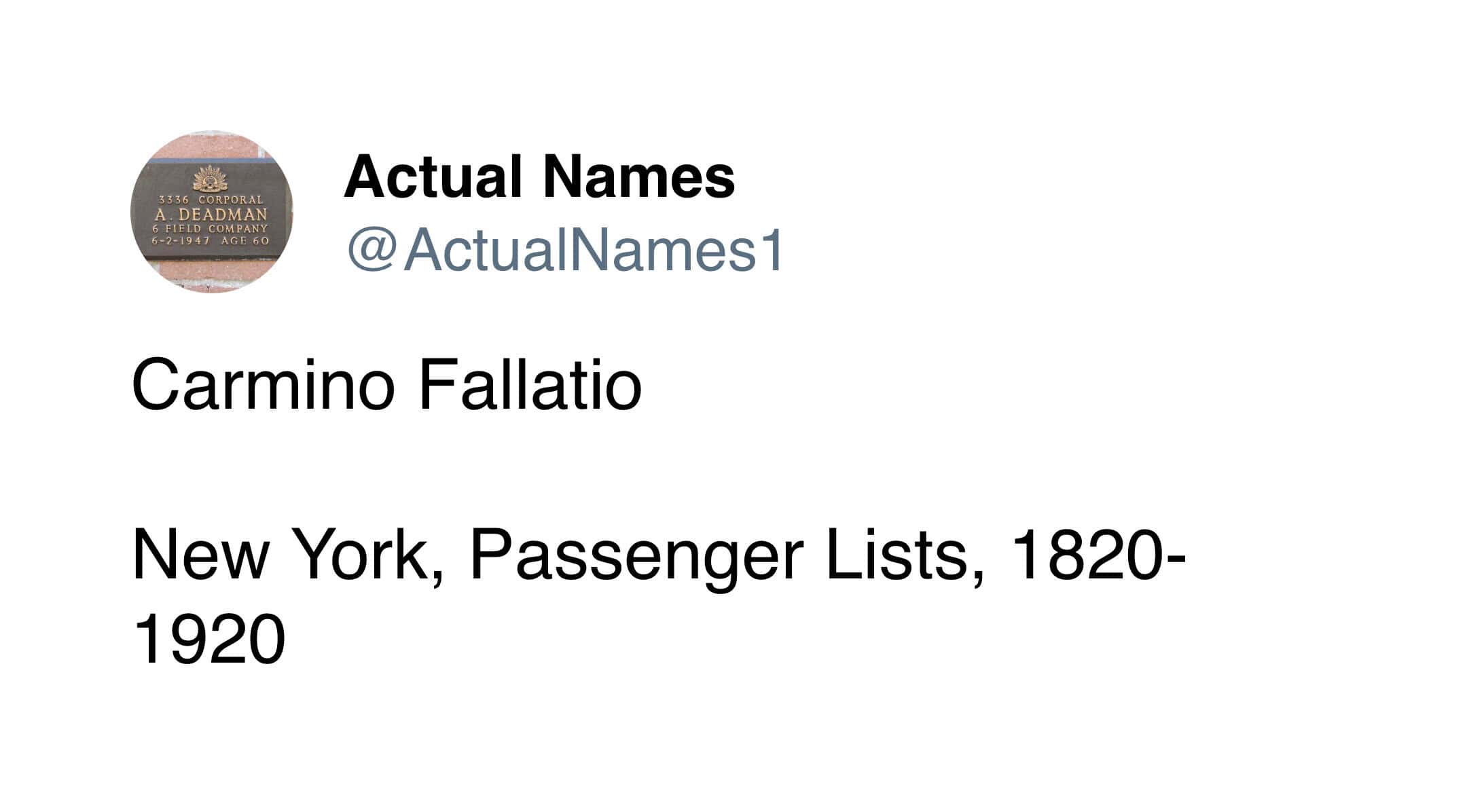
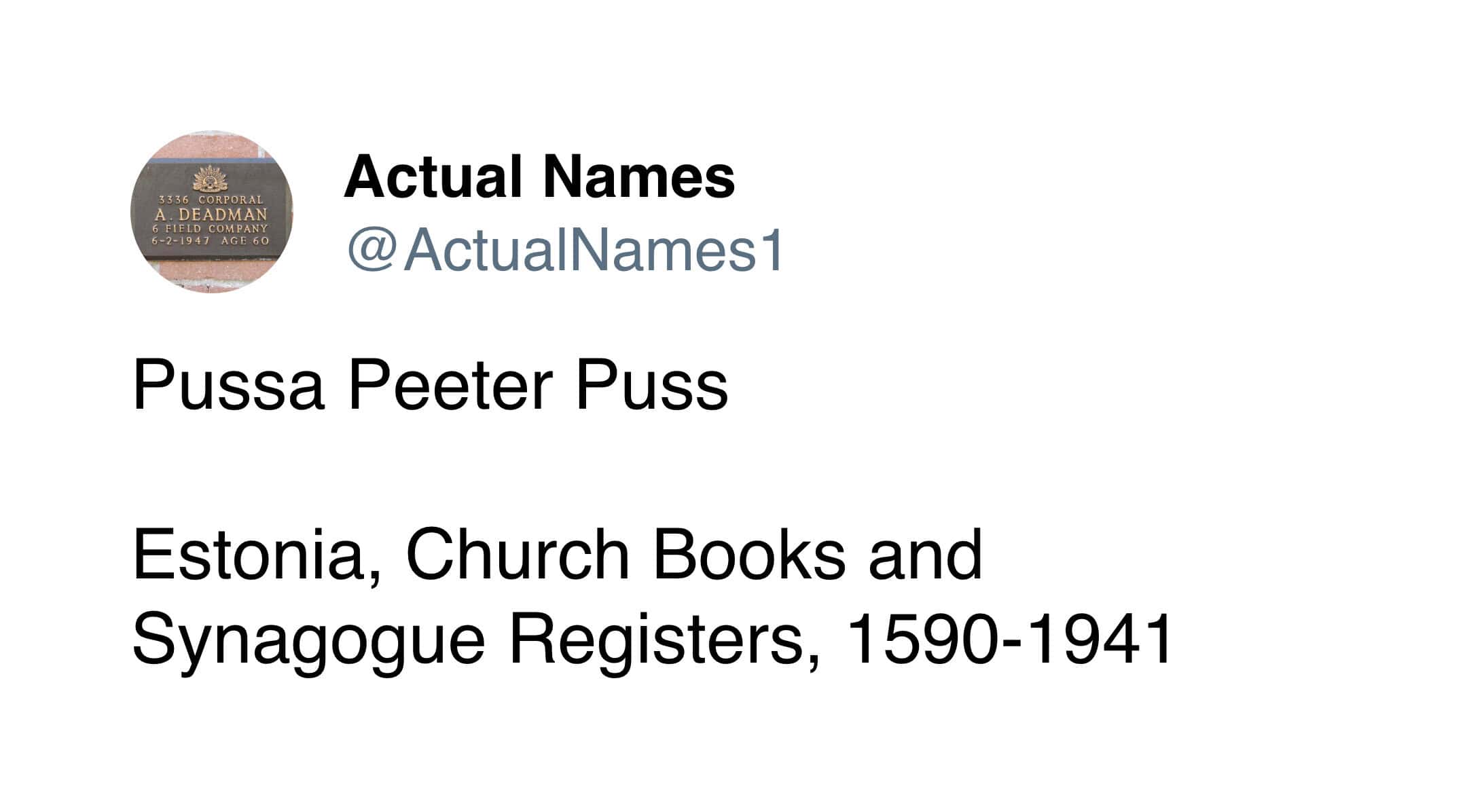
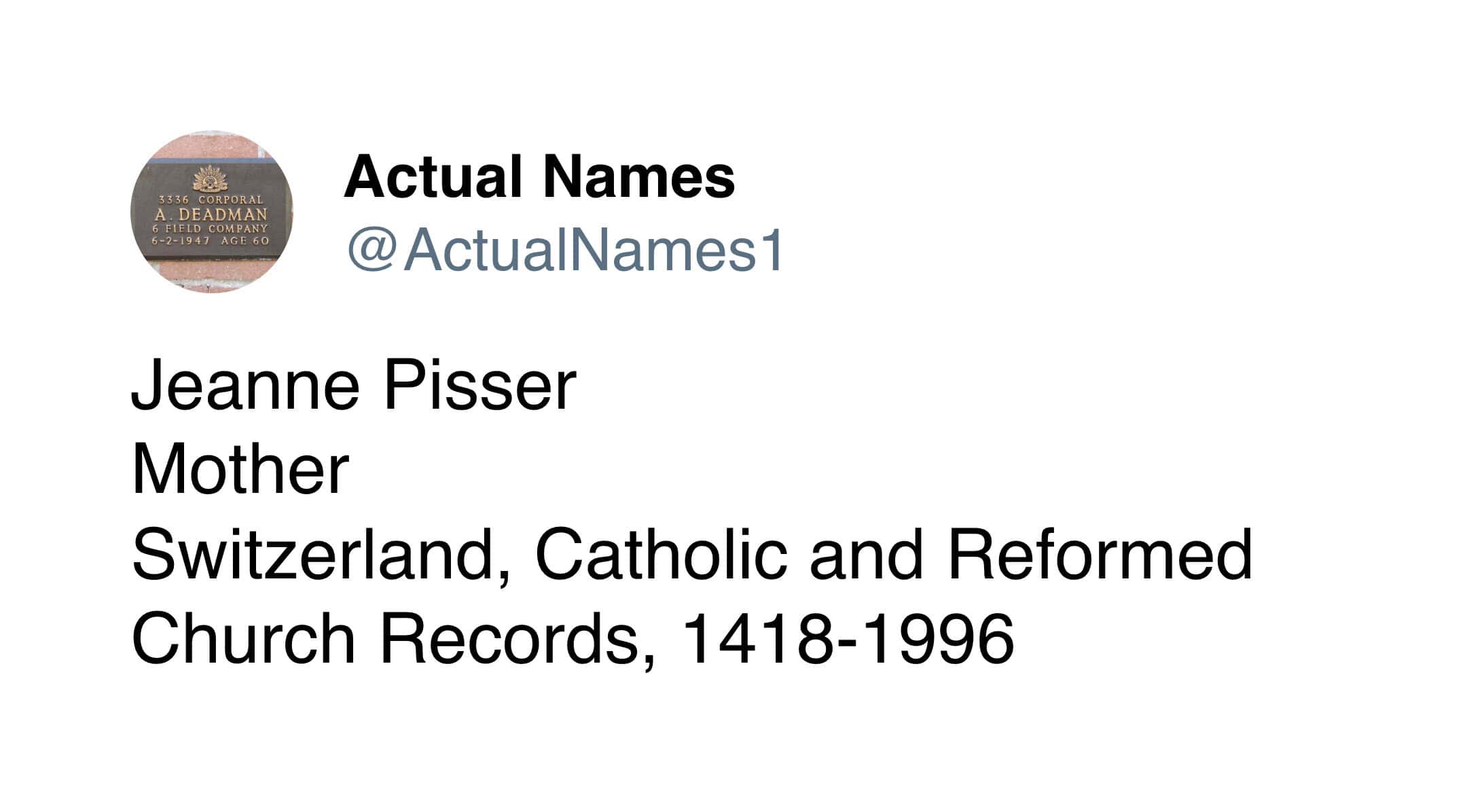
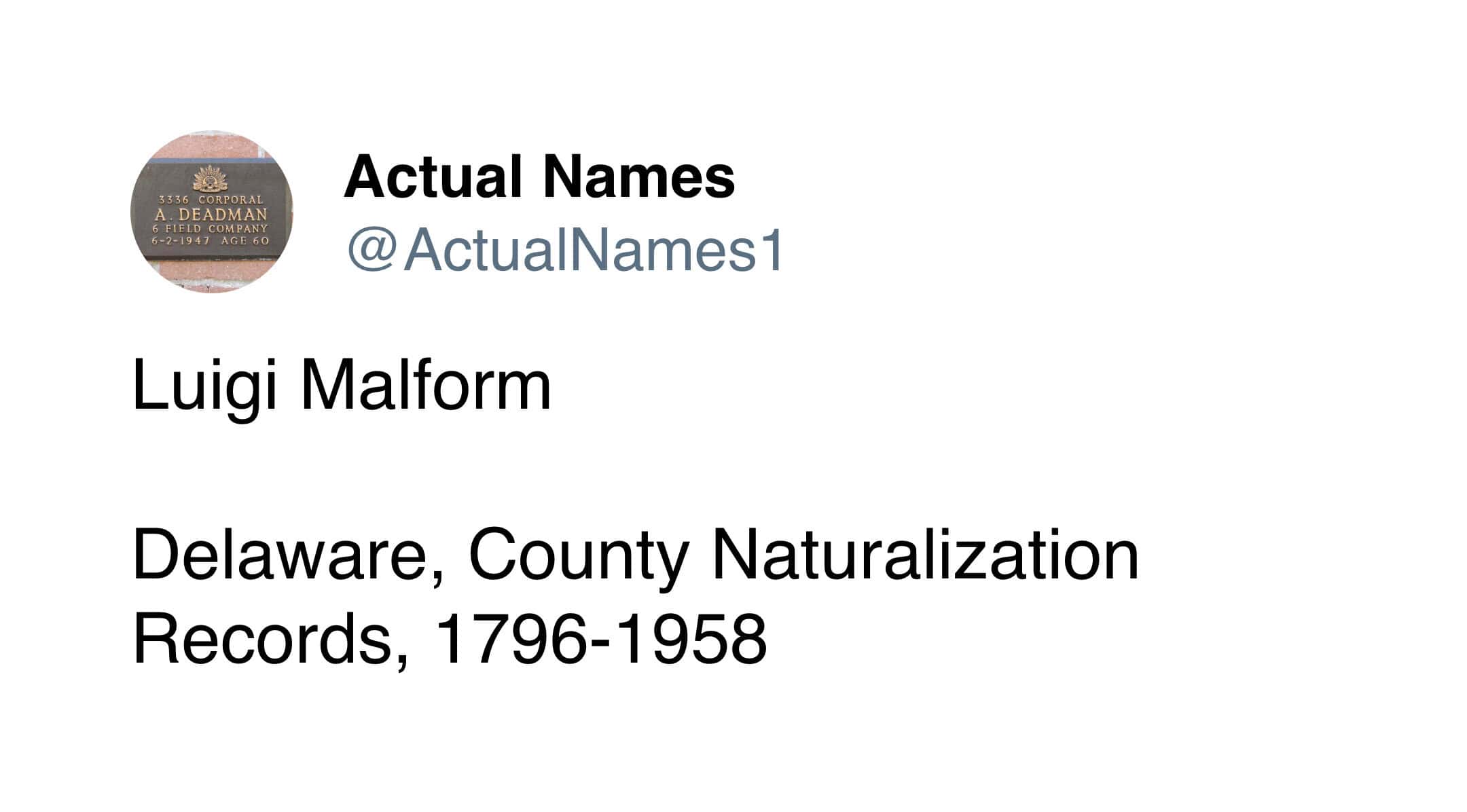
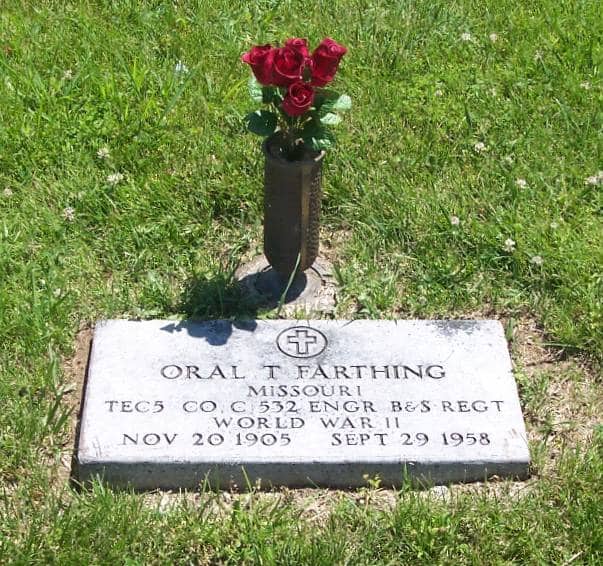
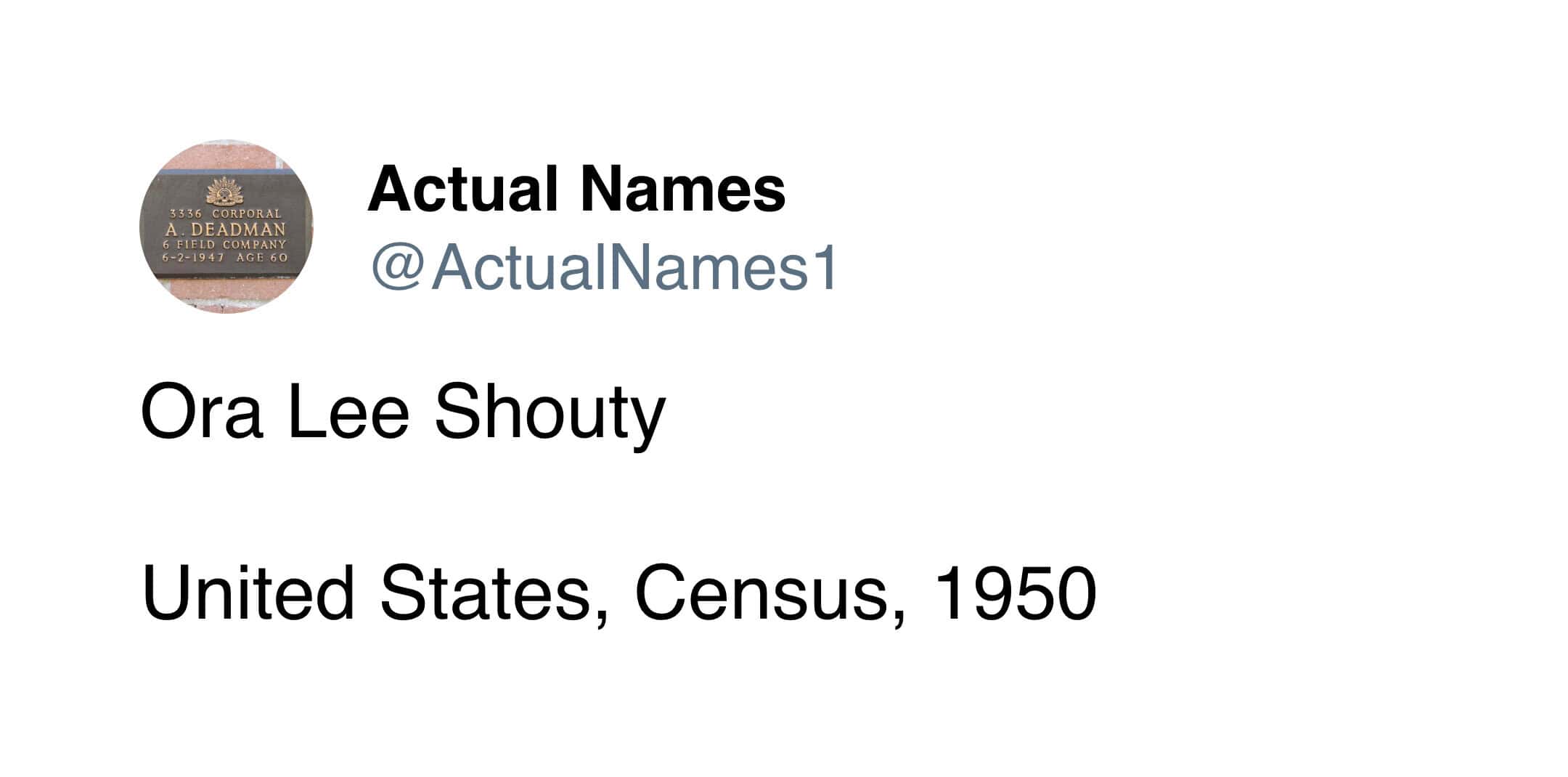
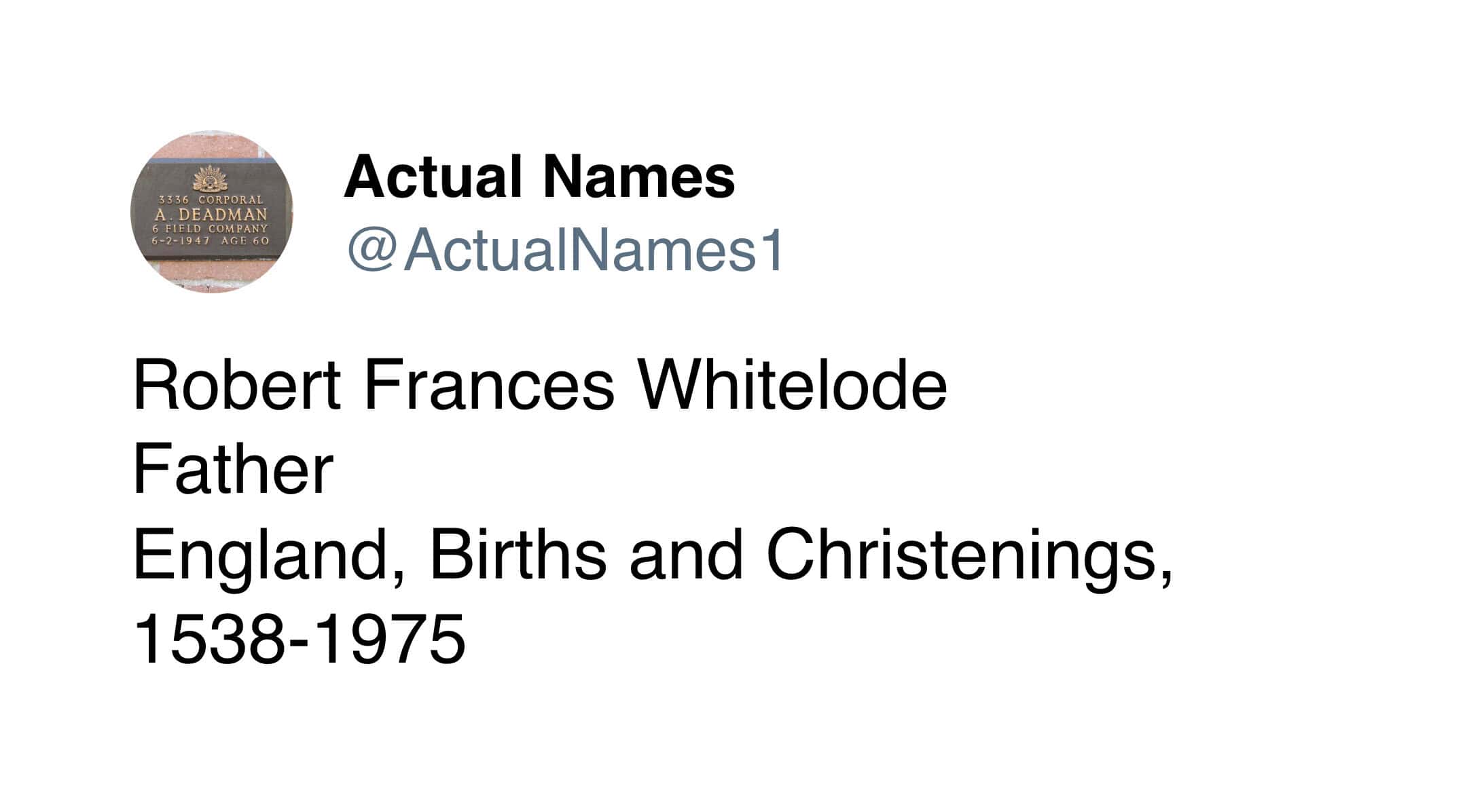
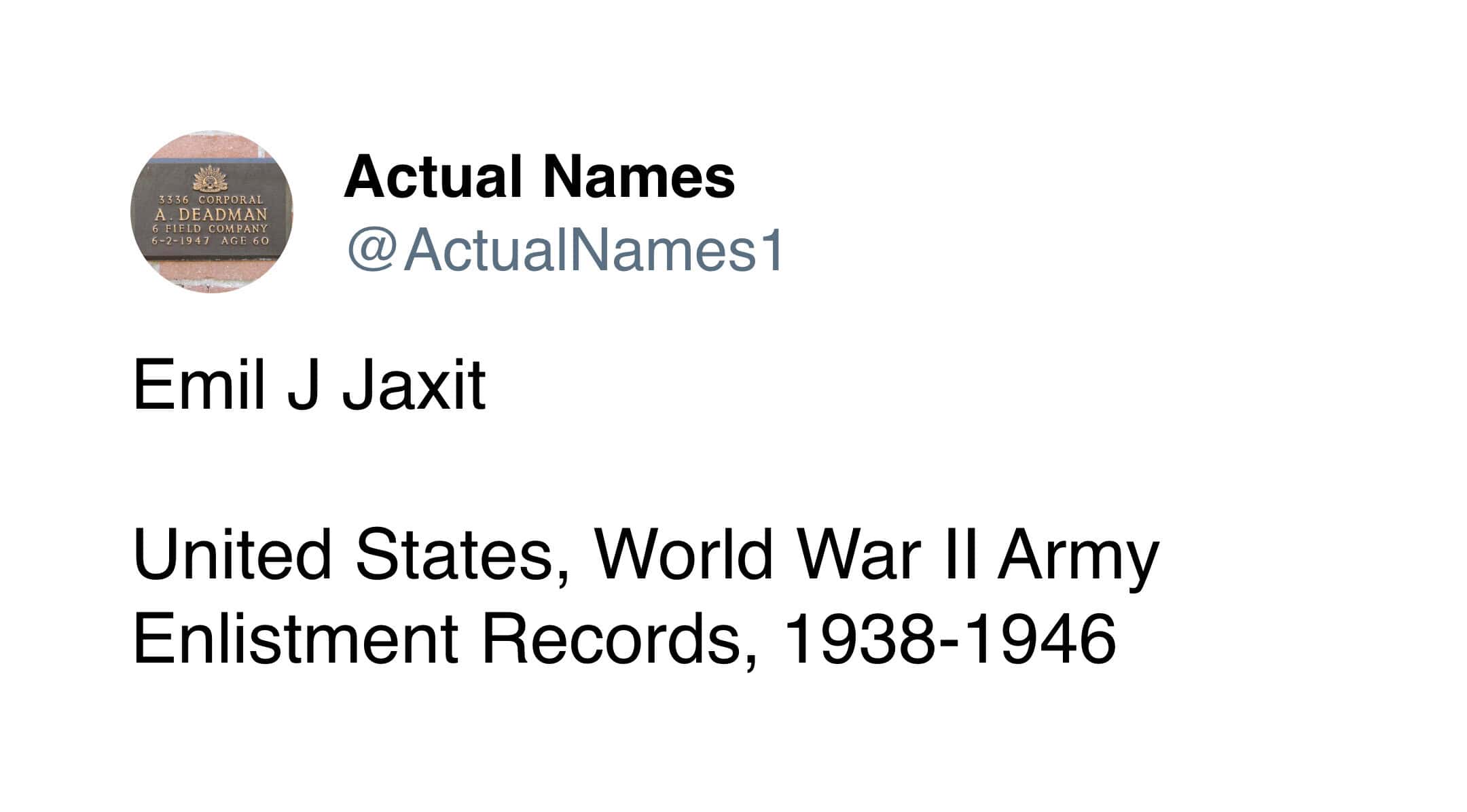
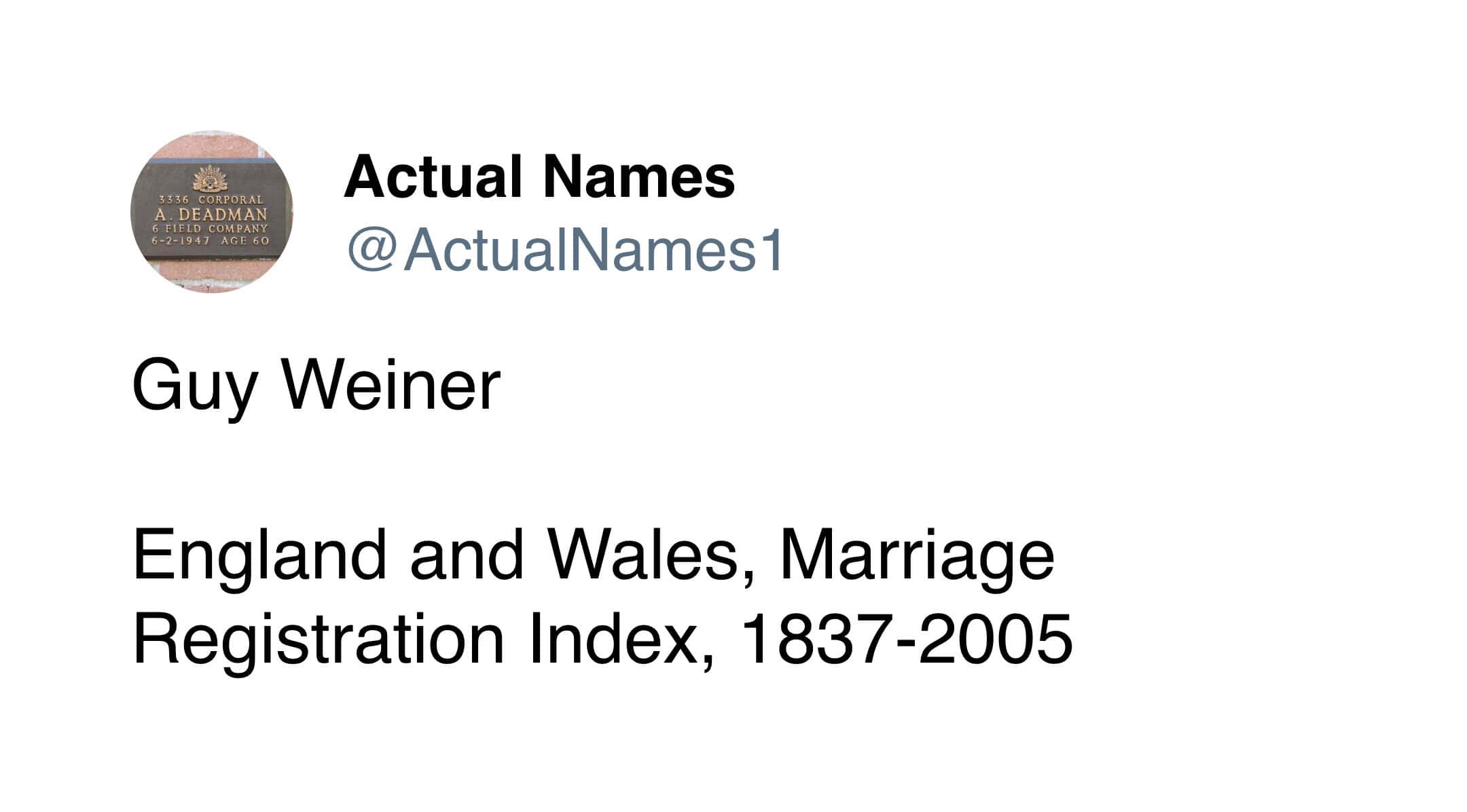
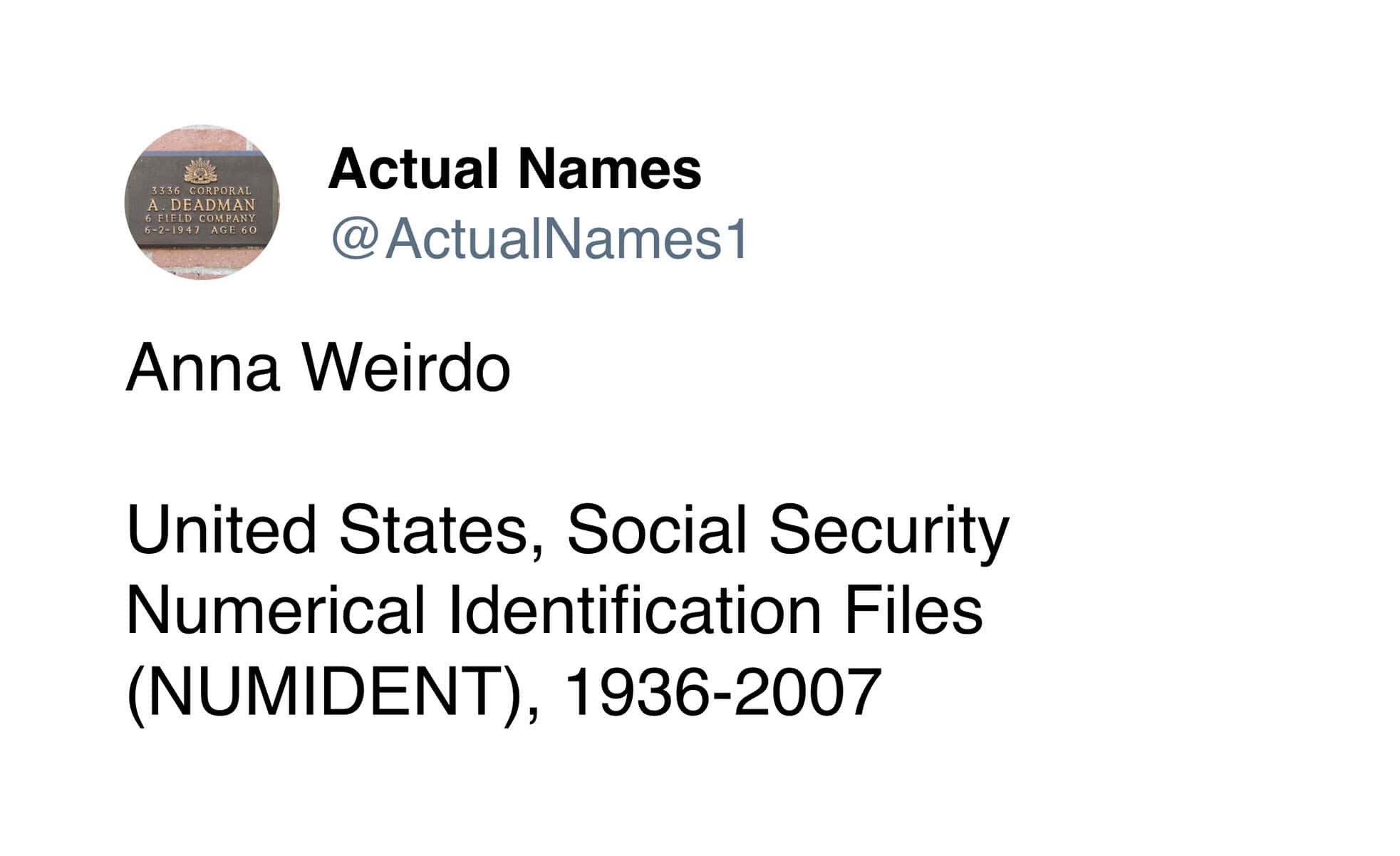

Ridiculous names
Read More
Funny historical names have been a genre since people first started digitizing genealogy databases and the algorithm started surfacing names that the physical archive had been quietly sheltering for centuries. What @ActualNames1 has understood, and what this gallery confirms, is that the names do not need context. They rarely benefit from explanation. The census taker wrote down Fanny Maneater in 1950 and moved on to the next entry, and that restraint is either the most professional thing a government employee has ever done or evidence that by the twentieth century, America had simply stopped being surprised. Either interpretation is valid. The entry stands either way.
Weird baby names in the historical record tend to arrive in two categories: the ones that were clearly accidents of phonetics or meaning-shift across time, and the ones that simply cannot be explained that way. Urethra Daily is the second category. The name requires knowing what a urethra is, which in 1870 was information available to anyone with a medical dictionary, and then deciding that the word had untapped potential as a first name for a daughter. Gennaro Orgasmo in nineteenth-century Naples required similar advance knowledge and similar boldness of vision. These were not innocent coincidences. These were choices, made by real people, about real children, who then had to live with those choices for their entire documented lives and beyond, into the genealogy databases where @ActualNames1 eventually found them.
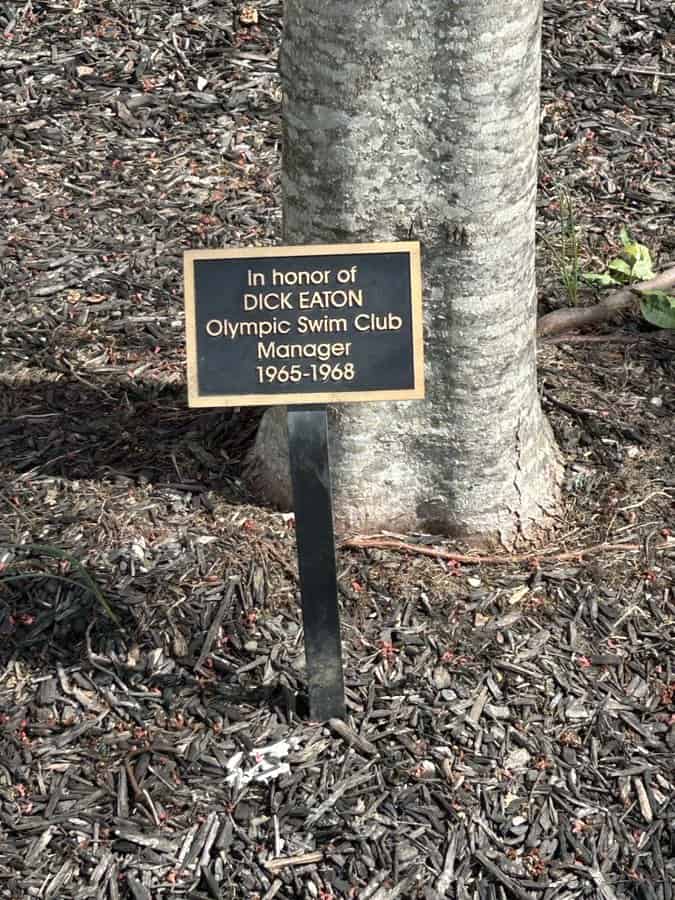
The names that land softest in this gallery are the ones where the person named had a life visible beyond the record. Dick Eaton, Olympic Swim Club Manager 1965 to 1968, received a memorial plaque. Someone ordered it, approved it, installed it, and it is still there. The plaque does not hedge. It does not use a nickname. It simply says the name, the title, the dates, and leaves the reader to sit with it, which is the correct approach when the alternative involves explaining a fully legitimate name to a committee. The swim club got a plaque. The plaque is correct. The tree is lovely.
The most interesting thing about all of these names is what they reveal about the privacy assumption of historical record-keeping, which is that there was none. The census was public. The church archive was public. The Social Security death index is public. Everyone in this gallery agreed, by virtue of existing in a documented time and place, to be searchable by anyone with access to a genealogy database and three hours to fill. B J Queen did not know their name would end up in a gallery captioned by someone on the internet in the twenty-first century. Nobody called Rotie Tooten Mother planned for this. The archive just kept being an archive and @ActualNames1 kept doing the work, and here we all are, reading about Ninja Geronimo from Peru with the full appreciation the name has always deserved.
If this gallery has sent you to a genealogy database to check your own family tree for surprises, funny real names and historical name research are companion categories where the discoveries are consistent and the census takers’ composure continues to be admirable. Weird baby names content belongs right beside it for the modern continuation of a tradition that is, as this gallery proves, older than anyone thought. And for anyone who wants the deeper context behind how names like these survived and circulated, naming history and etymology content is a rich space where the origin of “Fanny” as a given name is documented at length and the explanation is somehow both completely reasonable and not helpful at all.
Read Memes
Get Paid


Laura Bennett has spent eight years immersed in internet culture, specializing in deep dives into meme origins, evolving meme trends, and digital subcultures. As a contributor for several prominent online platforms, including BuzzFeed’s meme division and Know Your Meme, she’s written extensively about viral moments from Crying Jordan to Woman Yelling at a Cat. Laura believes memes aren't just internet jokes—they're modern-day folklore. She brings that passion to Thunder Dungeon by keeping readers connected to what's culturally significant, hilarious, and timelessly viral.