
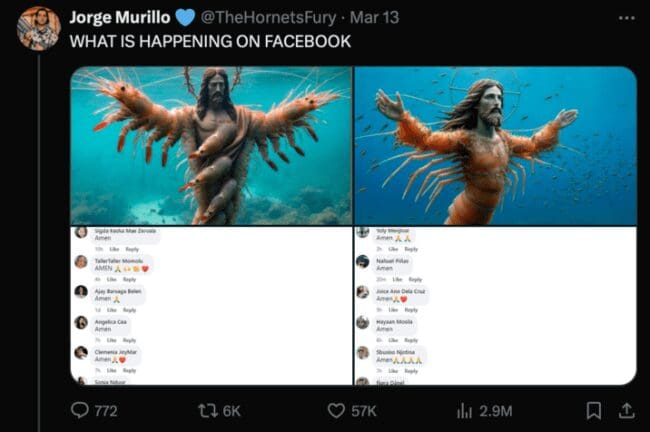
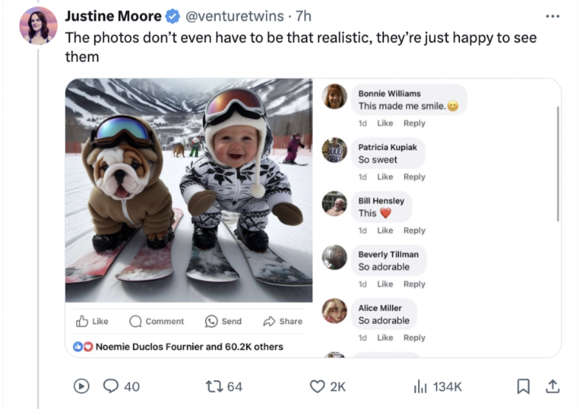
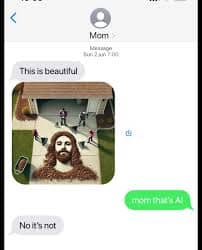
A Facebook post has surfaced featuring a giant crab-bodied Jesus emerging from the sea, captioned as the original poster’s “handmade” creation, and the comments section is full of three thousand variations of “Amen” from people who appear to be genuinely moved by the spiritual significance of Crab Christ. These AI Facebook fails are the documented collapse of an entire platform’s relationship with reality, and Crustacean Christ is somehow not even the strangest entry in the gallery. The cabbage babies are coming. Brace for the hallucinations.
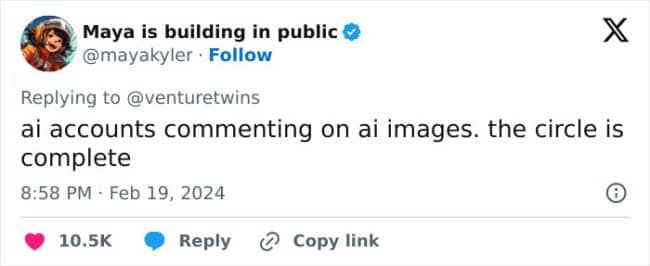
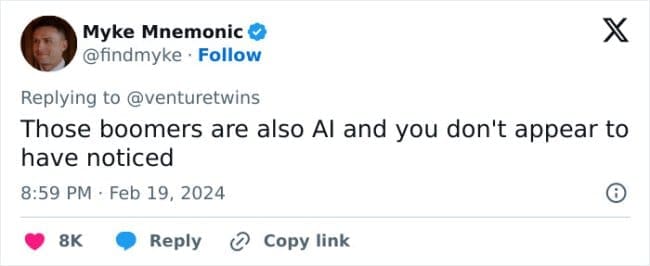
The internet is just three chatbots in a trench coat at this point.
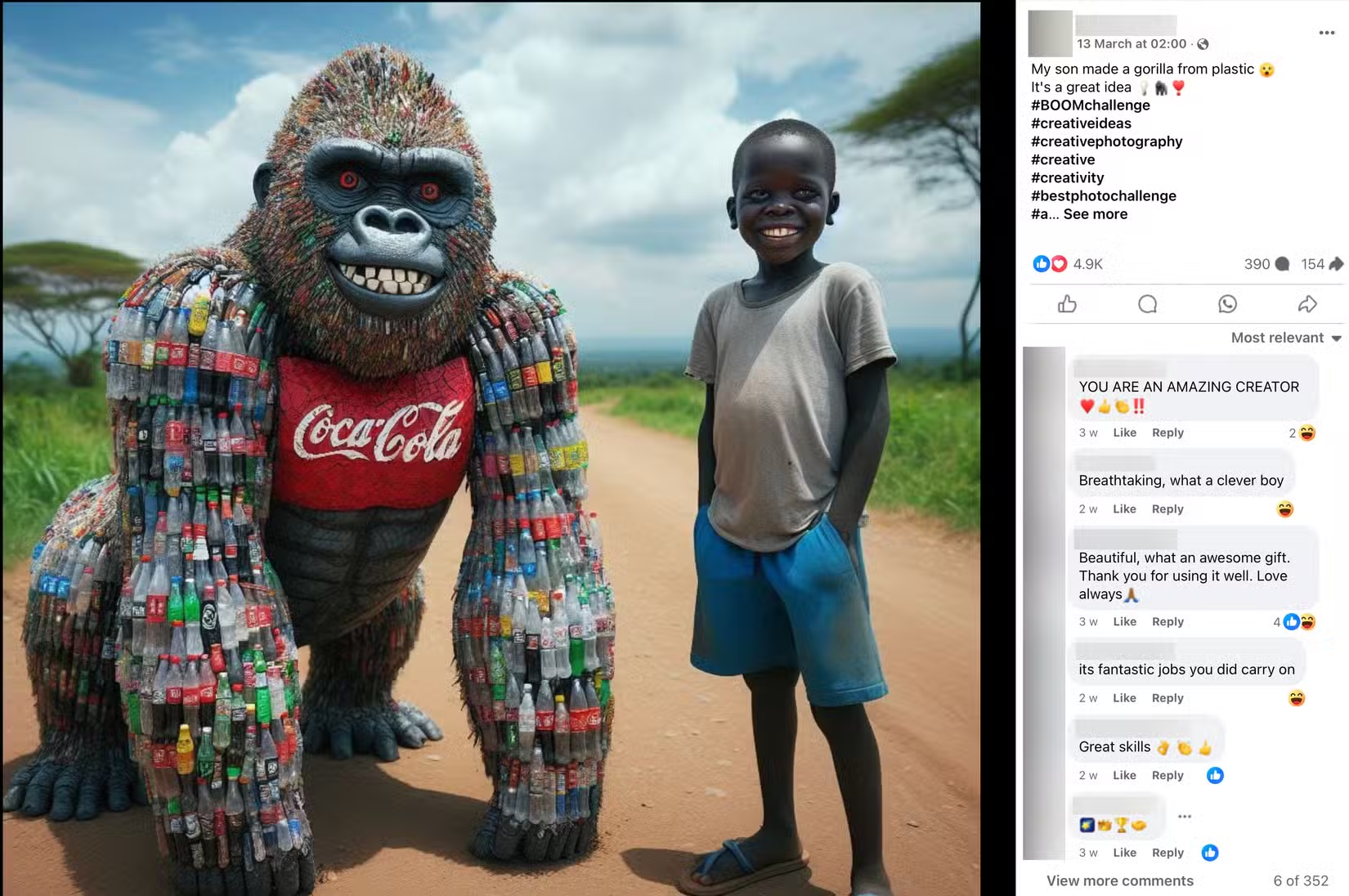
My son made this! He’s also 400 pixels tall and has seventeen fingers.
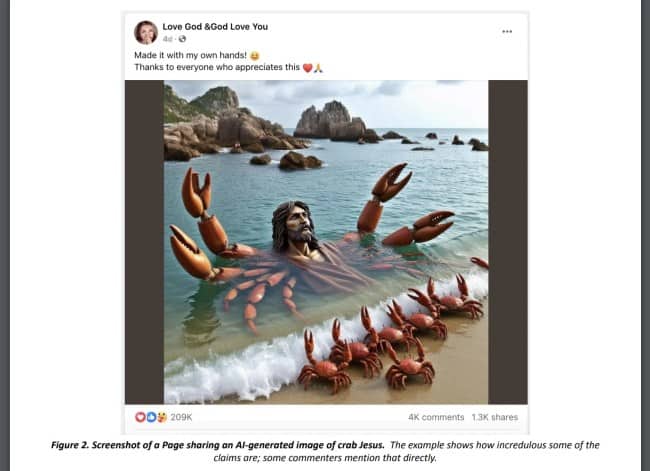
"Made it with my own hands!" …sure you did, Brenda. All twelve of them.
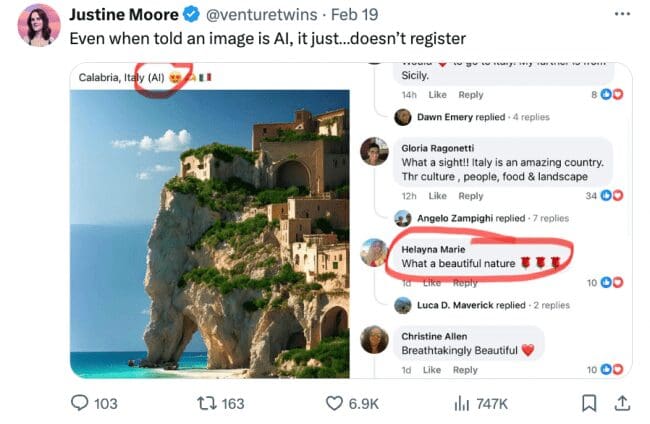
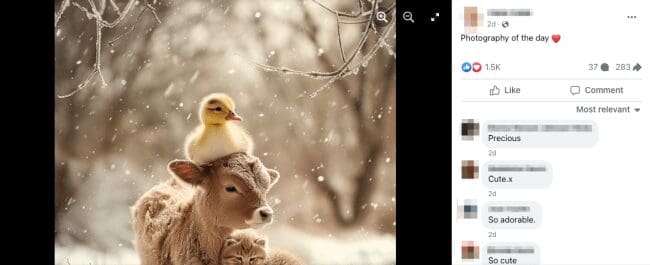
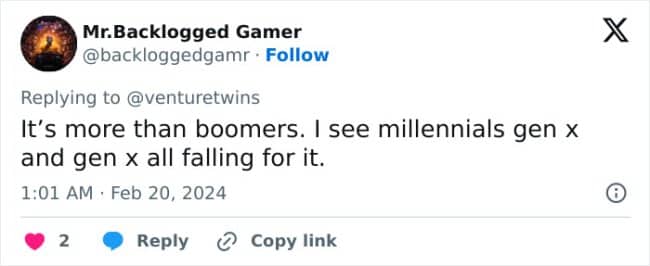

Titanic 2: The Re-Icing




AI Facebook fails
Read More
Shrimp Jesus is the central character of this whole genre and deserves serious analysis. Somebody, somewhere, asked an image generator to produce a religious icon with shrimp incorporated into the body, and the result has been viral on Facebook for nearly two years now, with each new iteration accumulating thousands of “Amen” comments from people who either do not realize the image is AI-generated or do not care. These AI image fails are operating in a unique territory where the technology is obvious to half the audience and completely invisible to the other half, and the gap between those two audiences is where the chaos lives.
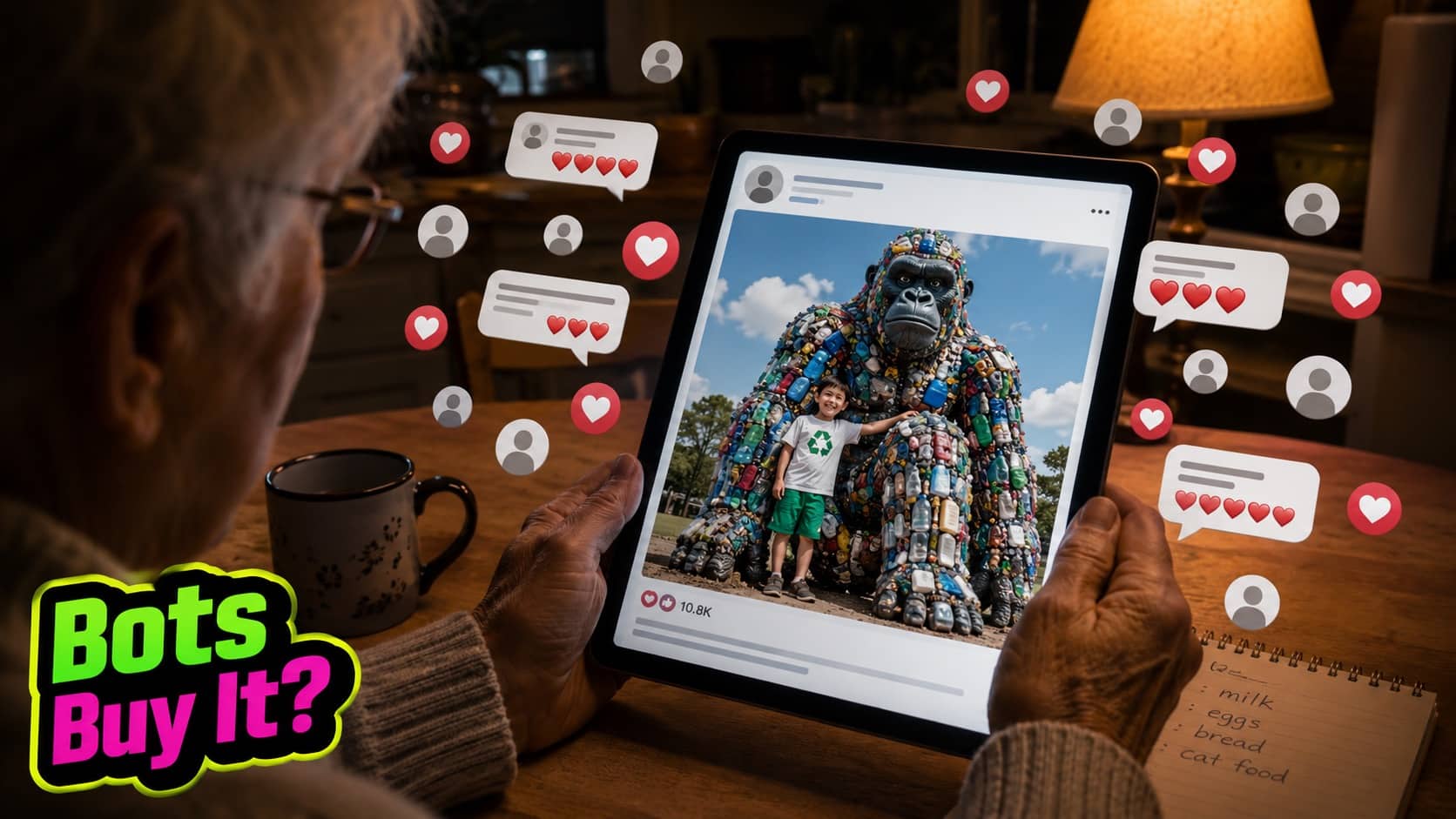
The “my son made this!” pattern is particularly worth noting. An AI image of a small child standing next to a sculpture made of Coca-Cola bottles, shaped like a gorilla, captioned by a Facebook account claiming personal authorship. The dead internet theory in this gallery is supported, repeatedly, by posts that openly attribute extraordinarily complex digital art to children who do not exist, and the comments section celebrates the achievement without questioning the physics. The bot accounts comment. The human accounts comment. Nobody is fact-checking the gorilla.
The fake “hand-carved” ice sculpture of a cruise ship is the one I keep returning to. The shadows are wrong. The proportions are impossible. The “artist” supposedly responsible for it does not have a visible workshop, a chisel, or, frankly, a verifiable existence. These AI-generated images are not even trying to pass as photographs anymore. They’re operating in a hyperreal zone where the obvious tells of generative art, the slightly-too-smooth surfaces, the impossible lighting, the over-detailed backgrounds, have stopped being disqualifying. They have become, weirdly, the new aesthetic.
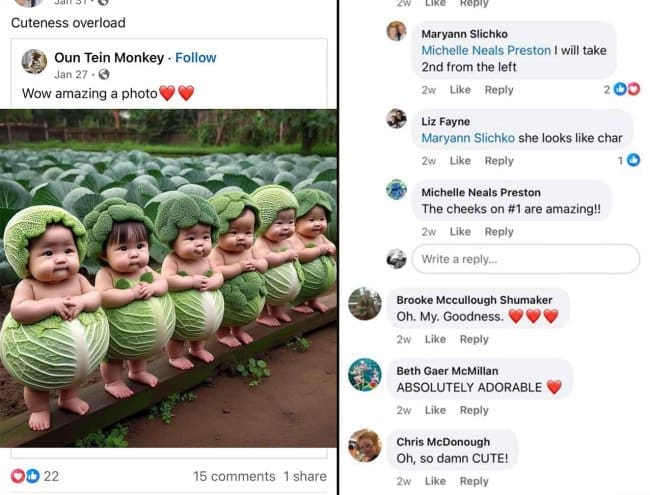
And the cabbage babies. Whole babies, dressed as cabbages, sitting in a field, with adult Facebook users in the comments asking how much one would cost to purchase. That sentence has now happened in reality, on a real platform, multiple times. The AI Facebook hoaxes operating at this level have moved past parody and into a kind of accidental performance art that we will be analyzing for decades.
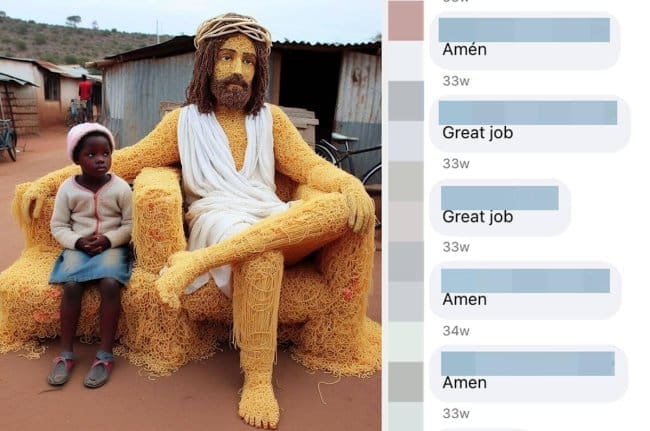
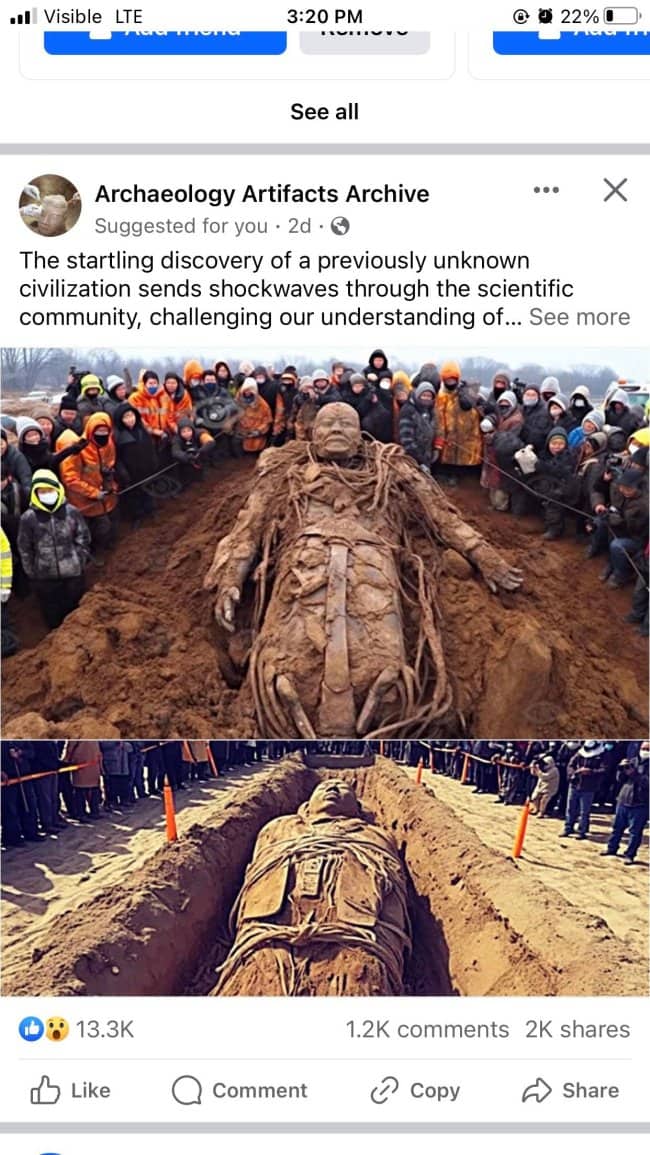
What this whole gallery is really capturing, beneath the easy laughs at the rendered animals, is a genuine inflection point in how the internet operates. The Dead Internet Theory used to be a fringe online idea, the suggestion that most of the content and engagement on major platforms was no longer being produced by humans. That theory has, over the past two years, quietly graduated from fringe to documented reality, at least on Facebook. The bots post. The bots comment. The humans who do show up either don’t realize what they’re engaging with or have made peace with it. The whole system functions on collective cognitive dissonance.
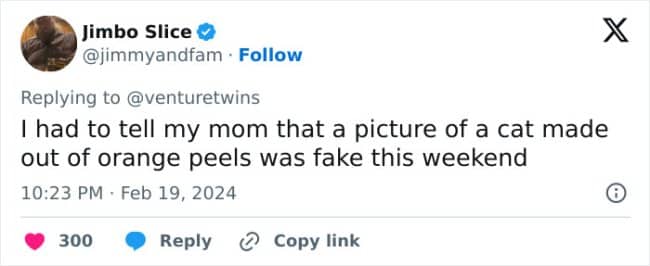
There’s a temptation to be condescending about the people in the comments, the “Amens” and the “my son made this” admirers and the cabbage-baby shoppers. I’d push back a little on that. Most of the people getting fooled by these posts are not stupid. They’re just operating in a media environment where the distinction between real and AI-generated has eroded faster than most users could keep up with, and the platforms have done essentially nothing to help. Facebook has not labeled the content. The accounts posting it have not disclosed anything. The audience has been left to figure it out themselves, and a significant portion of the audience, for reasons of age, attention, or simple goodwill, has not figured it out.
The other thing this gallery does is gesture toward a future that’s coming whether we like it or not. The technology is going to keep improving. The hallucinations are going to keep getting better. The cabbage babies are going to look more convincing. At some point in the very near future, the visual cues we’ve been using to spot AI content are going to disappear, and we’re going to have to find new ways to verify what we’re looking at. The Shrimp Jesus era is funny now. The Shrimp Jesus era is also a preview.
If the dystopian undertones were your kind of fun, broader tech criticism content lives in this exact lane, AI ethics compilations are doing serious work on this same subject, and general algorithm-discourse threads are where the wider conversation keeps unfolding. Pray for our timelines.
Read Memes
Get Paid


Priya Coleman is a viral content specialist and meme analyst with over six years in digital publishing. Her past roles include viral content editor for PopSugar's humor vertical and meme correspondent for HuffPost’s comedy section. Priya specializes in spotting trending meme moments just before they peak—like the chaotic delight of the Ever Given’s Suez Canal mishap or the existential comedy of This is Fine. She brings her sharp wit and instinctive knack for viral content to Thunder Dungeon, always keeping the community a step ahead of the latest meme craze.