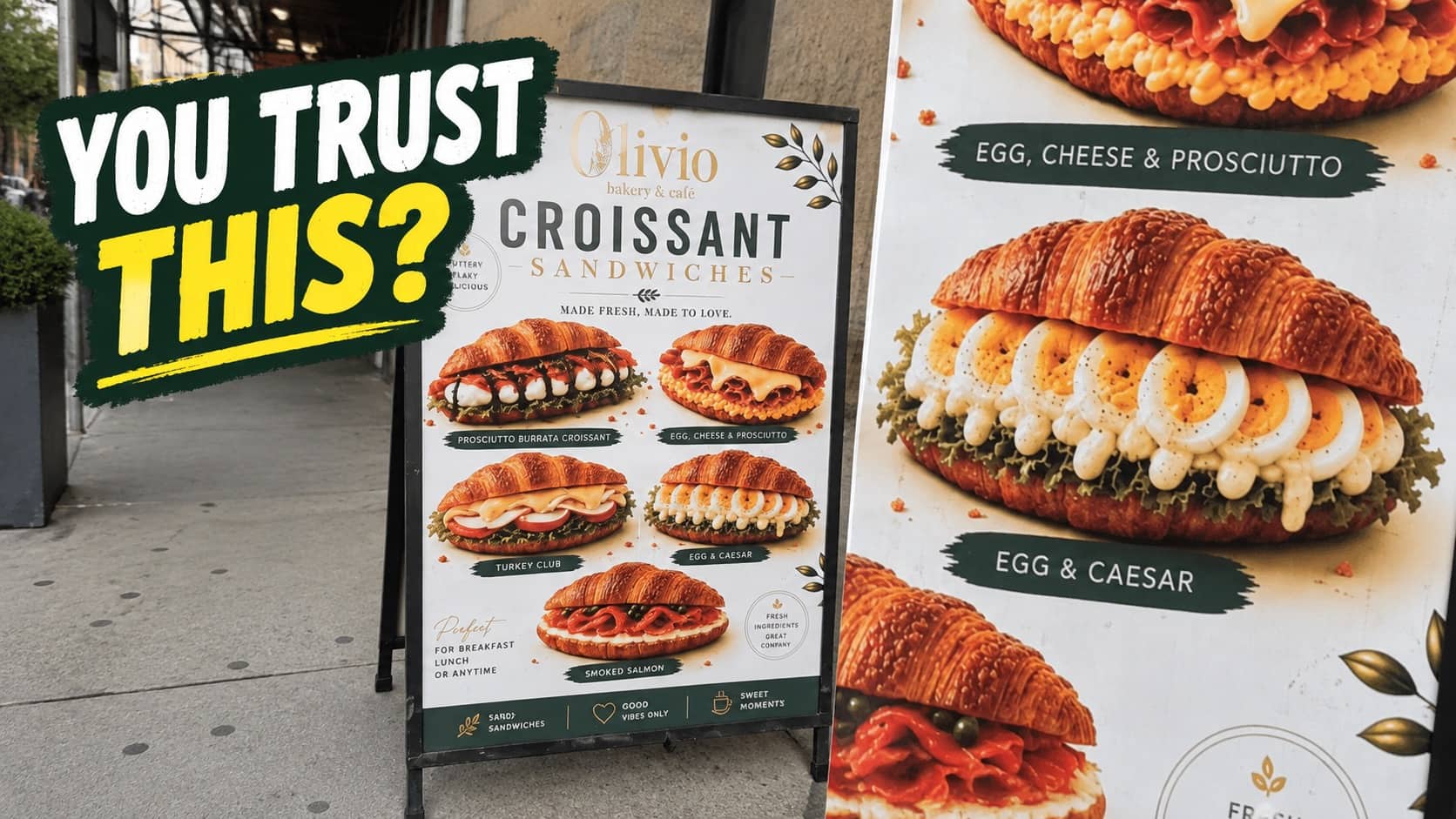

There’s a specific feeling I get walking past certain menus now. Everything looks like food. Nothing looks like food. My brain says “sandwich” and then, half a second later, says “no.” These restaurants using AI have generated their promotional images to save on photography, and the savings have been passed directly to my nervous system. The bread has too many holes. The egg has teeth. I’d like to file a report.
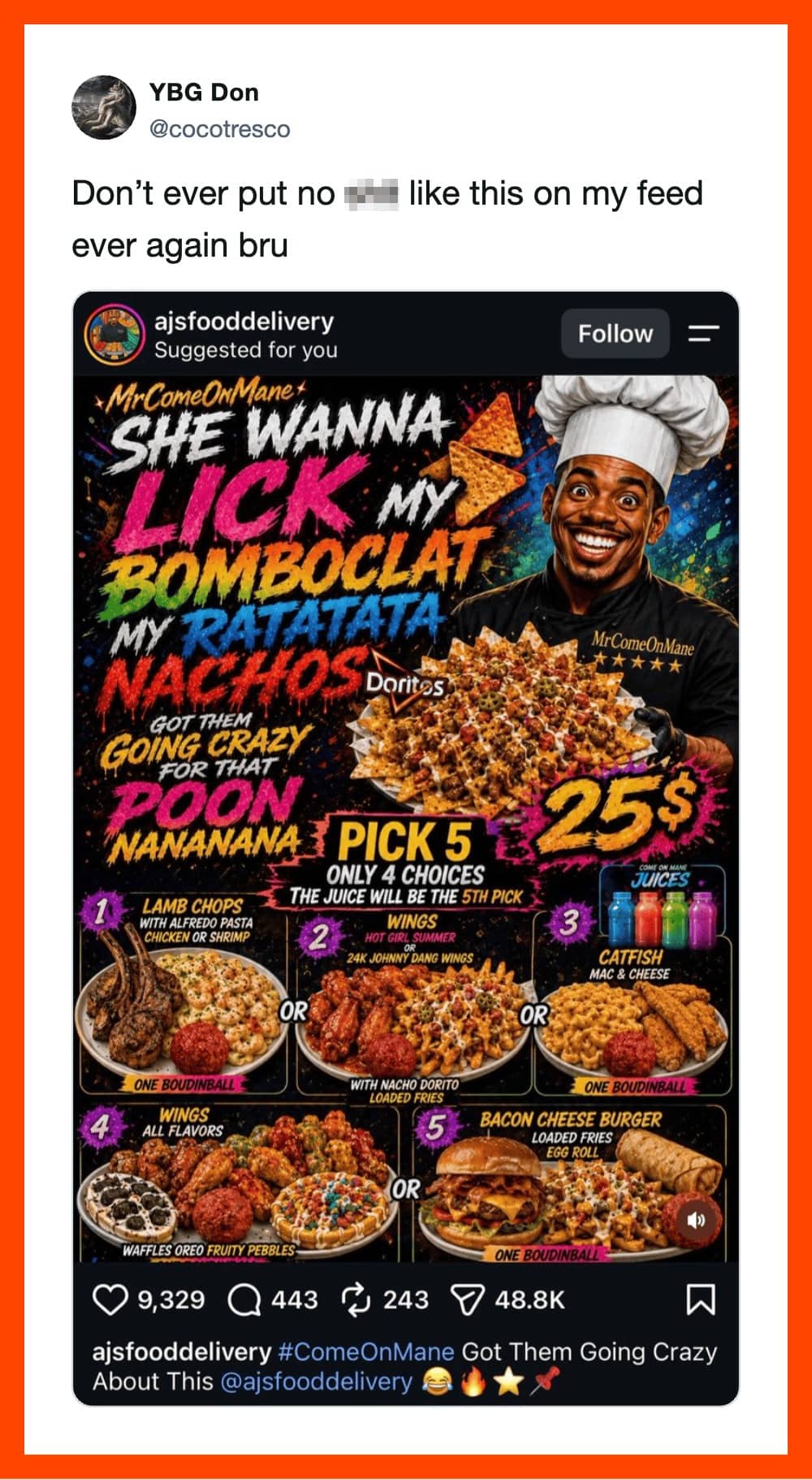
Graphics design is my passion, but AI-generated promo posters are my nightmare.
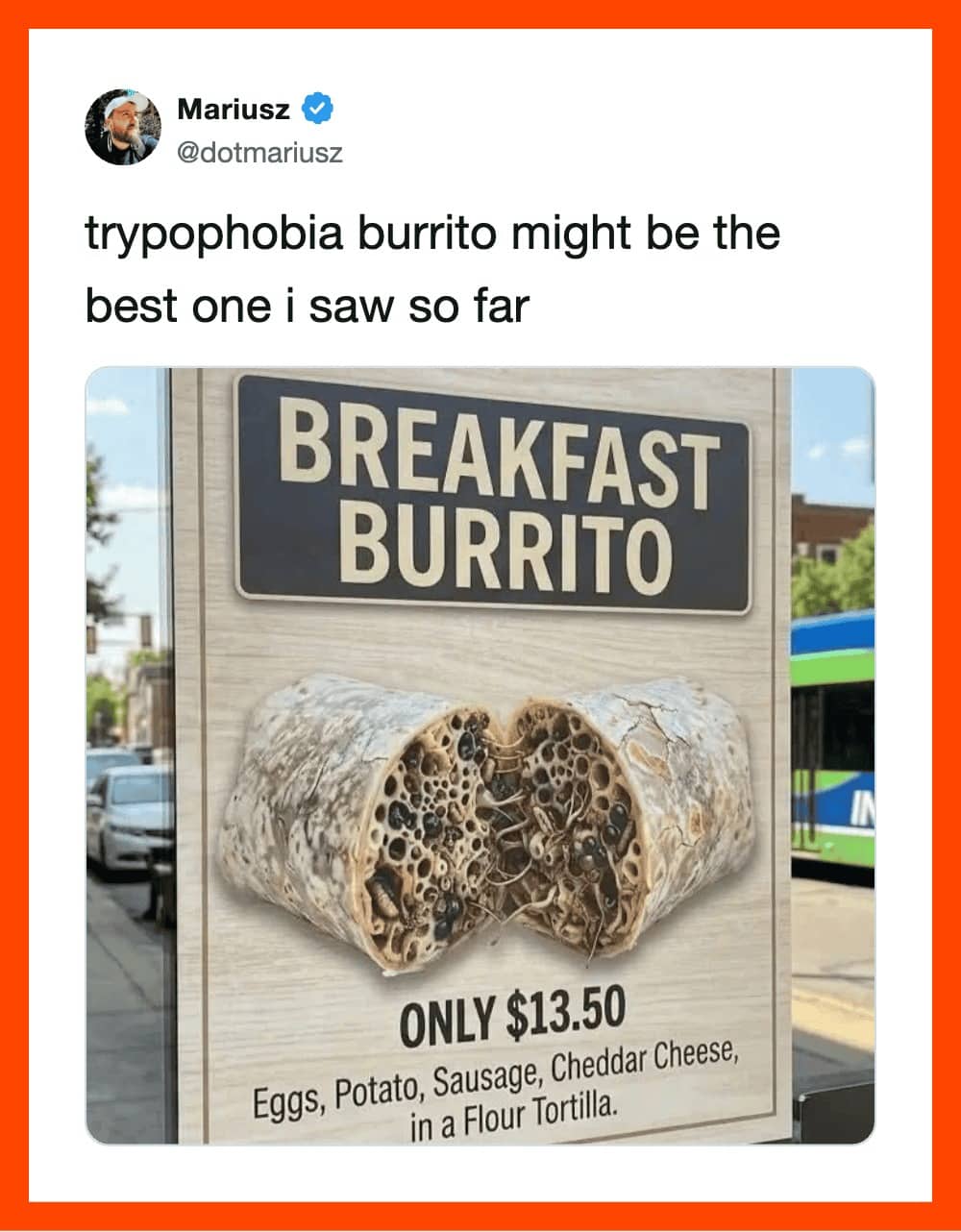
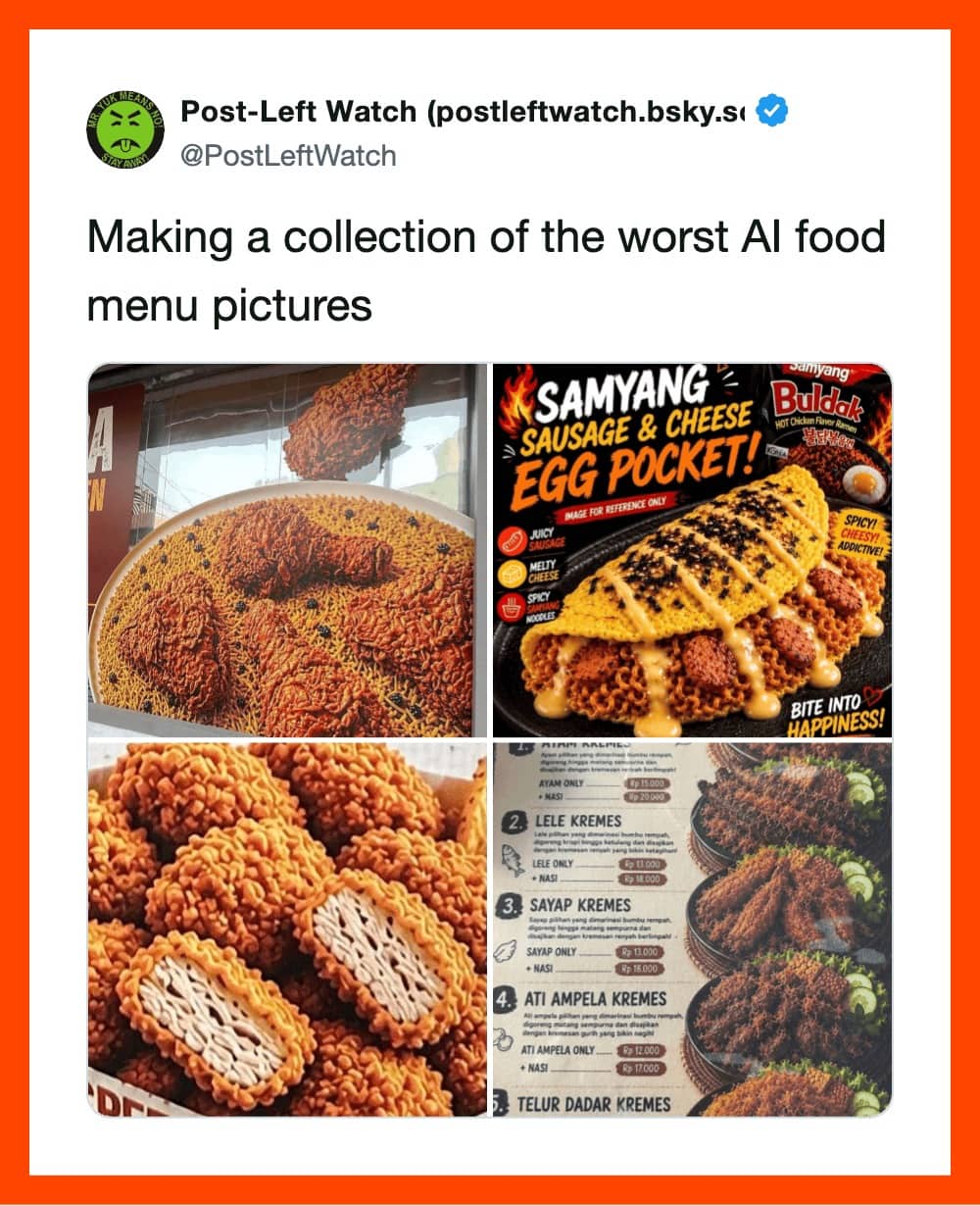
Trypophobia sufferers, look away immediately.
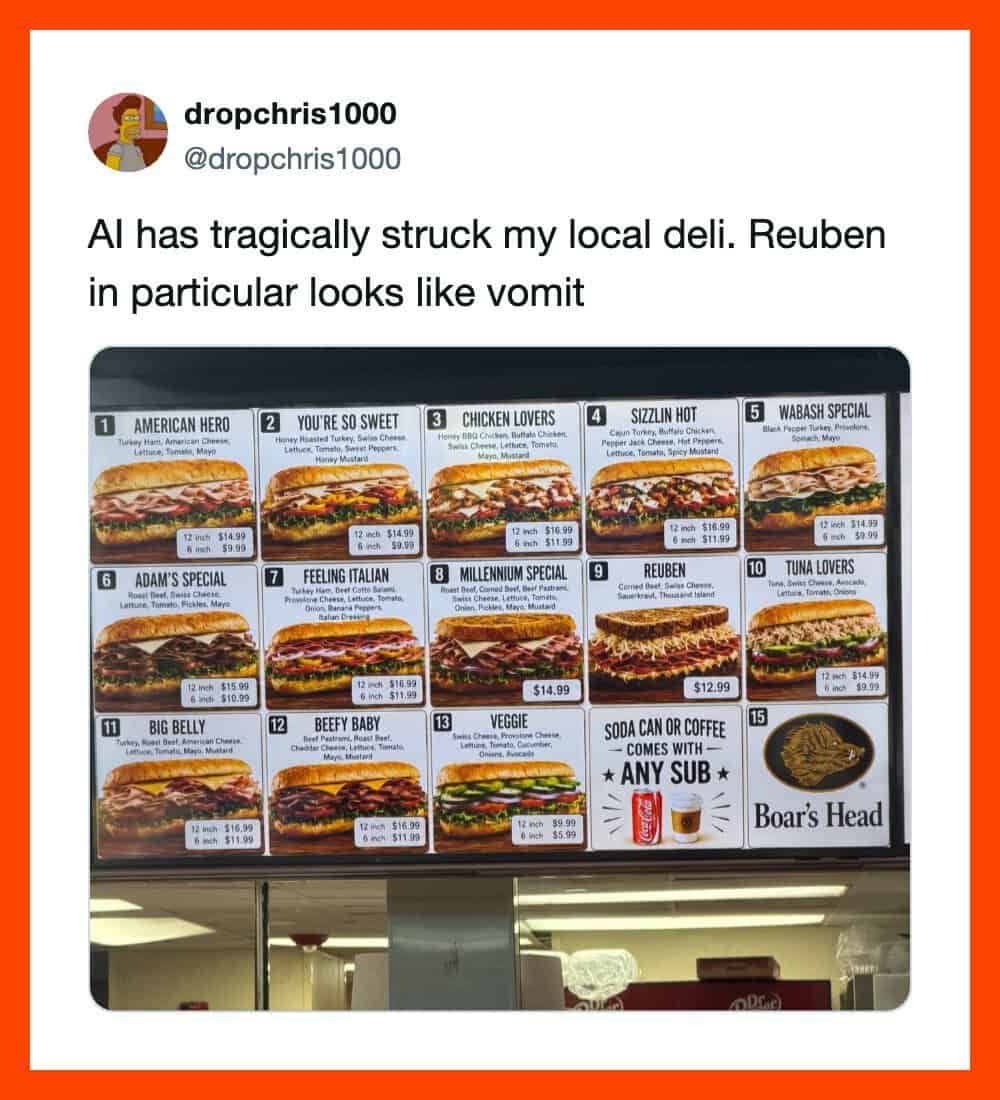
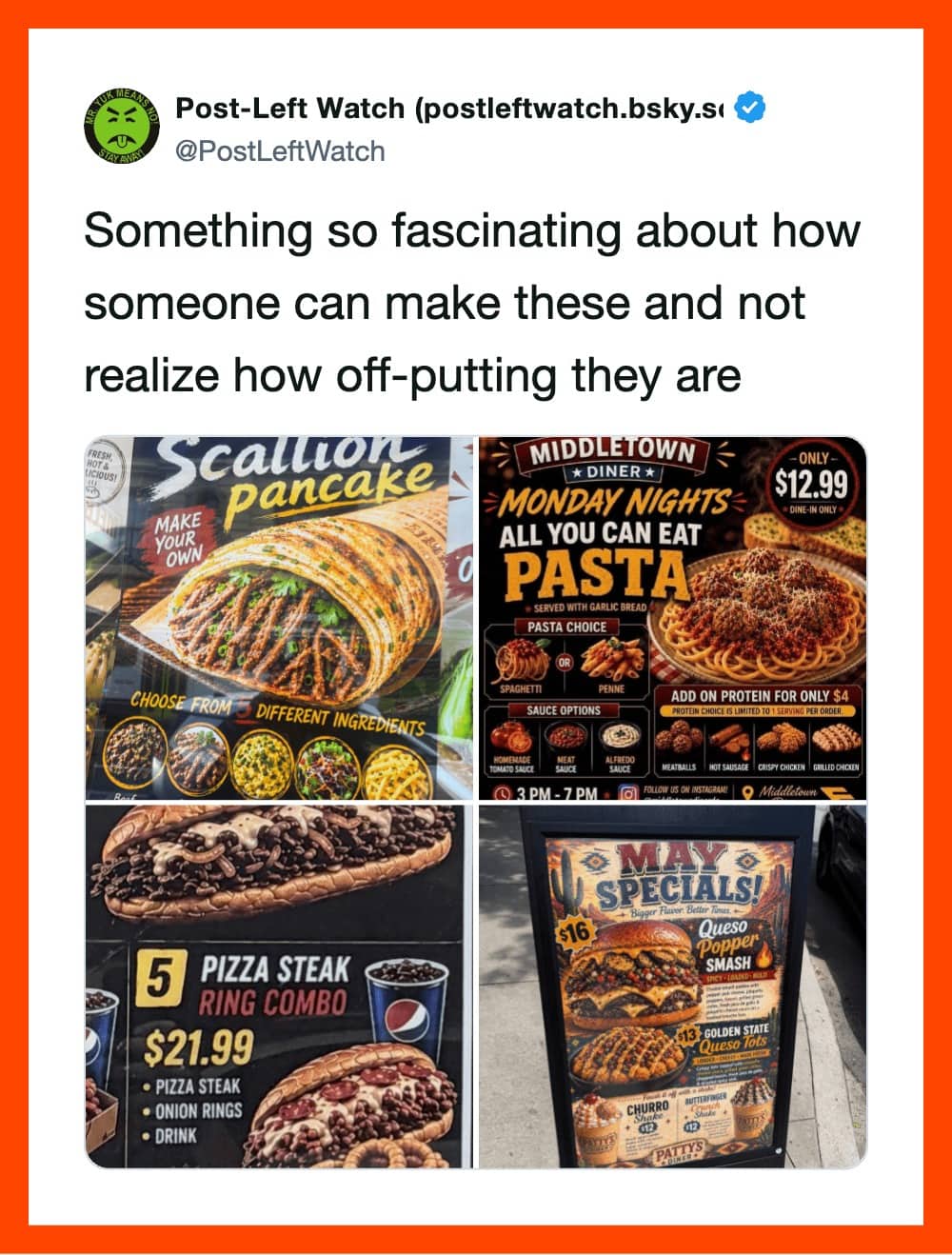
When you ask AI to generate a classic sub and it serves a nightmare stack.
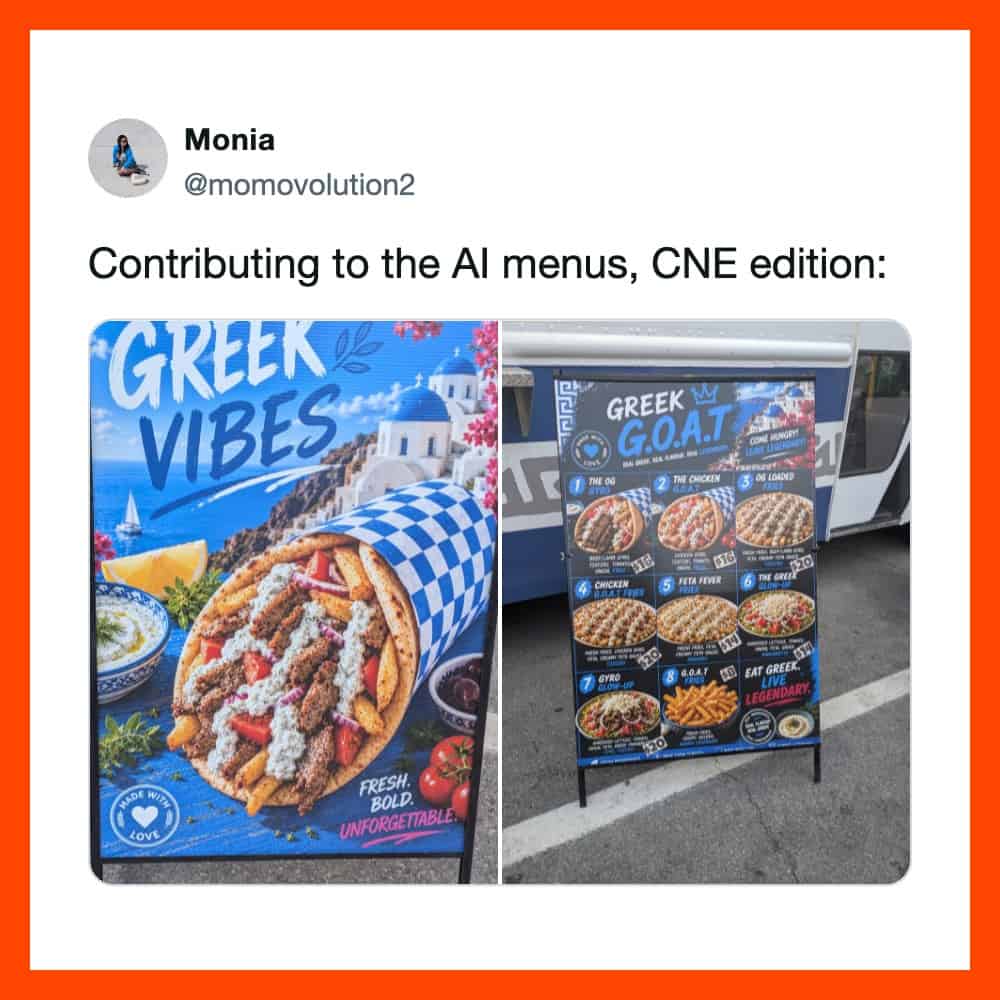
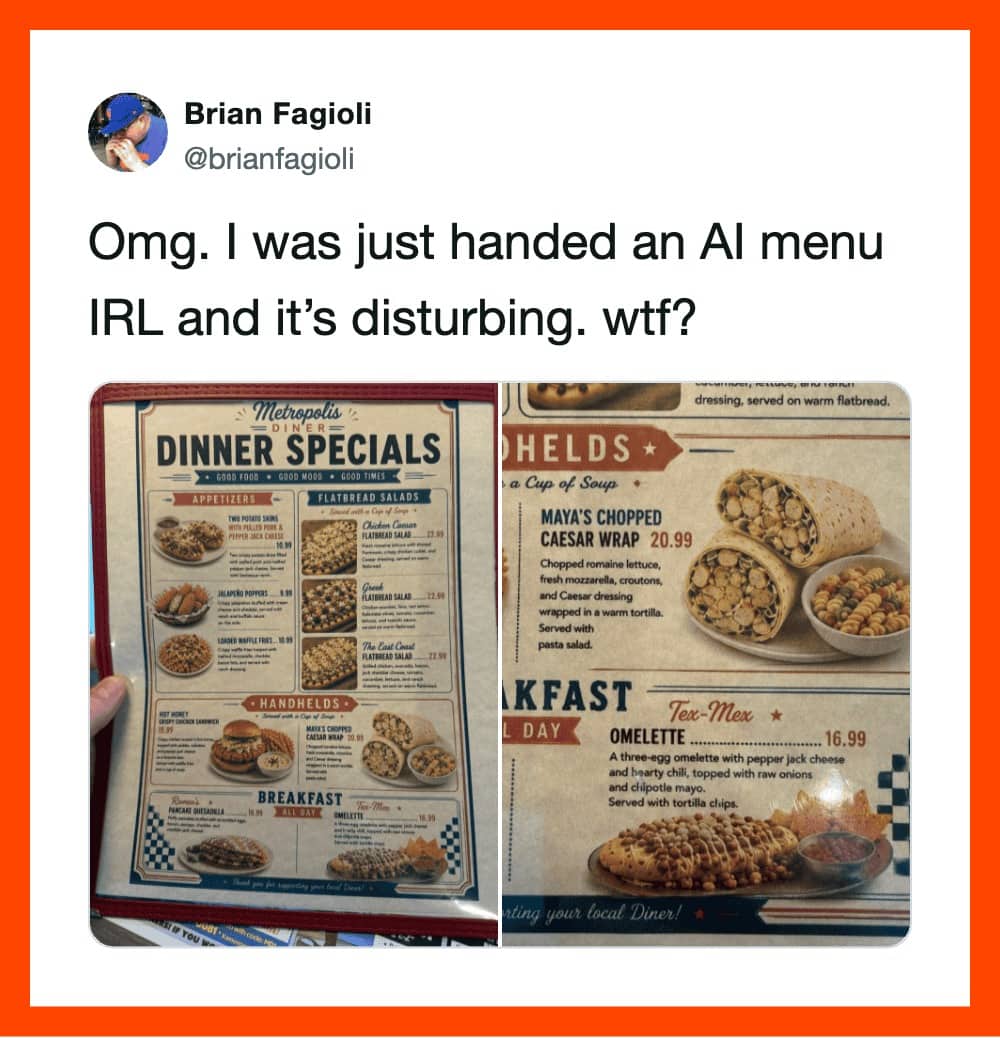
"Greek Vibes" brought to you by an algorithm that has never visited Greece.
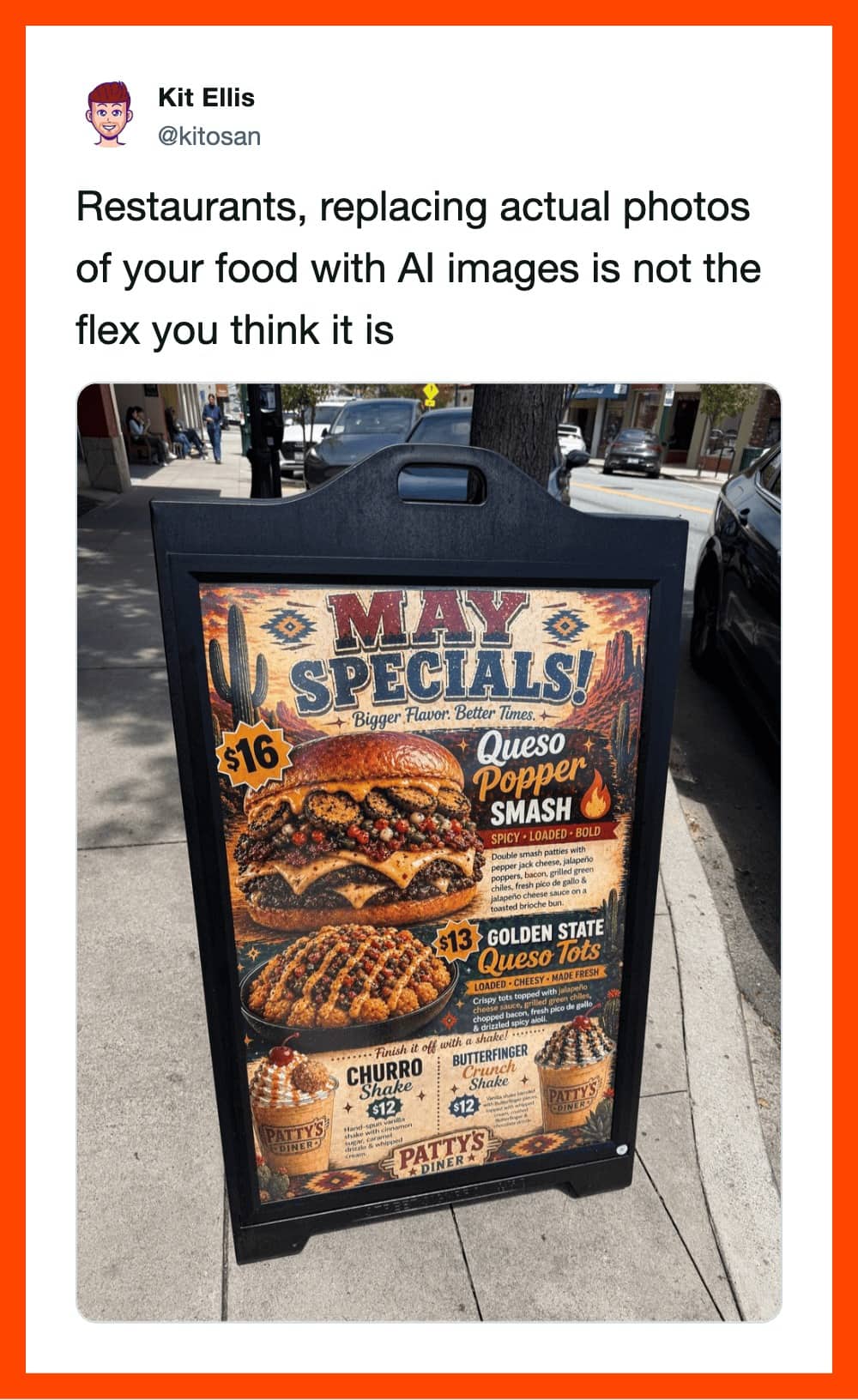
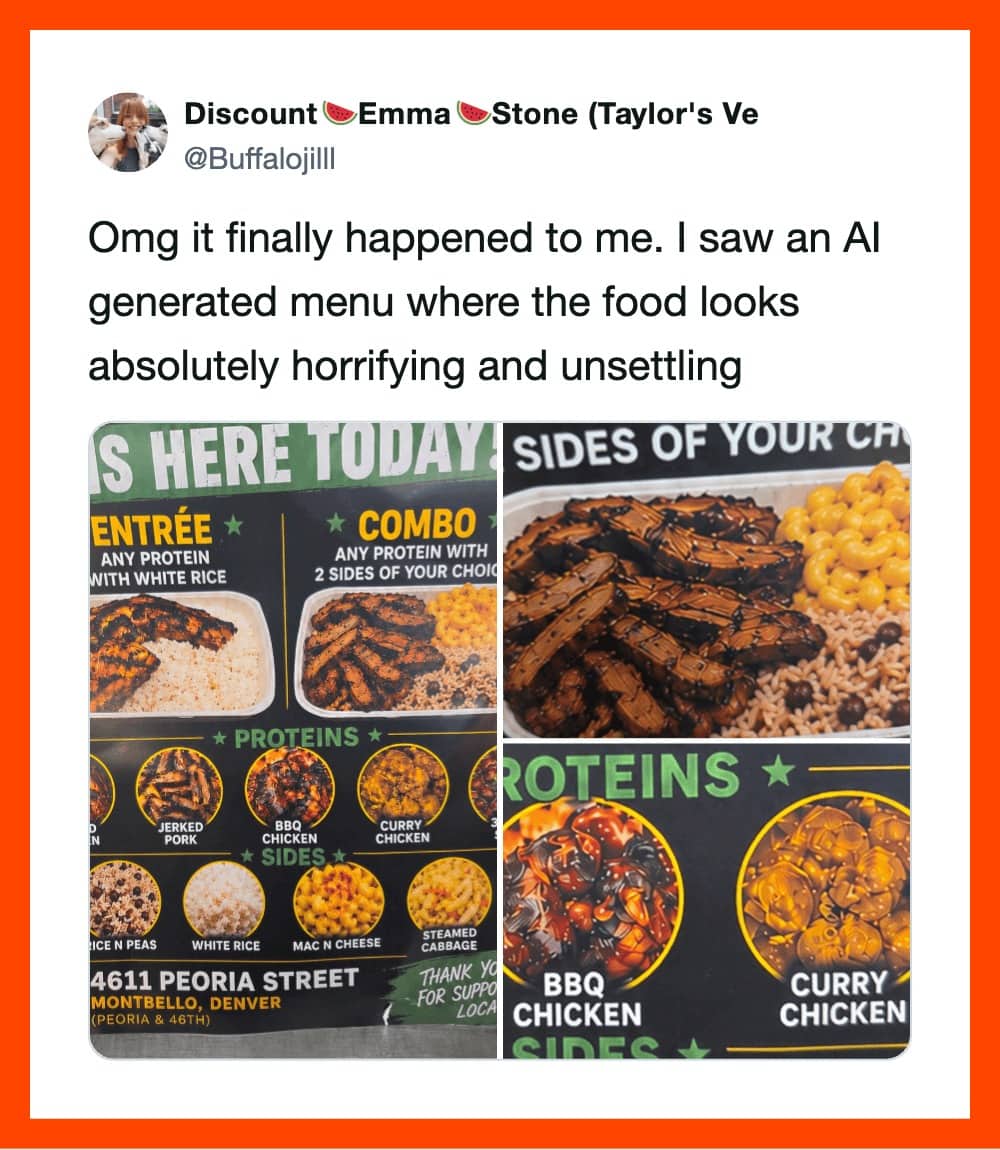
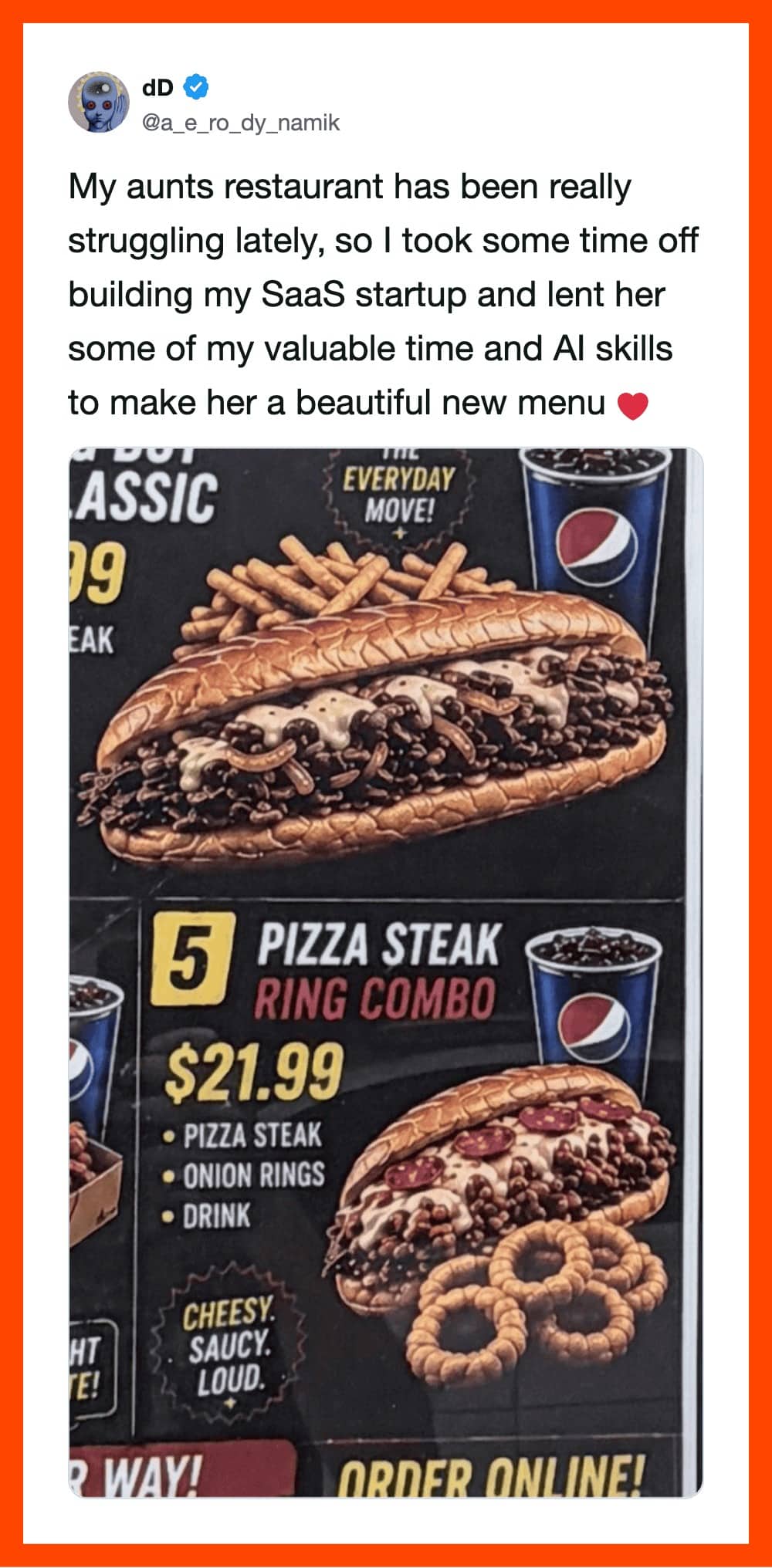
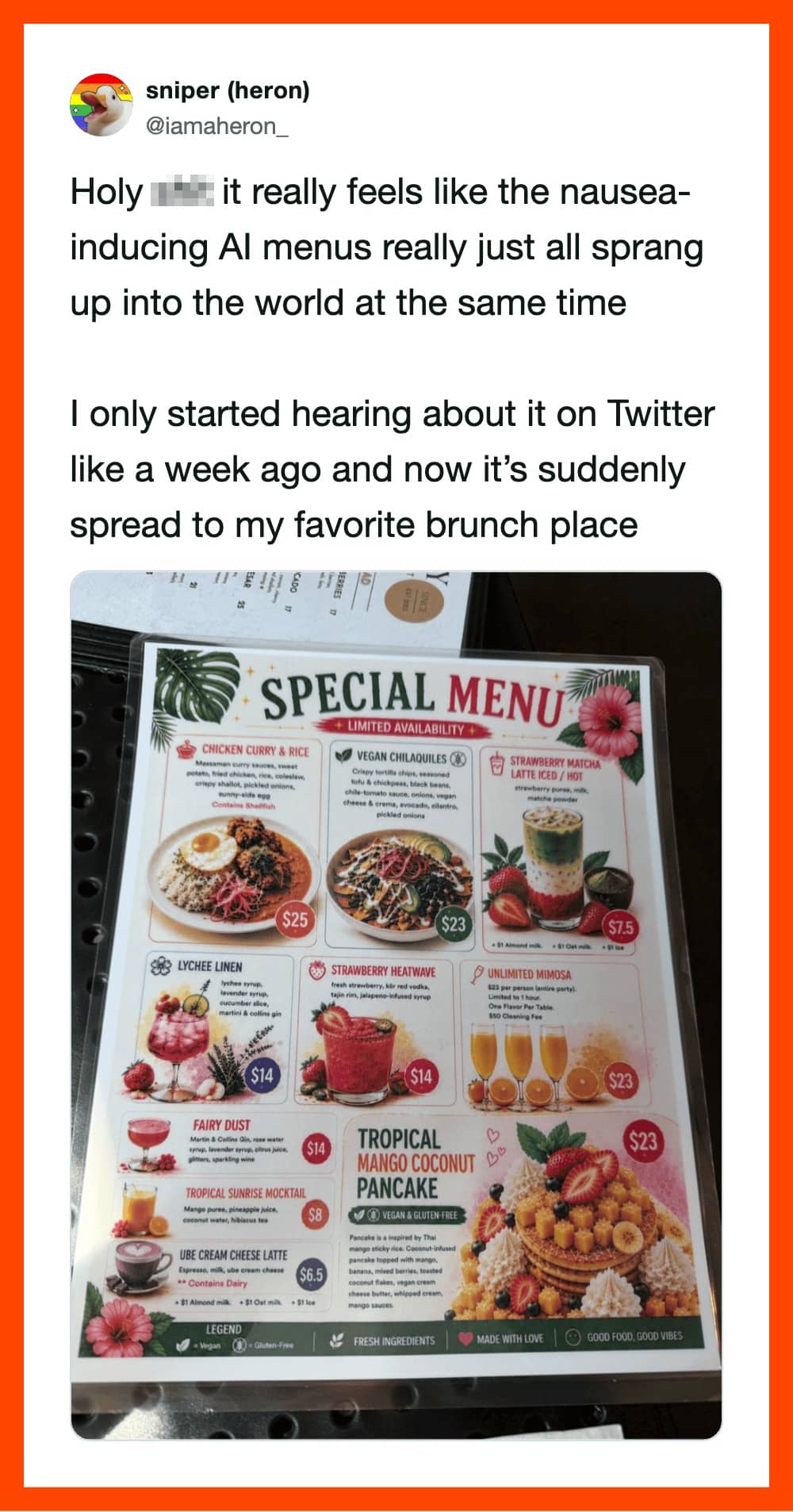
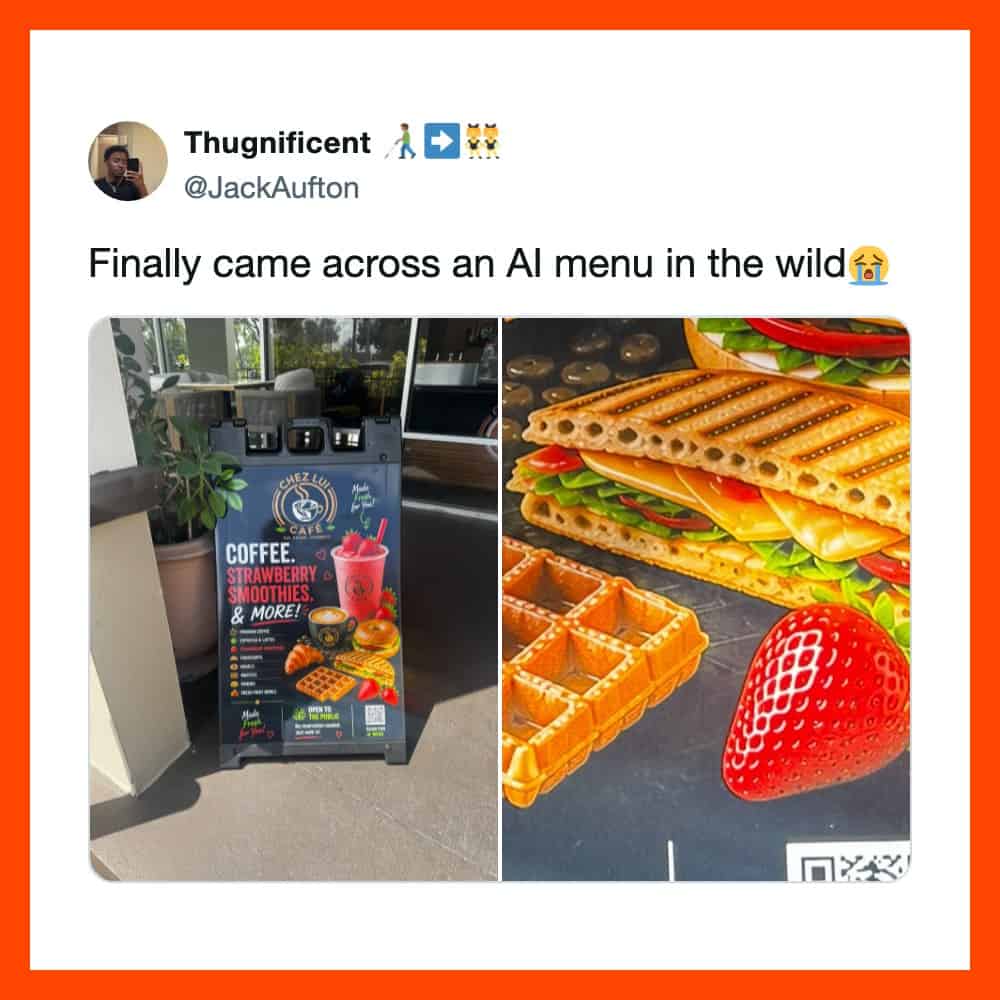
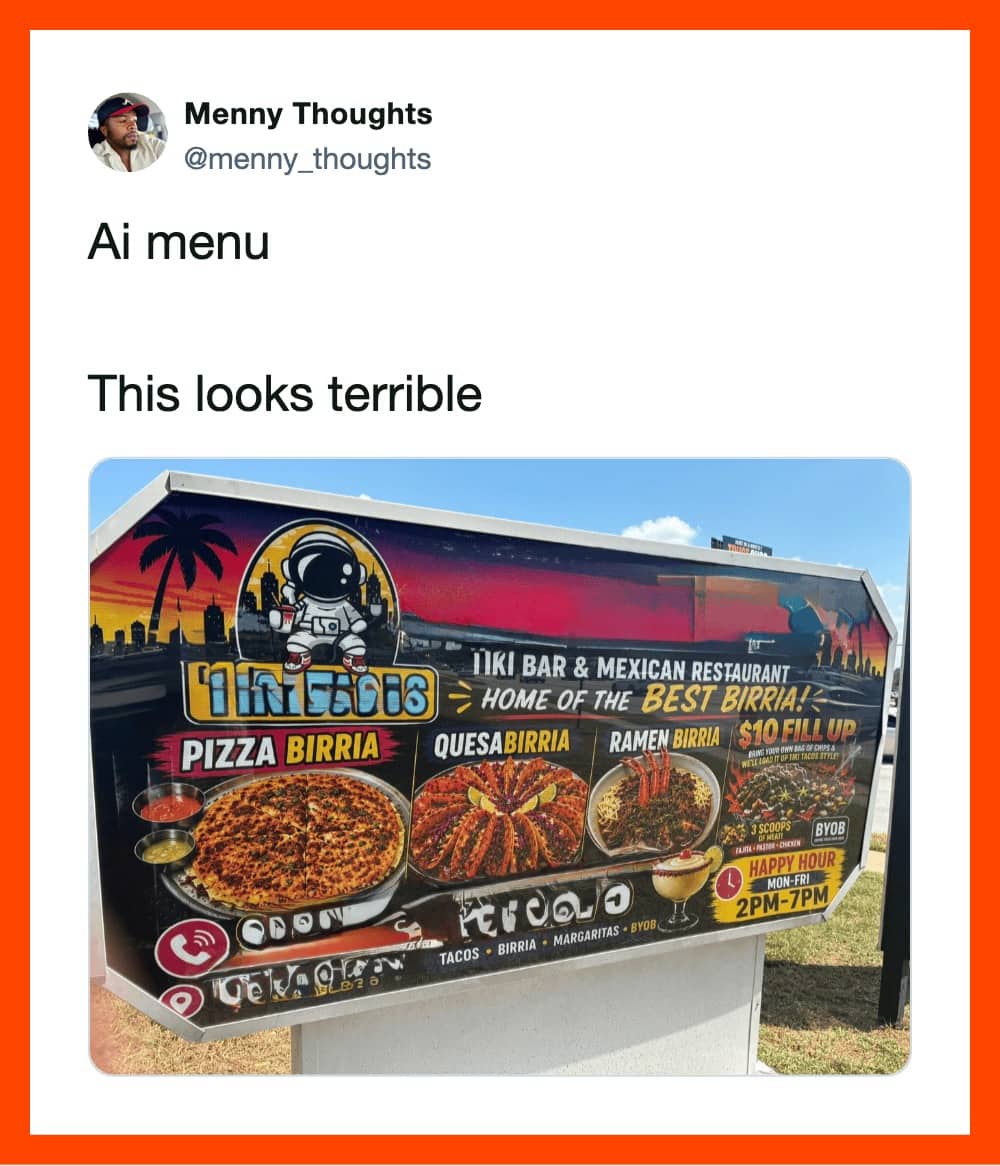
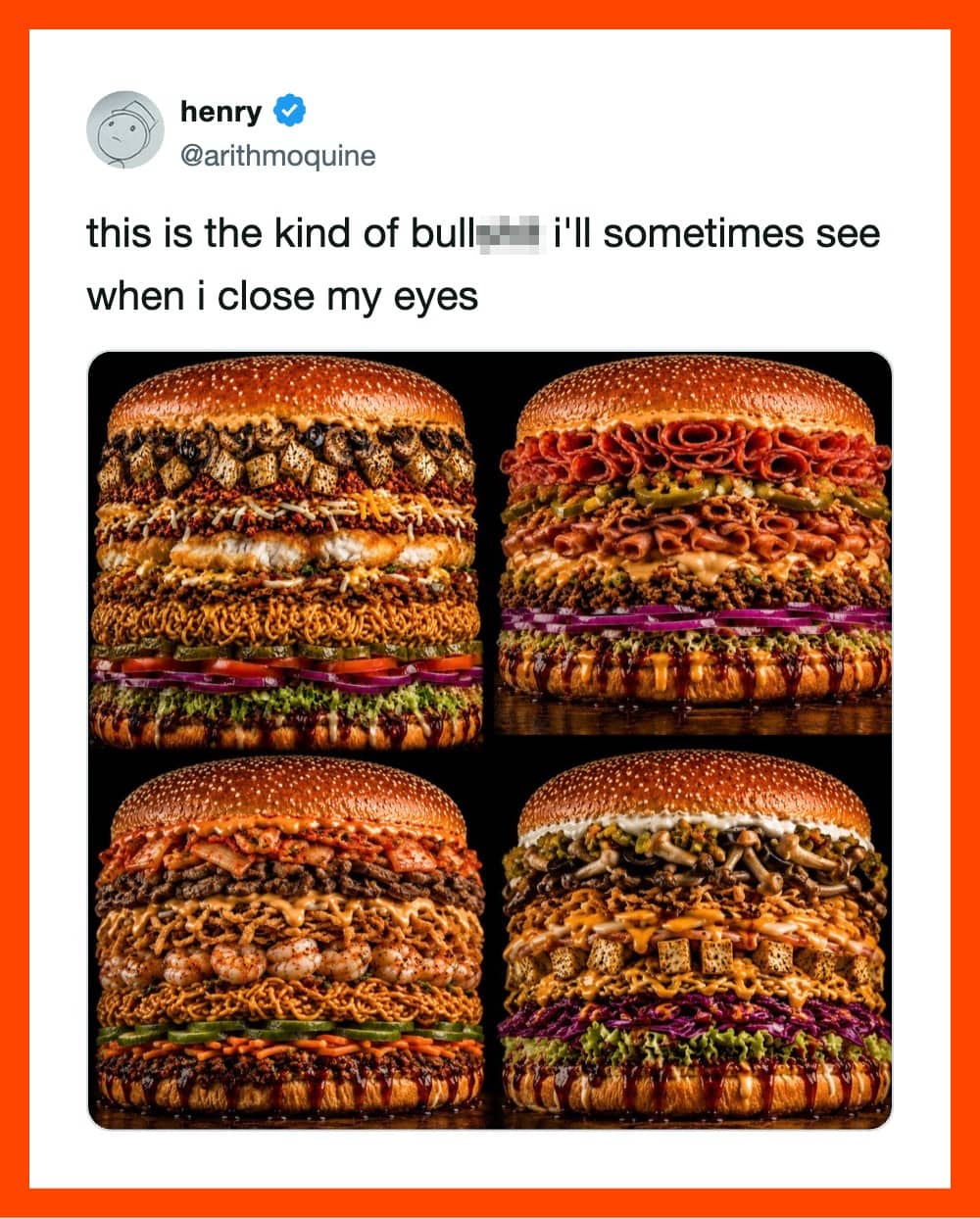
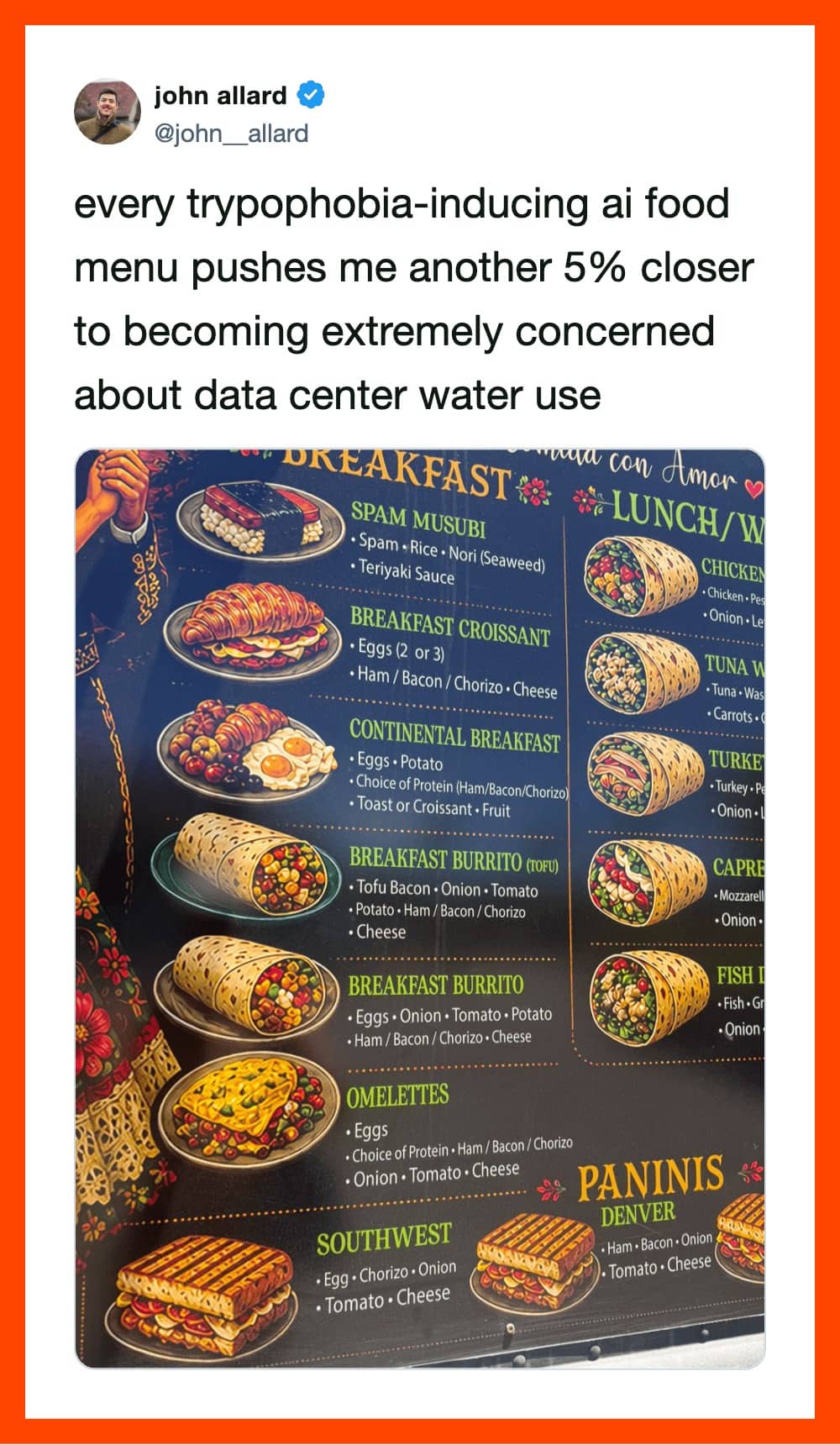
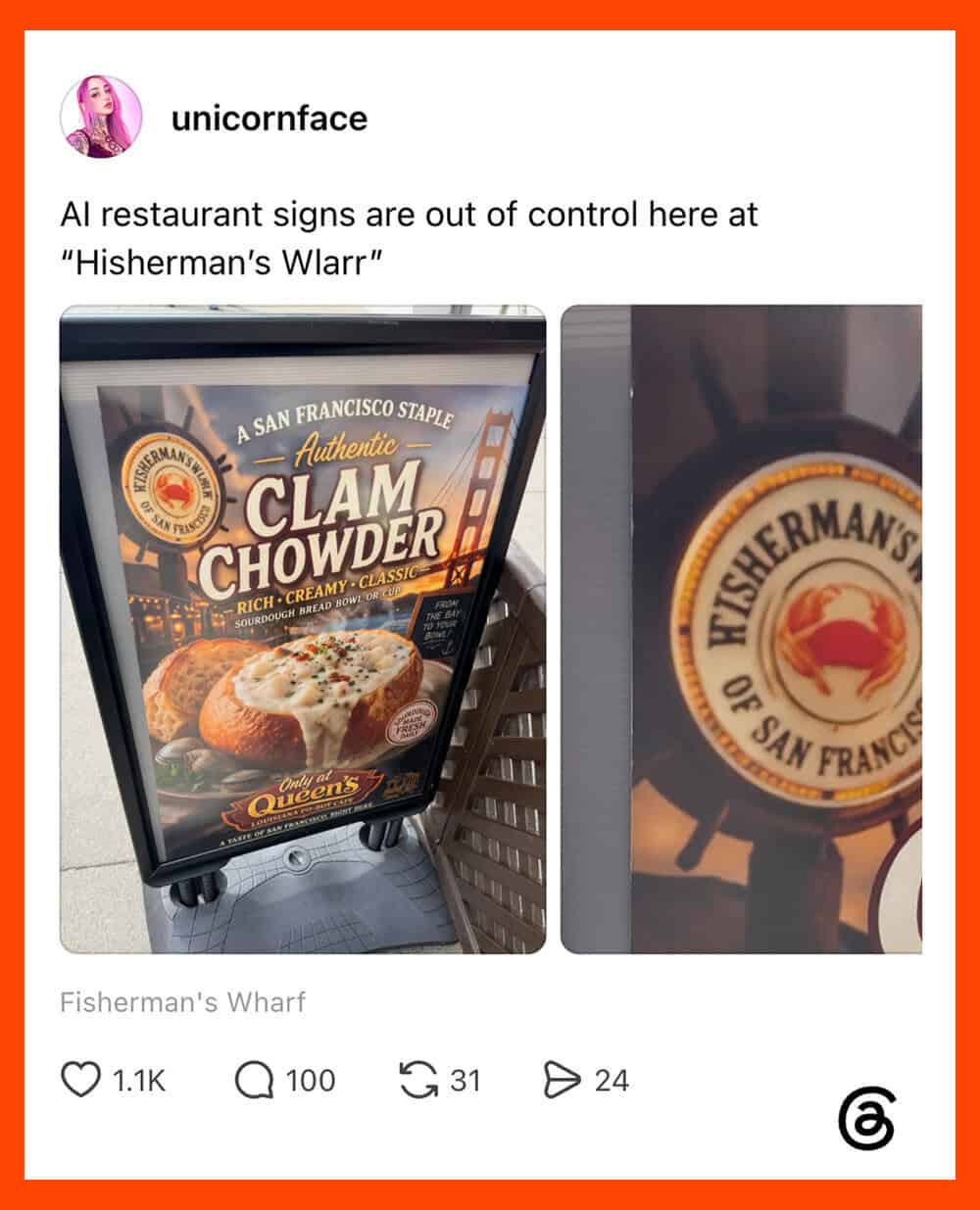
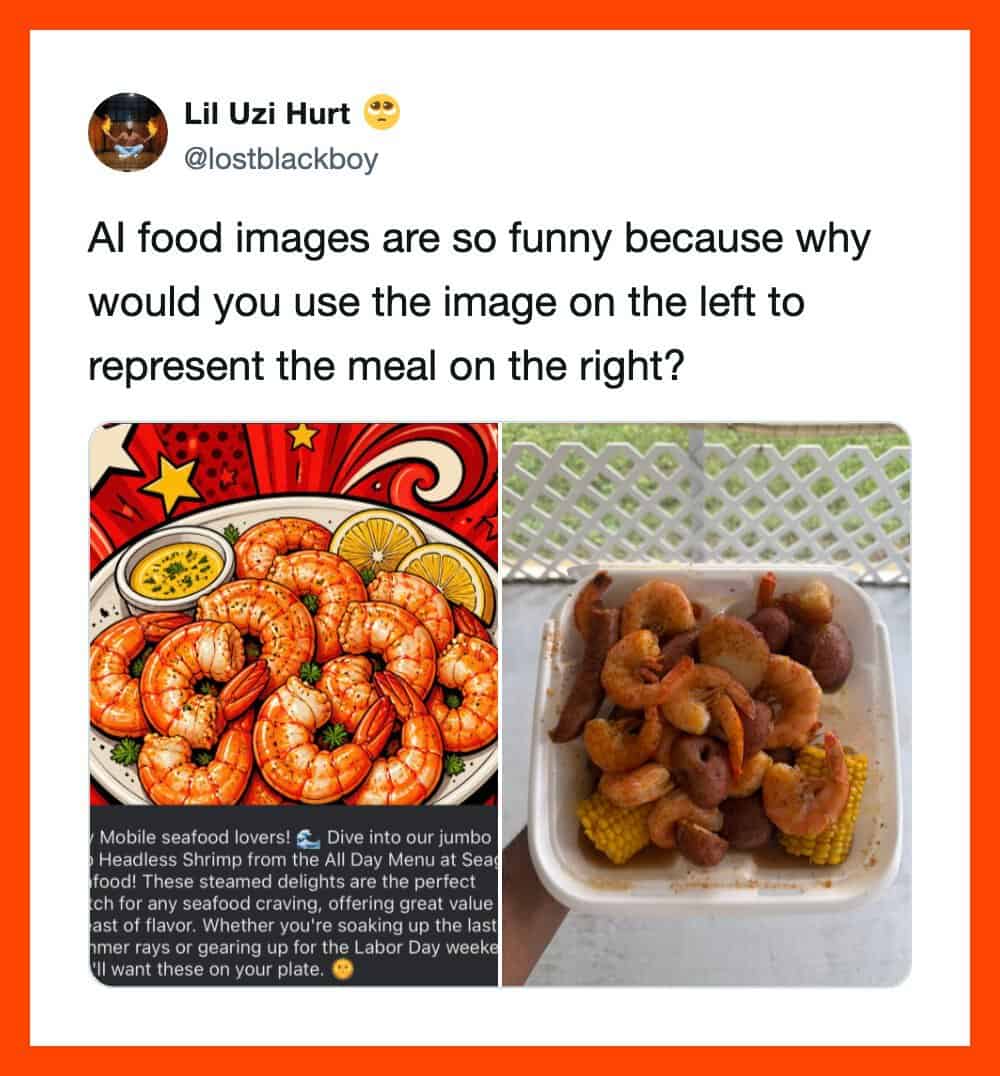
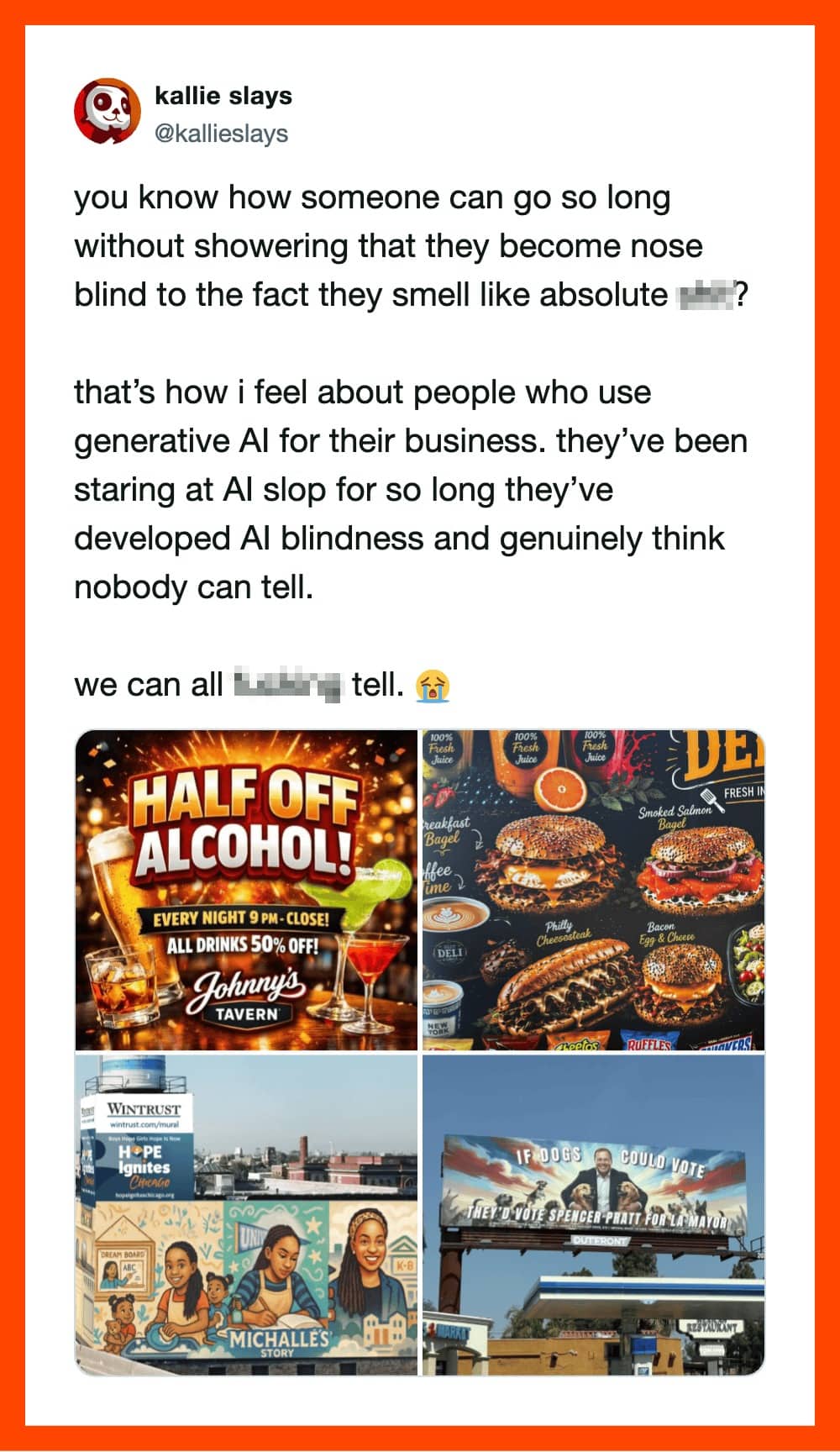

Restaurants using AI
Read More
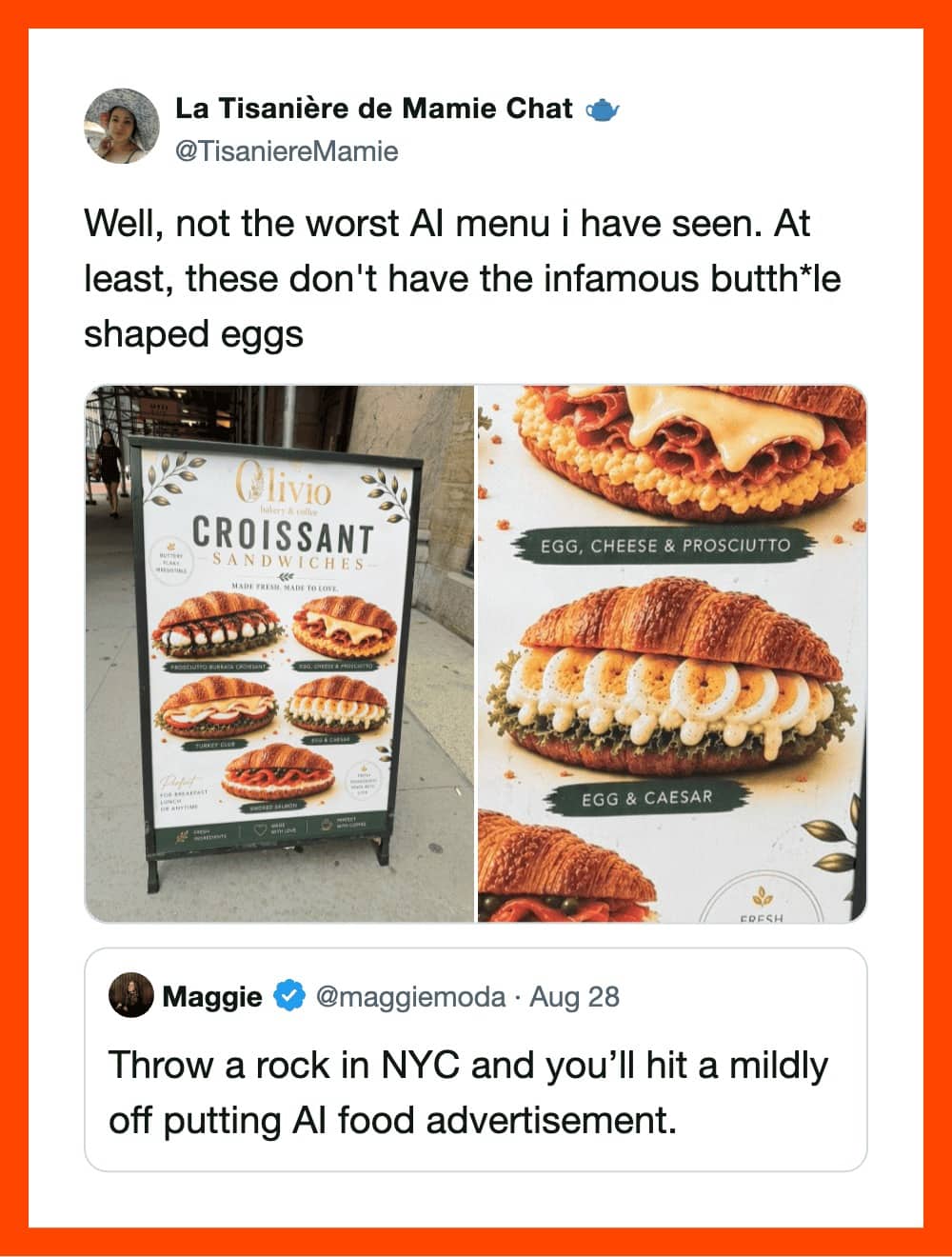
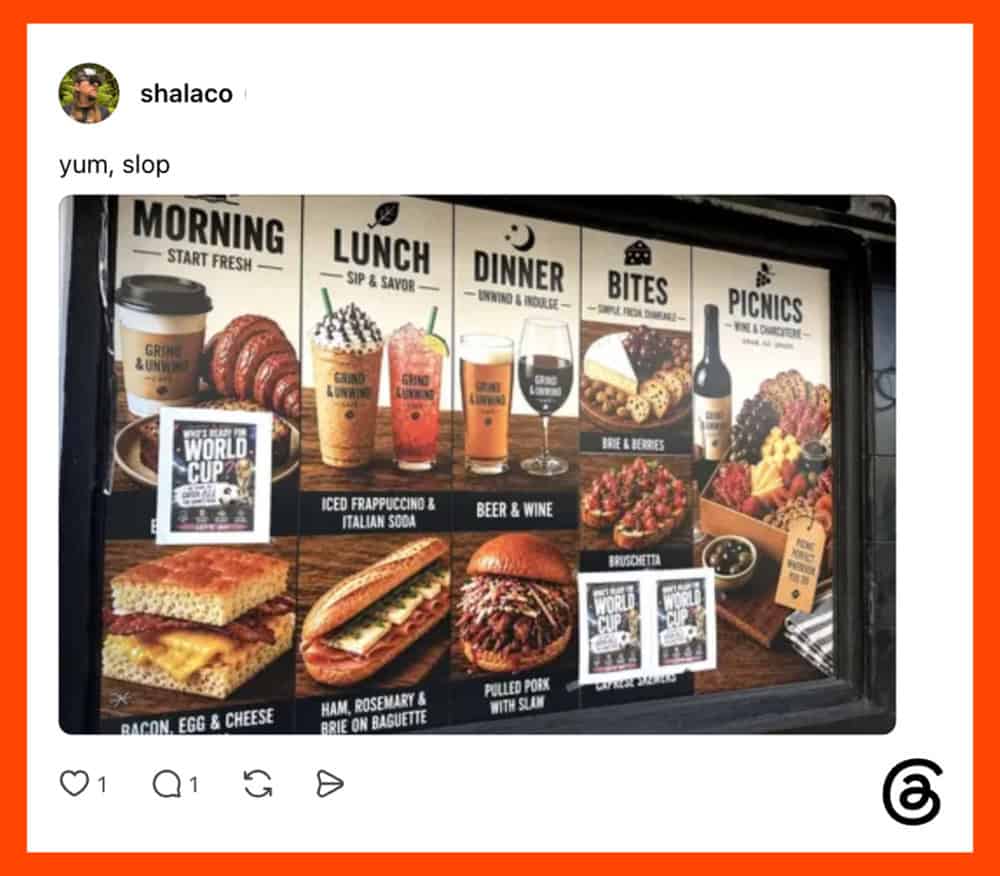
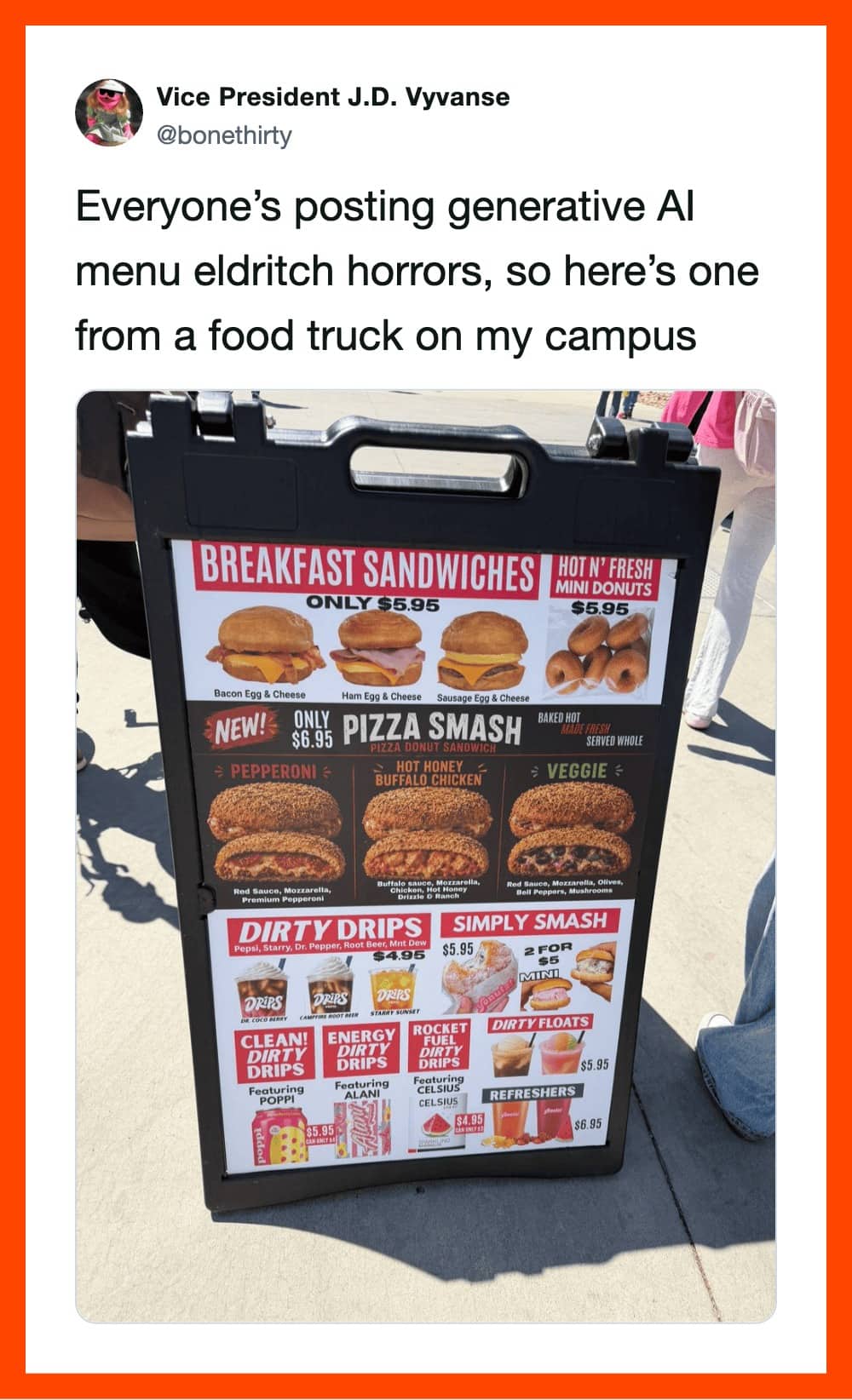
The uncanny valley material is the core of the problem, because these images are almost right, and almost is so much worse than wrong. There’s a croissant sandwich on a street sign where the sliced egg reads unmistakably as a row of small teeth, and once you see the teeth you cannot return to a world without them. There’s a breakfast burrito rendered with a strange internal honeycomb pattern that triggers a physical response in anyone with even mild trypophobia. The machine understands the general shape of breakfast. It does not understand that food should not have architecture. That gap is where the horror lives.
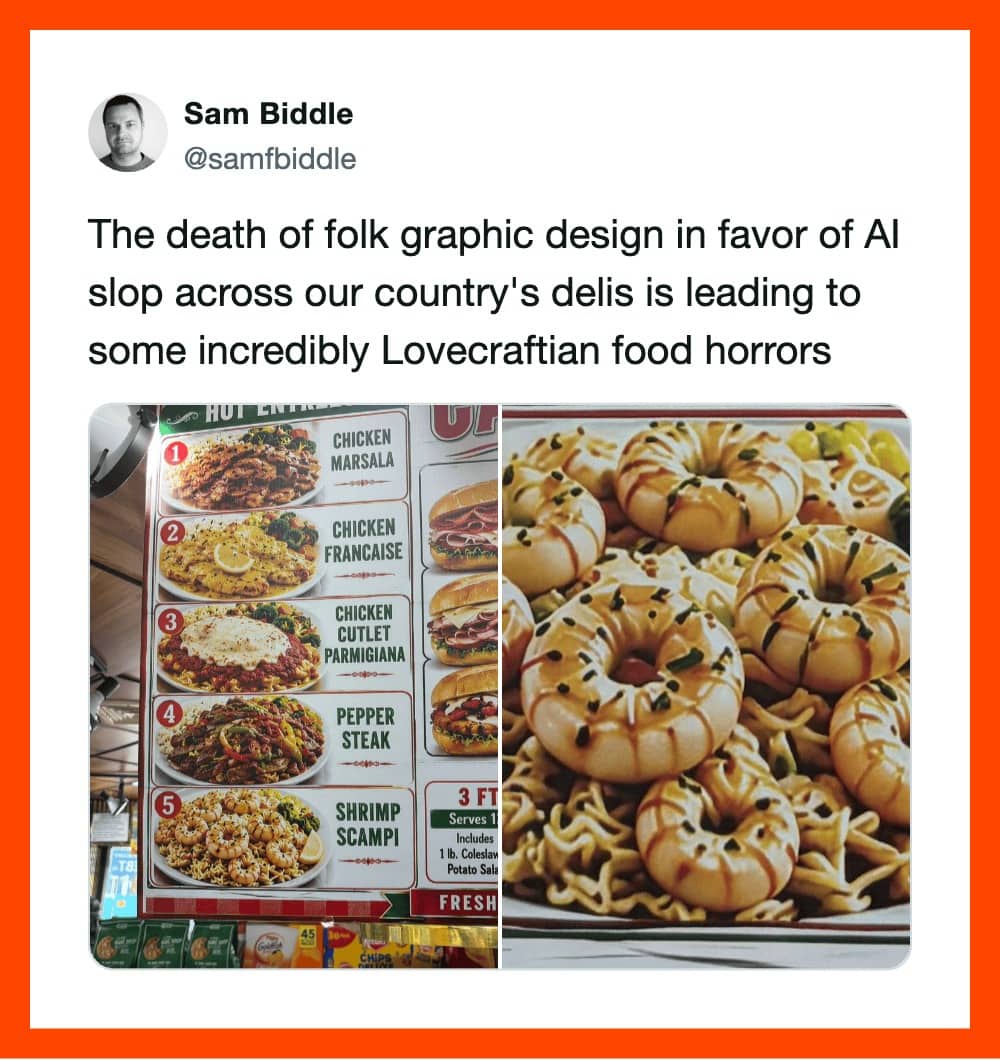
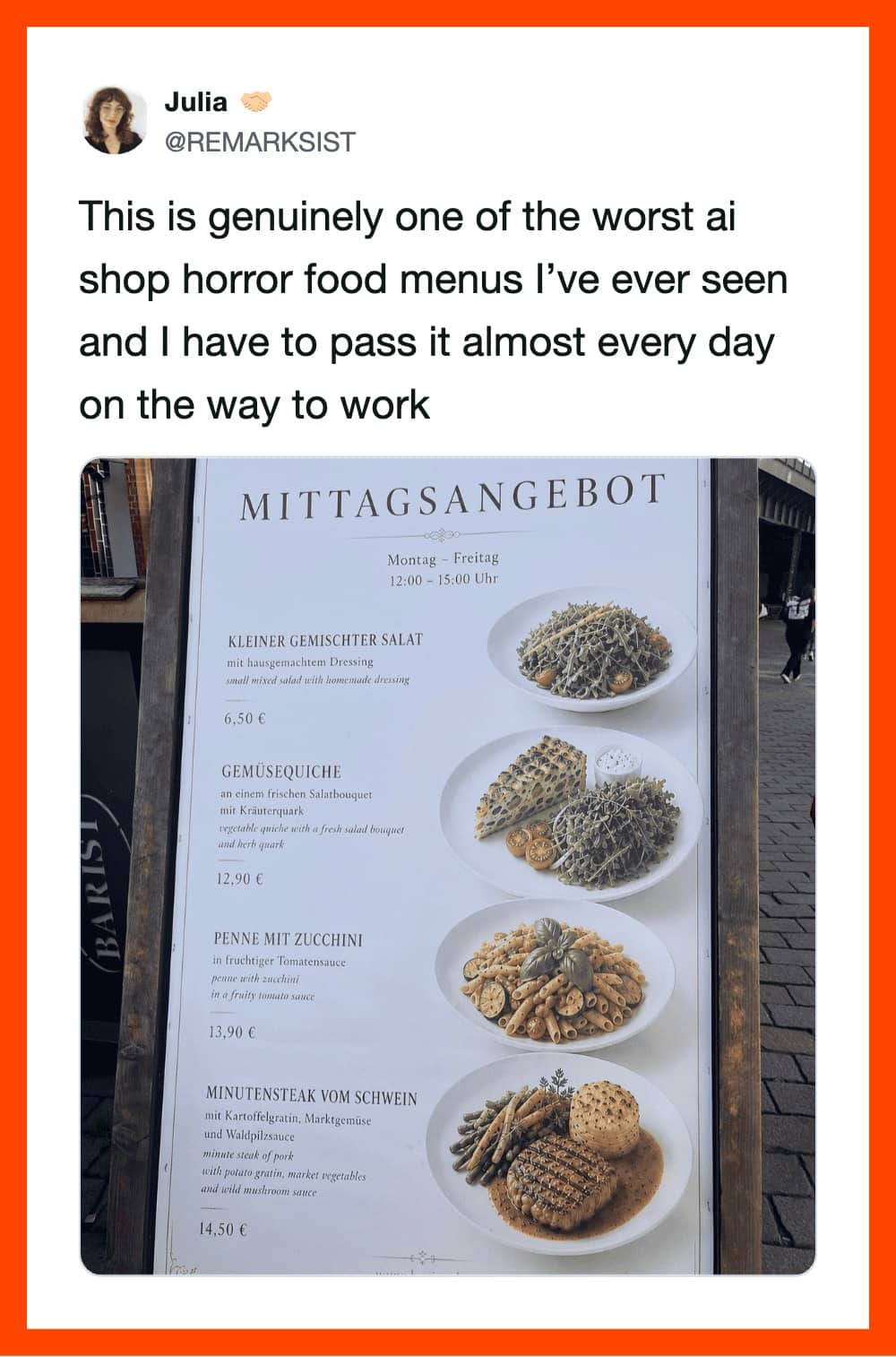
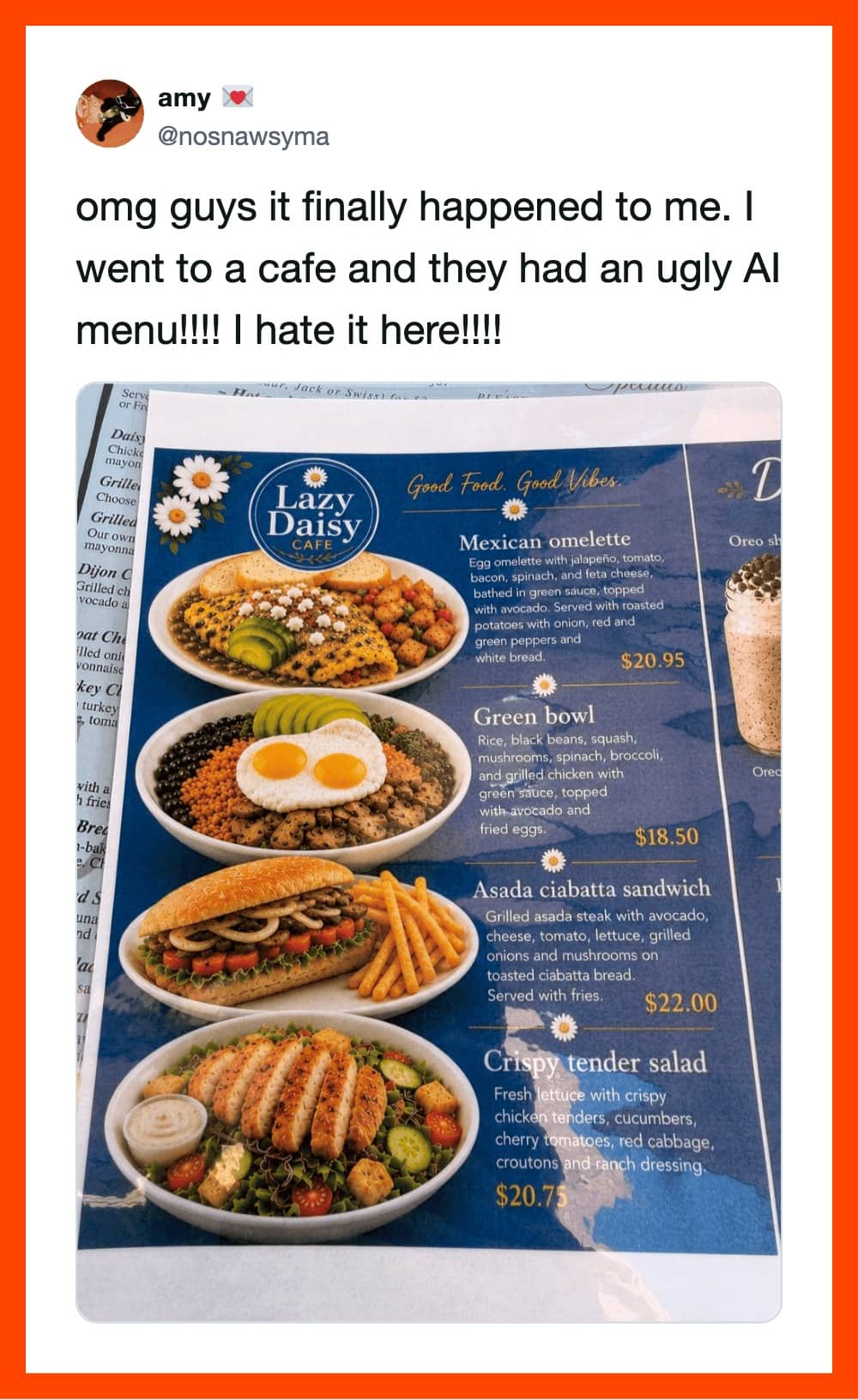
Then the deli-board disasters, where entire menus have been generated at once and the effect compounds. There’s a sandwich shop display where a classic sub has been rendered as something closer to an anatomical cross-section, and a pasta board where the shapes are not any pasta that exists, floating rings that might be bagels, might be donuts, might be marine life. There’s a cafe board abroad where a mixed salad appears to be shredded green rubber bands and a steak carries a surface pattern that does not belong on meat. Walking past that every morning on the way to work builds genuine psychological character. You’d start to question your own memory of vegetables.
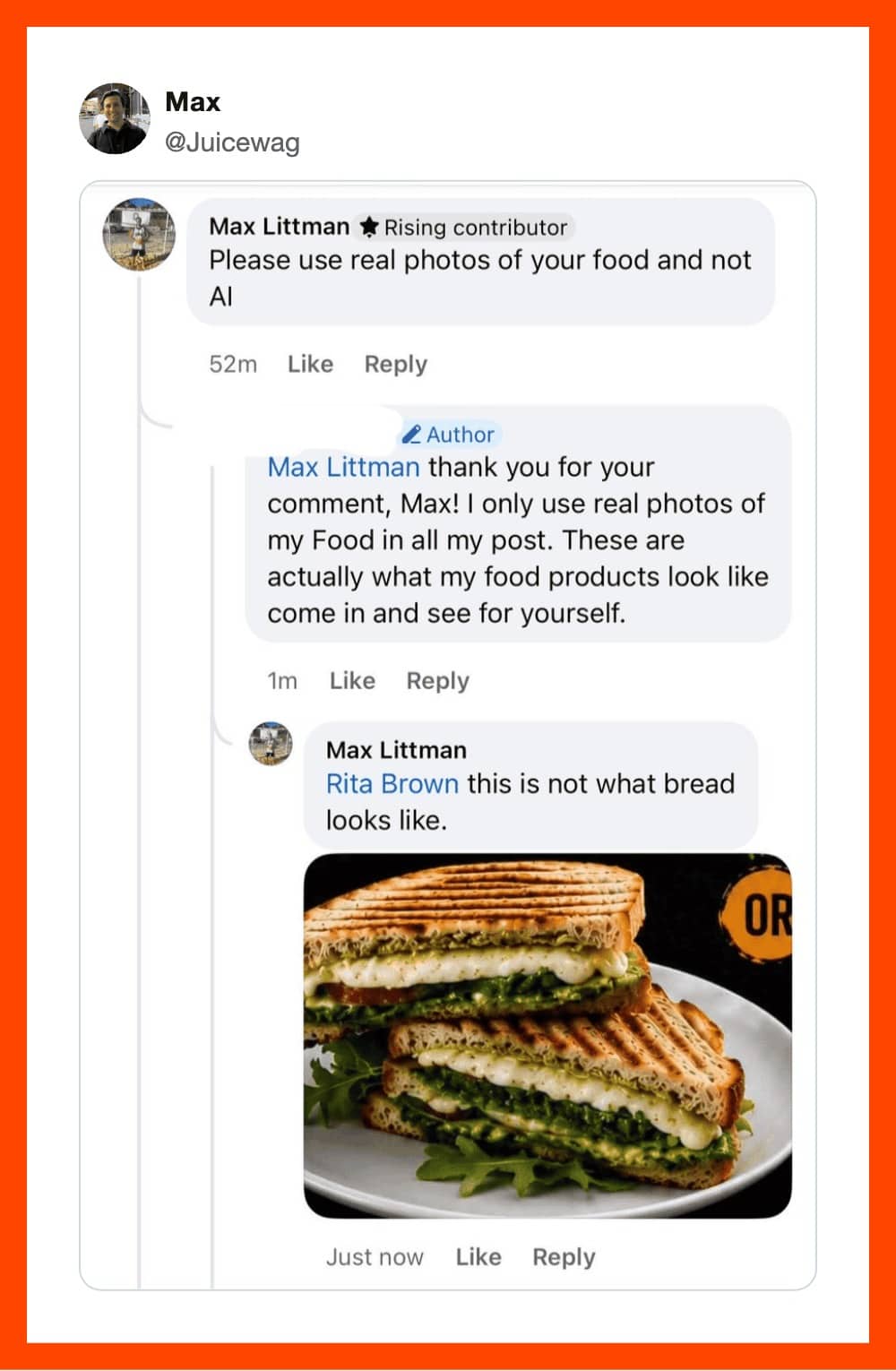
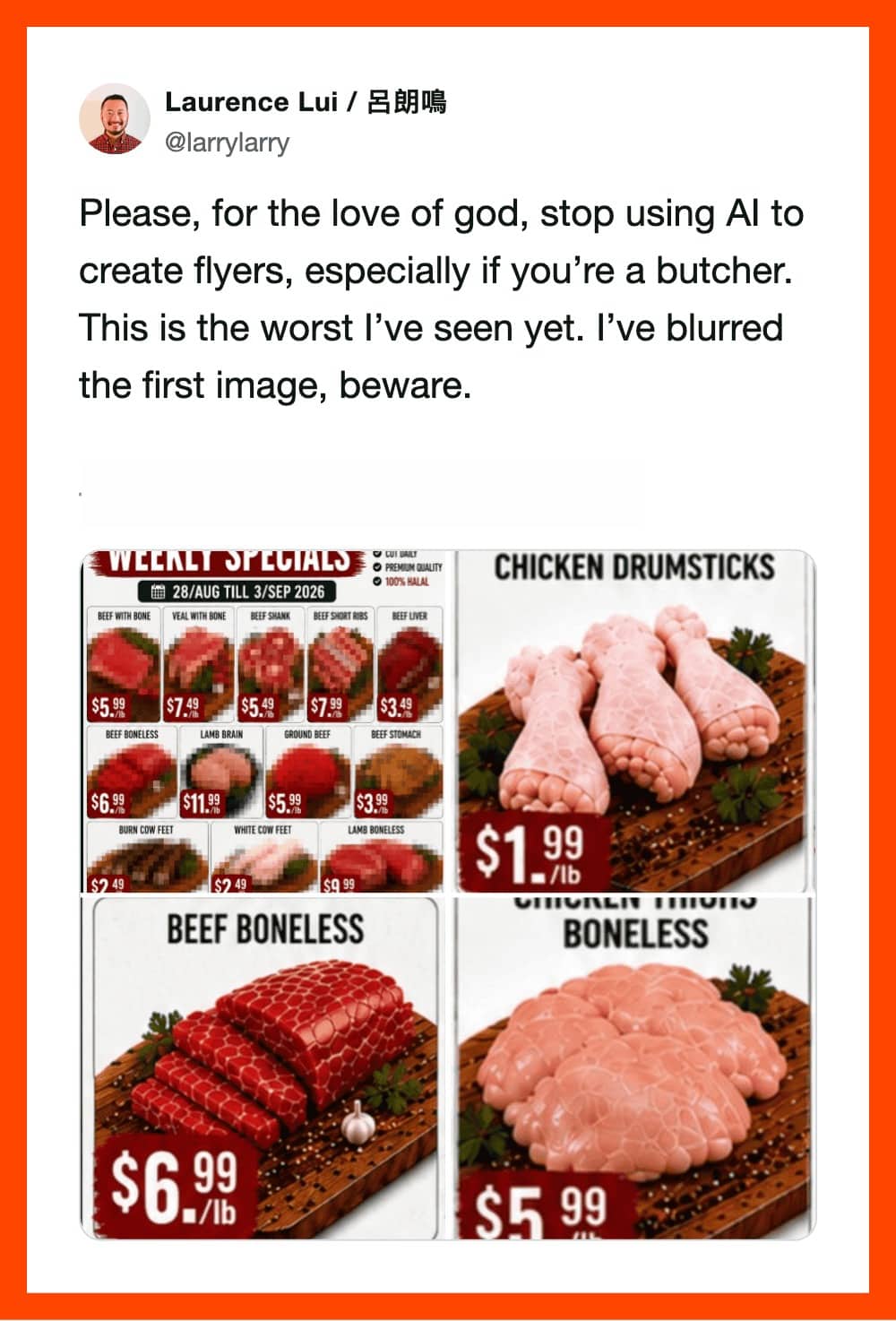
And then the accountability section, which is my favorite because it’s where humans get involved. There’s a butcher shop flyer with raw drumsticks that appear to have small finger-like protrusions, and honestly, blurring that image was an act of public mercy. There’s a food truck advertising a certain Mediterranean cuisine through graphics clearly produced by a system that has never encountered that country, where the fries resemble plastic building blocks. And there’s a comment thread where a customer flatly informs a restaurant owner that the pictured bread is not what bread looks like, and the owner insists it’s real. That exchange is the whole era in miniature. Somebody with basic functioning eyes versus somebody committed to the bit.
Here’s the actual business problem underneath all this, and I think it’s genuinely interesting: food photography exists to make you hungry, which means it has exactly one job, and a technically impressive image that makes you uneasy has failed at that job completely. A blurry phone photo of a real sandwich taken by the owner outperforms every one of these, because the phone photo is trustworthy and trust is the entire currency of food. You cannot generate trust. You can only take a picture of the actual sandwich.
And the trust damage extends past the image, which is the part restaurants aren’t calculating. When I see a generated photo on a menu, I don’t just distrust the picture, I start wondering what else got shortcut. The kitchen. The ingredients. The whole operation. That’s an enormous amount of credibility surrendered to save a few hundred dollars on a photographer. Take the picture yourself. Bad lighting is fine. Bad lighting is honest. The teeth are not.
The egg had teeth. The bread had holes. Photograph the actual sandwich.
If your appetite needs further ruining, our internet culture content has plenty, with AI fail archives, uncanny image threads, and design disaster compilations rendered at unsettling resolution. Look closely at every menu from now on. You’re welcome. You’re also sorry.
Read Memes
Get Paid


Michael Hartley, or just "Mike," is an editor and seasoned meme historian whose articles have traced the evolution of meme humor from early Impact-font classics to today’s TikTok sensations. With nearly a decade spent as senior editor at ViralHype and as a regular contributor to Cheezburger, Mike has dissected the rise of meme legends such as Bad Luck Brian, Success Kid, and Doge. When he's not hunting down meme gold for Thunder Dungeon, Mike teaches workshops on meme marketing and the psychology behind shareable content.