
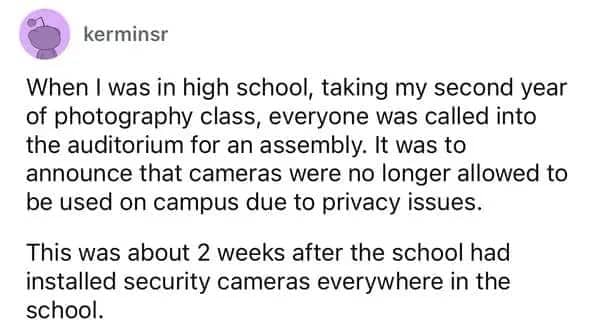
A Catholic school once banned ankle socks because ankles were considered sexual, and somebody, an adult human with a paycheck, sat in a meeting and signed off on that decision. These stupid school rules are the small fragments of administrative absurdity that defined an entire generation’s relationship with authority, and Reddit has compiled them with the precise emotional energy of group therapy. The eraser ban is in here. The chest-bump ban is in here. The school that banned cameras while installing twenty new security cameras is, somehow, also in here. Let’s process.

You will have fun with these strangers and you will like it."

Not all heroes wear capes; some carry a ladder.

Cover those scandalous joints immediately!
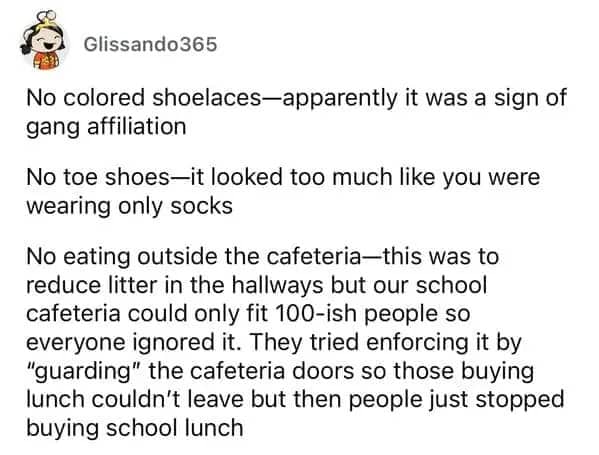
Toe shoes are a crime against fashion, to be fair.


Do as I say, not as the icons do.



Stupid school rules
Read More
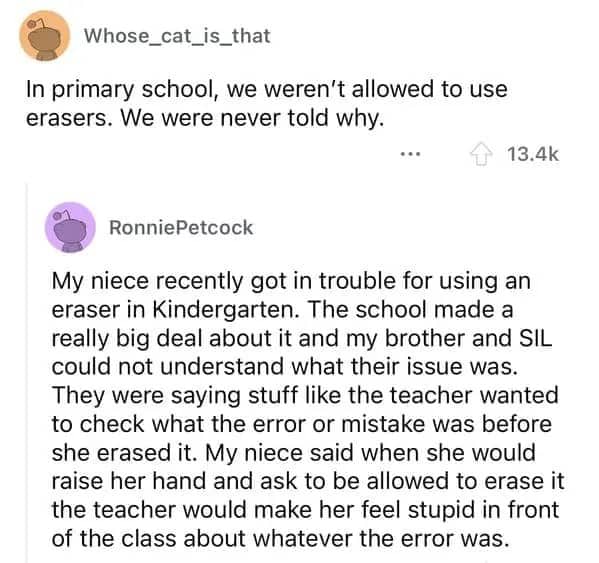
The eraser ban is the entry that has destroyed me. The reasoning, as documented in the post, was that teachers wanted to be able to see every mistake a student made, to better correct it. The result, in practice, was a classroom full of children who could not fix their own work without raising their hand and asking permission to undo a typo. These weird school rules are the kind of thing that, when you read them years later, you cannot believe an adult agreed to enforce, and yet somebody did. The eraser ban was real. The kids survived. The trauma is still settling.
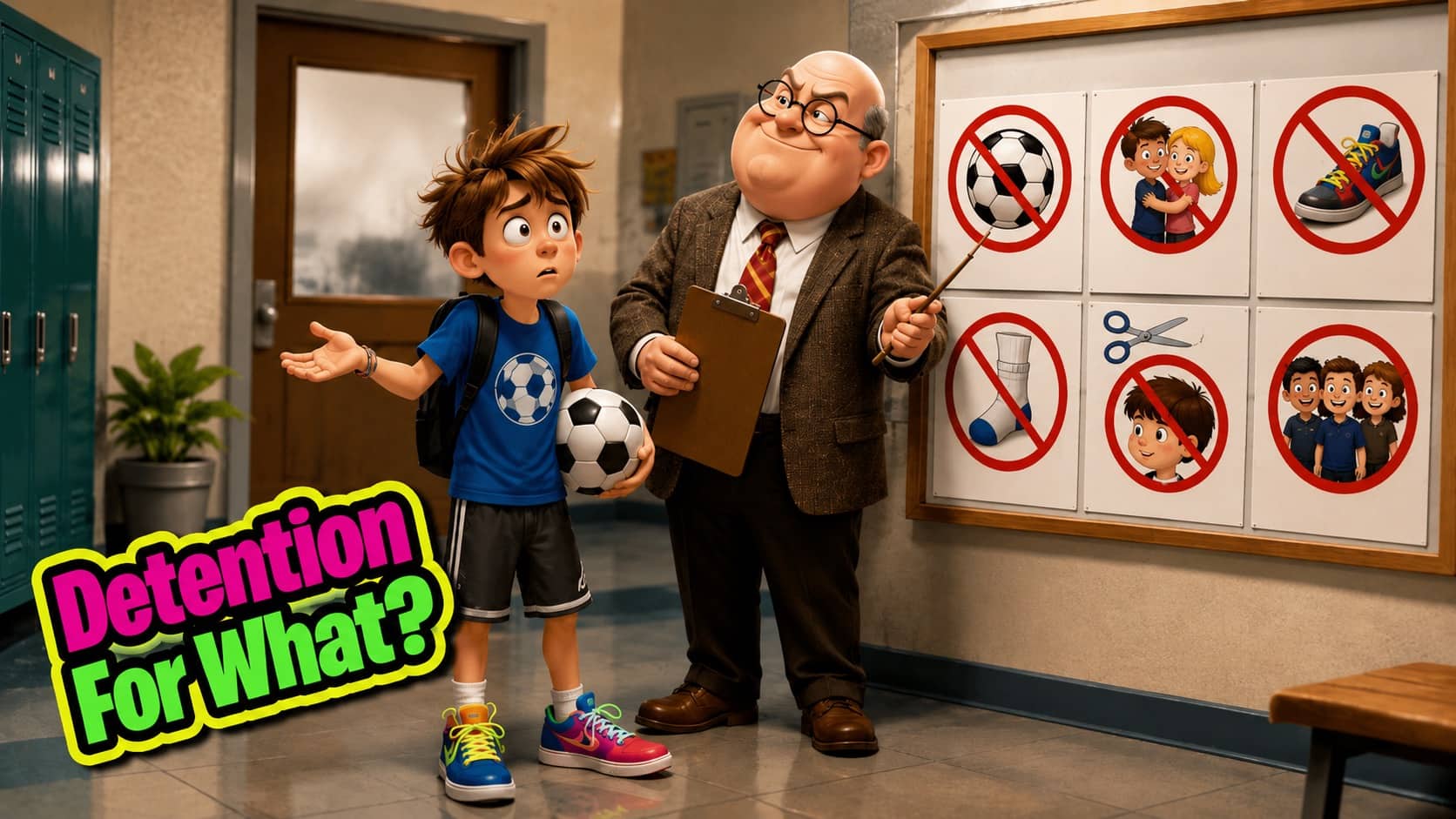
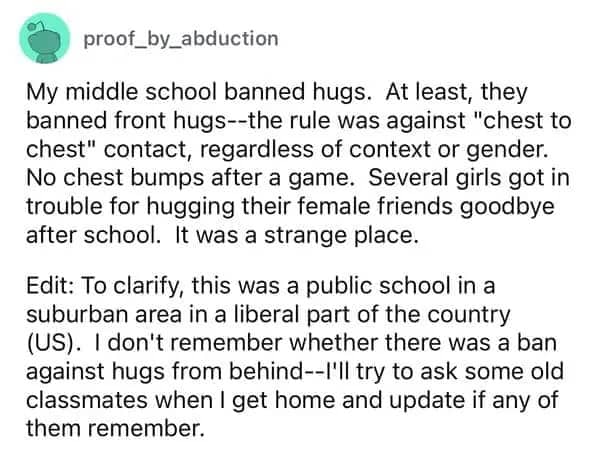
The ankle sock ban deserves its own moment of historical analysis. Ankle socks, in a school somewhere in the world, were classified as too revealing, on the theory that the ankle itself was sexual, and the entire student body was therefore required to wear longer socks at all times. The school dress codes in this gallery have been doing the Lord’s work in administrative absurdity for generations, but the ankle thing is particularly remarkable because it requires the adult enforcing it to have, at some point, articulated out loud that they considered an ankle inappropriate. Nobody has fully recovered from this conversation.
The story of Mr. Bennish and the one-student bathroom policy is the most genuinely unsettling entry in the whole gallery. A teacher decided that only one student at a time could be excused to use the bathroom, students had to wait in line at his desk to be granted permission, and the result was, predictably, multiple accidents. The bizarre school policies and ridiculous school rules in this gallery occasionally tip from “absurd” into “actively harmful,” and Mr. Bennish is the patron saint of that category. Some rules are funny in retrospect. Some rules left marks.
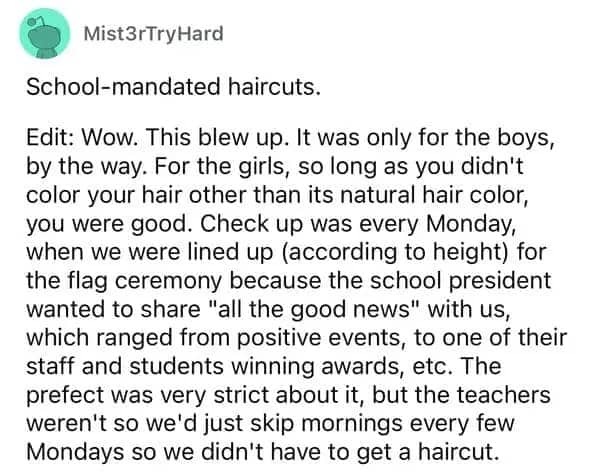
And the school that banned mandatory haircuts for boys while featuring pictures of long-haired Jesus on every wall. The funny school stories that come out of this gallery often involve this exact internal contradiction, where the rules of the school and the values of the school are in open public conflict, and the students notice, and the students stay quiet because they cannot win this argument. Jesus has long hair. The students do not. Logic has officially left the building.
What this whole gallery is really documenting, beyond the laughs at the specific rules, is the very strange power dynamic at the heart of every school. Adults, with no particular qualification beyond being adults, are given authority over hundreds of children for hours every day, and the rules they invent to maintain that authority often have very little to do with education. They have to do with control, with appearances, with the very specific neurosis of whichever administrator was in charge of writing the handbook that summer. The result, decades later, is this kind of compilation, where every rule reveals something about who made it and what they were afraid of.
There’s a recurring theme in these stories that’s worth naming, which is how often the rules were specifically designed to police the bodies of girls and the autonomy of children in general. The ankle socks. The front-hug ban. The haircut inspections. The bathroom restrictions. These weren’t really about safety or education. They were about establishing that the institution had the right to dictate every aspect of how students presented themselves, and the rules were extra and arbitrary in part because the arbitrariness was the point. If the rule made sense, you’d follow it because it was sensible. If the rule didn’t make sense, you’d follow it because the school said so, and that, structurally, is the lesson.
The other thing this gallery does, quietly, is gesture toward how much of contemporary online discourse about institutions traces back to exactly these formative experiences. The people writing these posts are not nostalgic. They’re remembering specific moments where an adult exercised arbitrary power for no good reason, and those moments did not leave them gently. The jokes are funny. The jokes are also processing. Some of the eraser kids are now therapists. Some of them write online. All of them remember.
If the school-trauma humor was your kind of fun, broader bad-teacher story galleries cover this exact terrain, growing-up Reddit threads carry similar energy, and general “rules I had to follow” compilations are where the related stories keep arriving. Hug your eraser. Some of us never got to.
Read Memes
Get Paid


Alex Thompson has been chronicling internet culture and meme phenomena for nearly seven years. Starting at CollegeHumor and later becoming lead meme editor at Mashable, Alex has covered everything from vintage internet memes like Rickrolling to recent viral events such as Corn Kid and Grimace Shake. With a keen eye for what connects and entertains digital audiences, Alex writes with humor, relatability, and deep knowledge of online culture. At Thunder Dungeon, Alex is the go-to source for meme analysis, viral breakdowns, and internet nostalgia.