
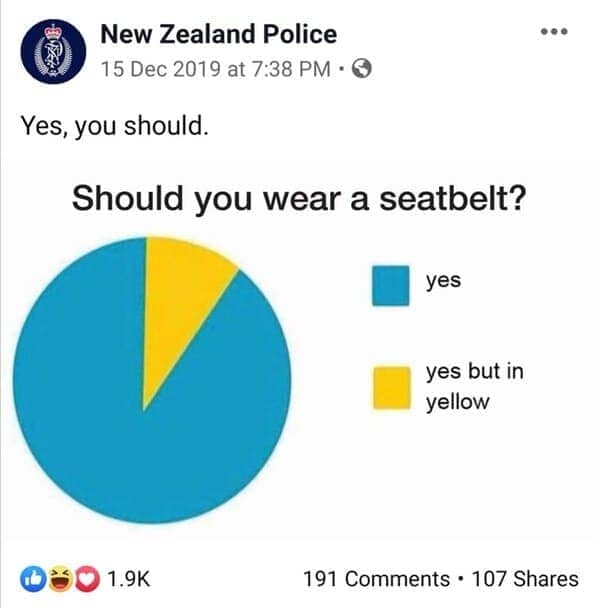
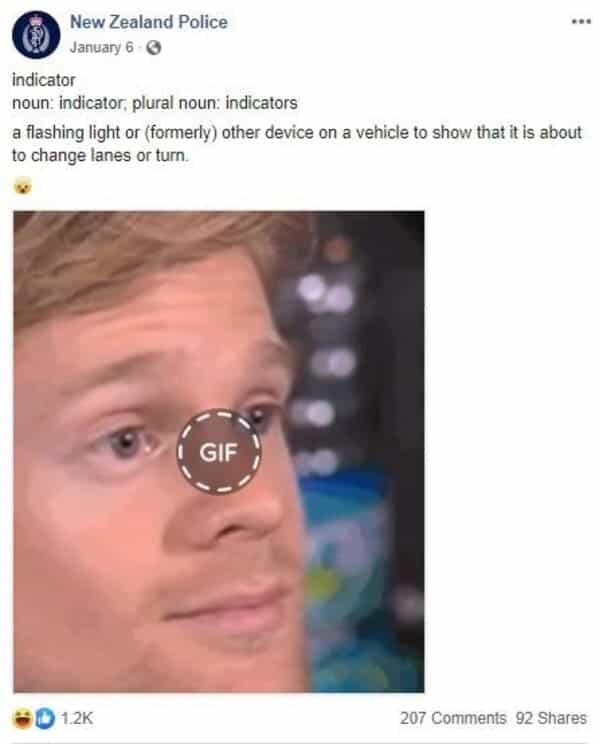
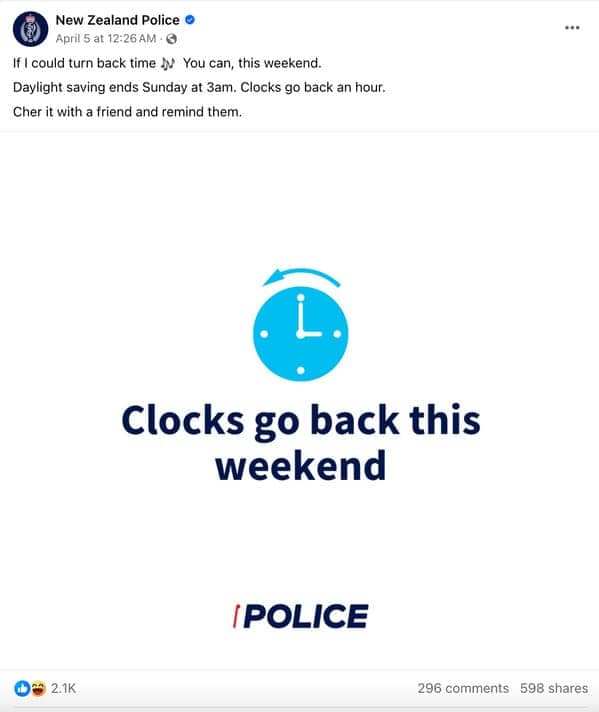
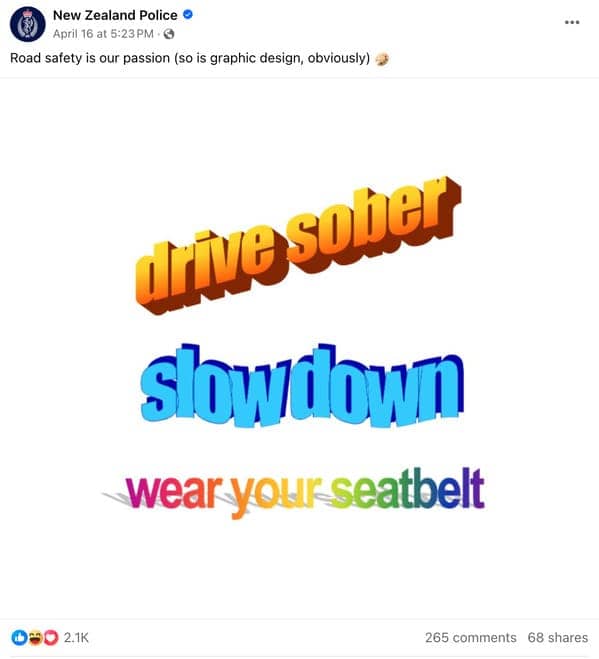
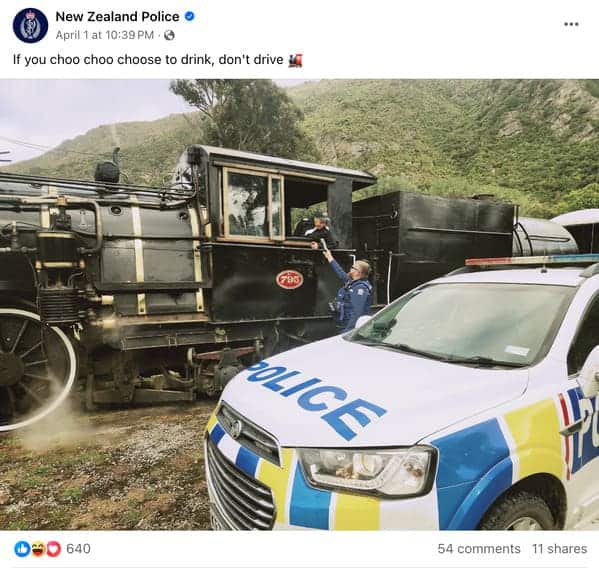
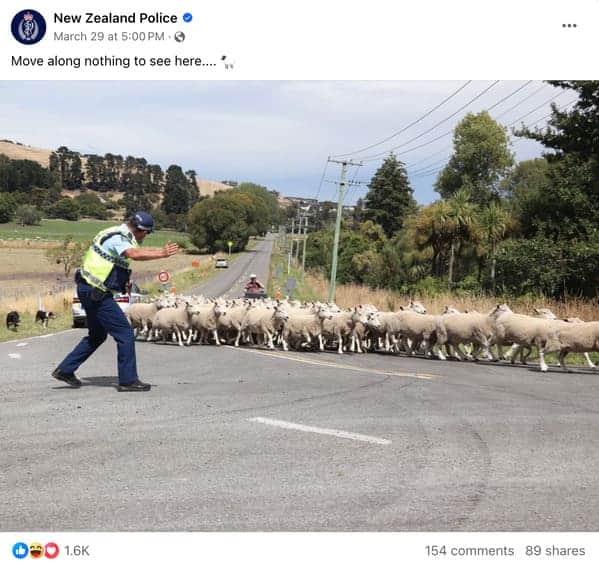
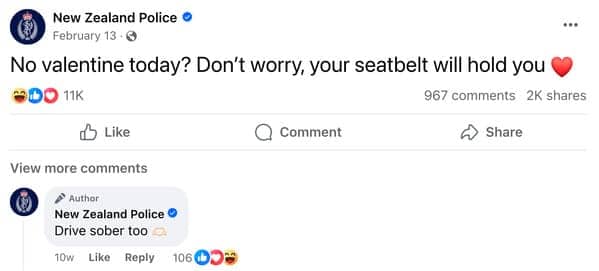
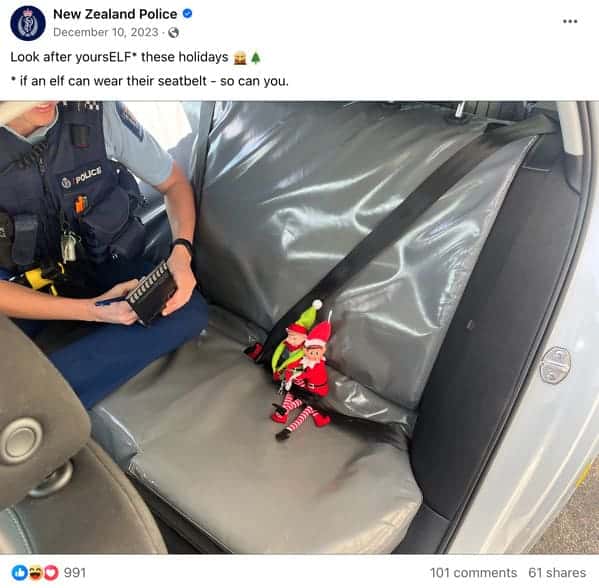
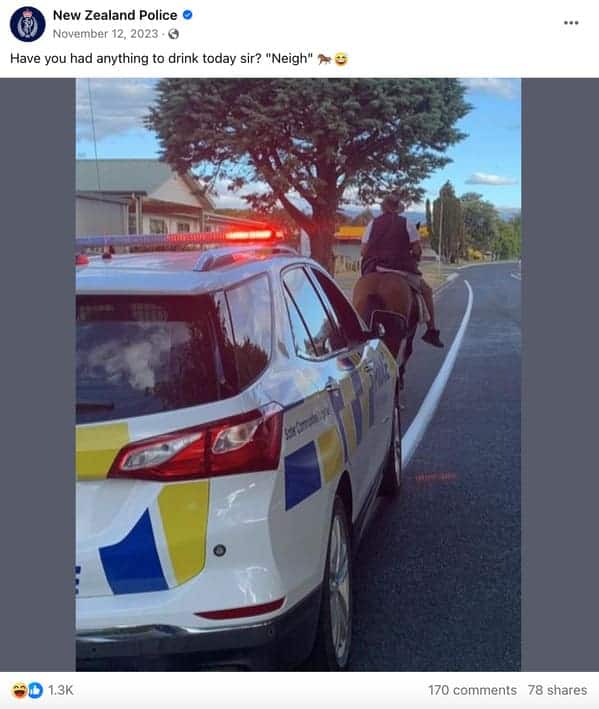
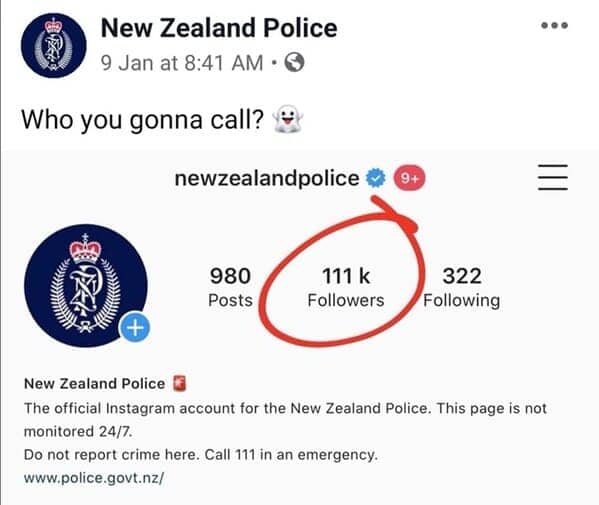
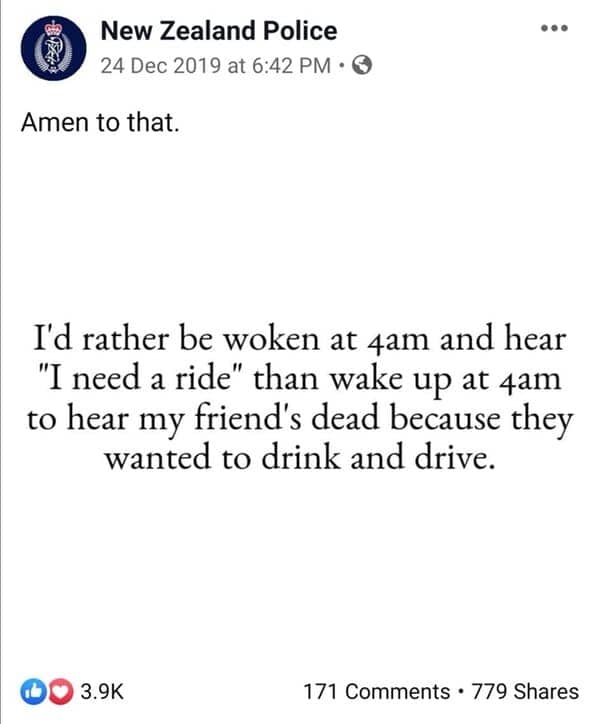
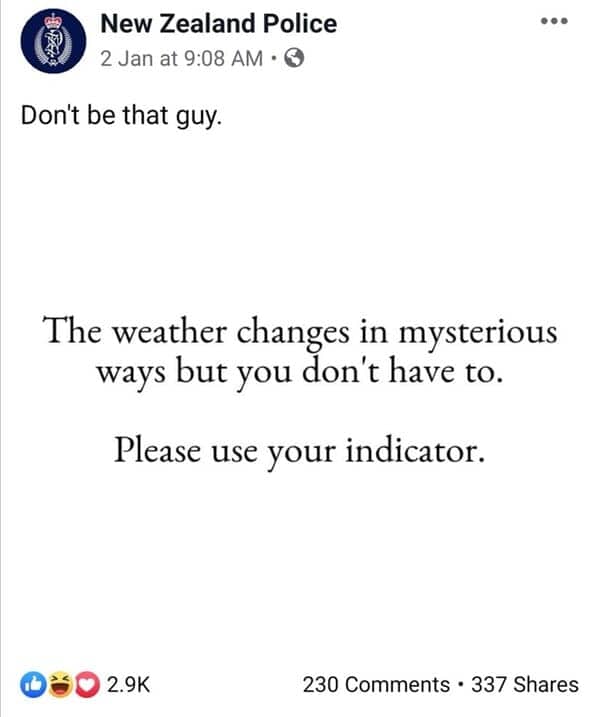
Government social media accounts exist on a spectrum. At one end: the municipal water authority posting regulatory updates in Helvetica. At the other end: the New Zealand Police Facebook page, which is currently explaining seatbelt laws through the medium of Mariah Carey lyrics and has been doing this for years without once showing signs of slowing down. The NZ Police page is the account that broke something in the collective understanding of what government communication is allowed to be, and the break was entirely welcome, and the rest of us have been following at a respectful distance ever since, notifications on, ready for whatever pun-heavy road safety metaphor arrives next.













New Zealand Police Facebook
Read More
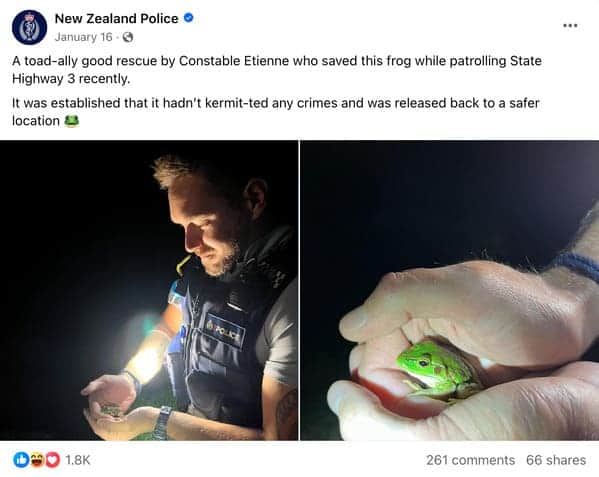
Funny police social media has existed in pockets across various platforms, but the New Zealand Police have achieved something that most institutional accounts never manage, which is a consistent voice that is recognizably theirs across every post regardless of subject matter. The seatbelt message is different every week. The animal content is different every week. The pun orientation is different every week. But the tone — warm, slightly unhinged, fully committed to the bit, aware that the bit is a bit — remains identical, and that consistency is what distinguishes a genuinely funny account from an account that occasionally gets lucky. This is not occasional luck. This is a philosophy.
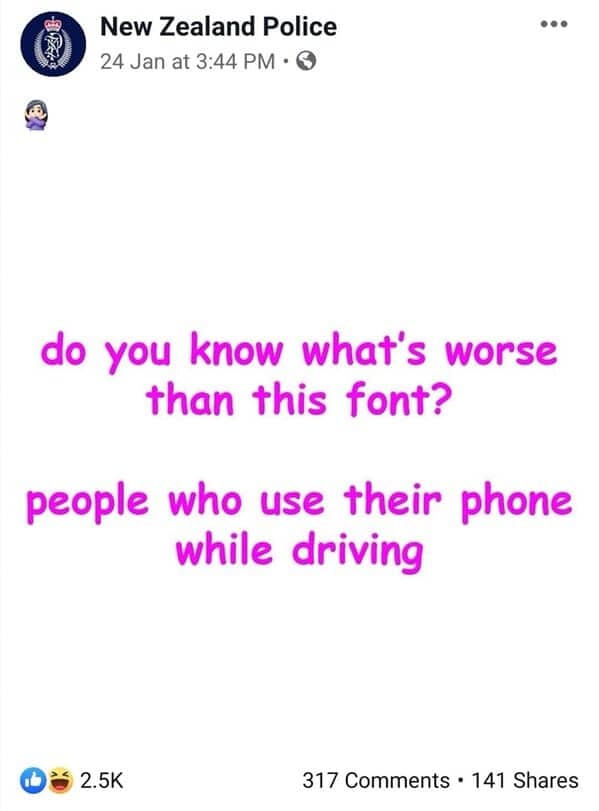
The most remarkable thing about the NZ Police Facebook strategy is not the jokes. It is the reach those jokes have achieved on behalf of content that is, at its core, road safety information. Stop signs and speed limits and seatbelt compliance are not traditionally considered engaging content categories. They do not tend to generate shares. They do not tend to generate the kind of affectionate commentary that builds a community around a page. And yet here we are, in a world where people screenshot a police department’s use of Comic Sans to make a point about distracted driving and send it to their friends, who then share it, and the road safety message travels embedded inside the joke like a vaccine inside a piece of cheese. The cheese is a pun about sheep. The vaccine is “buckle up.” The sheep are real.
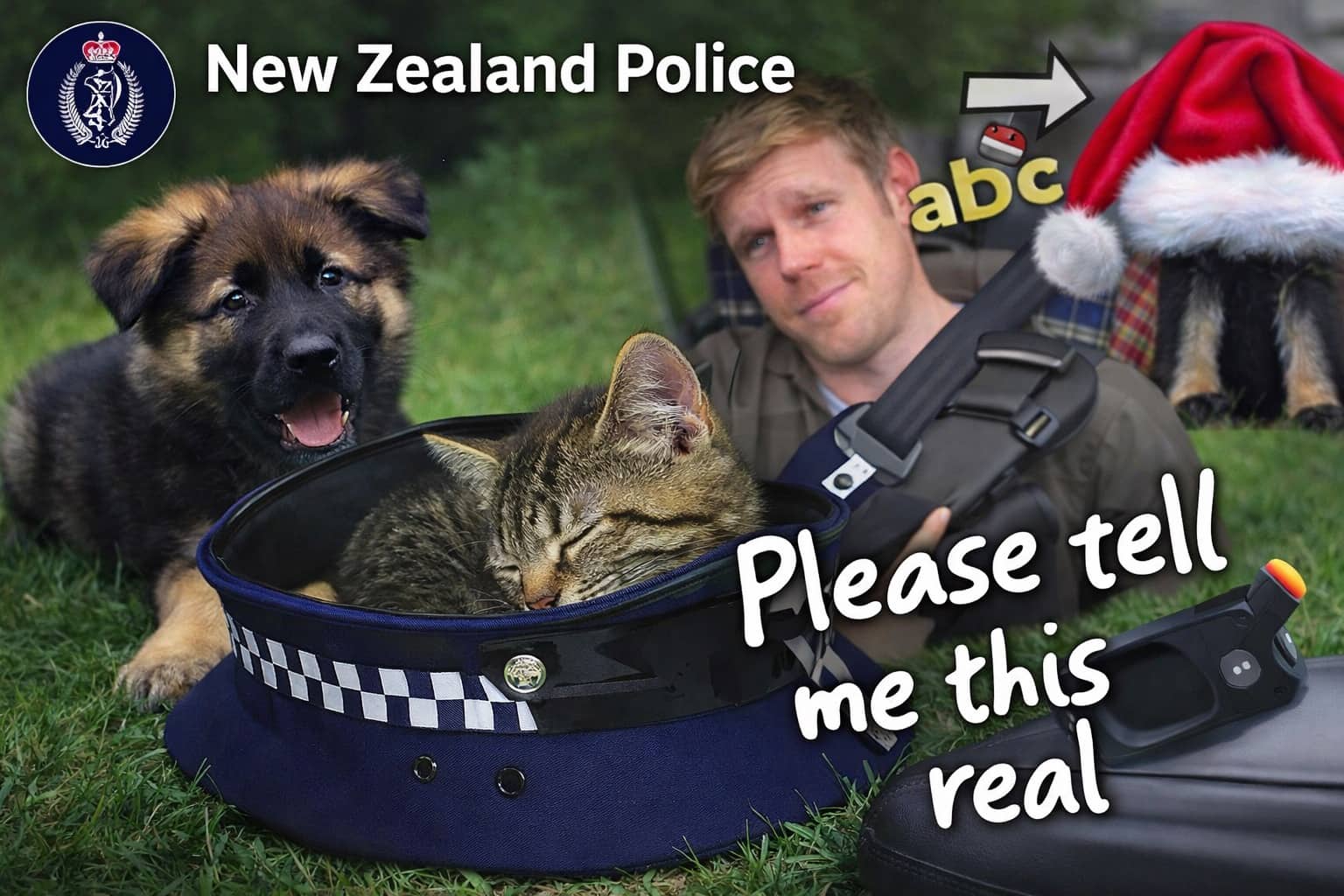
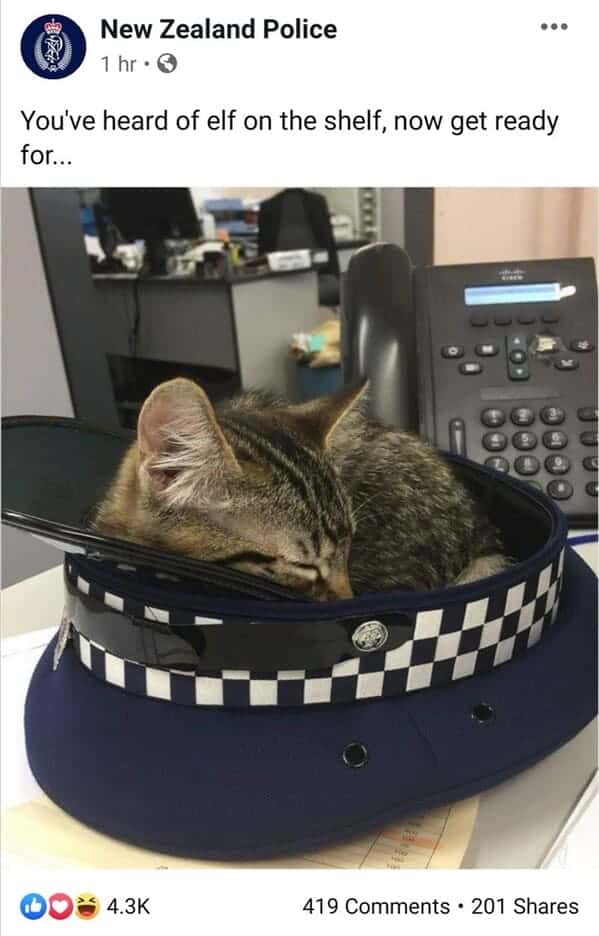
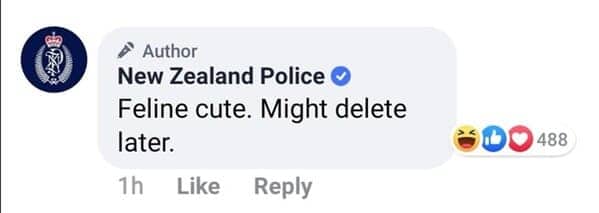
What the account has also understood, and what most institutional accounts miss entirely, is that the animals are not a distraction from the message. The animals are the message, in the sense that they create the relationship between the account and its audience that makes the safety information land rather than scroll past. A kitten sitting inside a police hat is not an advertisement for road safety. But the person who stops scrolling for the kitten is now in a conversation with the New Zealand Police, and the conversation is warm, and the next post in their feed might be about indicator use, and they are now significantly more likely to read it than they would have been if the kitten had never been in the hat. This is not accident. This is strategy. The kitten was always load-bearing.
If this gallery has made you reach for the follow button, government and institutional social media humor is a companion category documenting the full spectrum of what happens when public bodies are given Twitter or Facebook accounts and varying levels of creative freedom. Funny police posts and public service humor belong right beside it for the wider tradition the NZ Police are operating within and, currently, leading by a comfortable margin. And for anyone most drawn to the pun infrastructure specifically, wordplay and pun content is a well-populated space where the sheep/traffic/baa construction has been deployed in multiple dialects and the commitment to the craft is always respected.
Read Memes
Get Paid


Alex Thompson has been chronicling internet culture and meme phenomena for nearly seven years. Starting at CollegeHumor and later becoming lead meme editor at Mashable, Alex has covered everything from vintage internet memes like Rickrolling to recent viral events such as Corn Kid and Grimace Shake. With a keen eye for what connects and entertains digital audiences, Alex writes with humor, relatability, and deep knowledge of online culture. At Thunder Dungeon, Alex is the go-to source for meme analysis, viral breakdowns, and internet nostalgia.