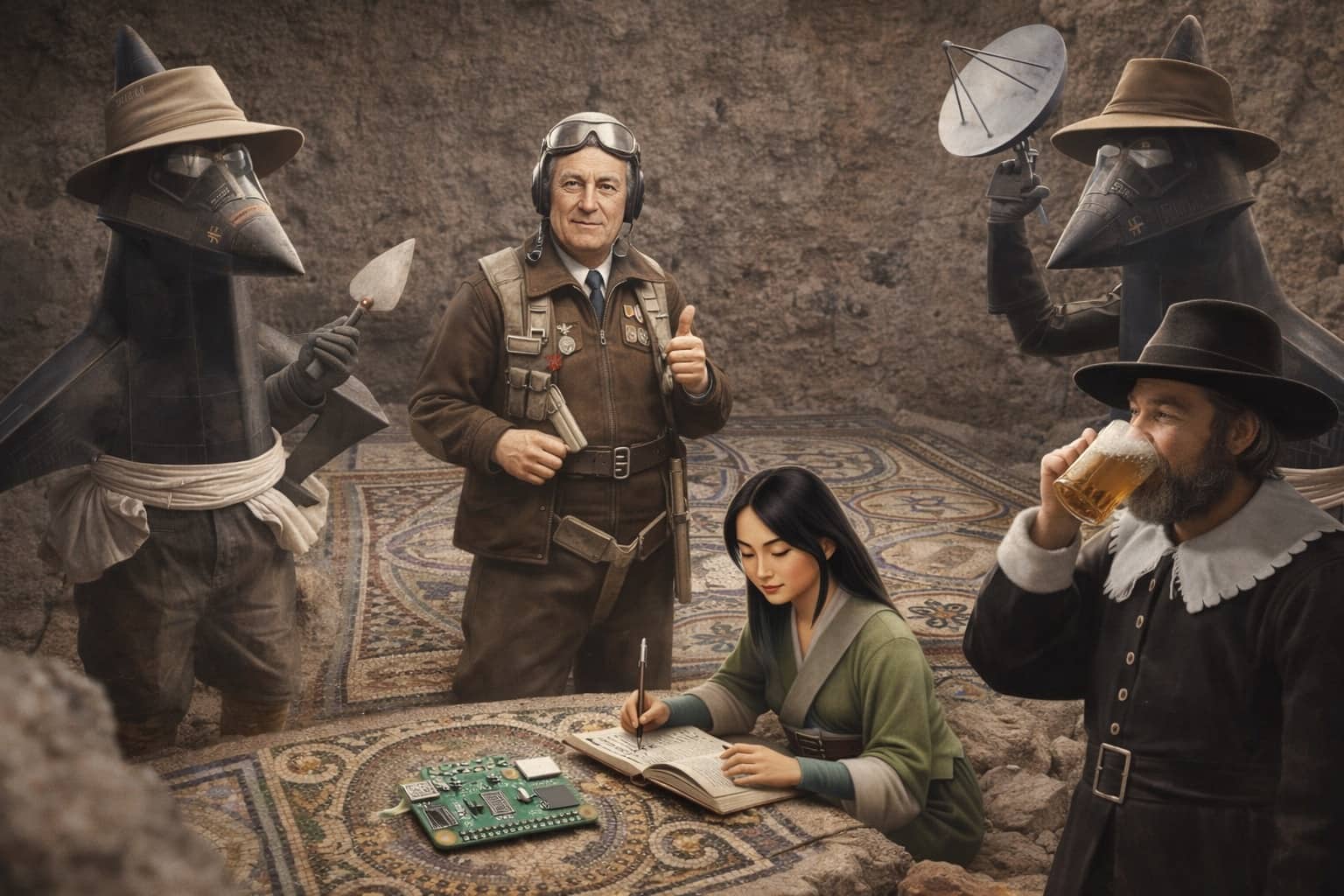

History, as it was taught, was largely a story about the decisions of people who already had statues. It moved in straight lines: dates, treaties, the names of kings, the wars between them. What it routinely omitted was the texture, the operational detail, the actual circumstances under which civilization kept making itself up as it went along. The Pilgrims did not choose Massachusetts. They ran out of beer. That is not a colorful footnote. That is the founding geographic fact of an entire regional identity, determined by beverage inventory on a boat in the North Atlantic, and it did not appear in a textbook because whoever wrote the textbook made a judgment call about dignity that the Pilgrims themselves did not earn. Weird history facts are not weird because the past was strange. They are weird because the version we were given was edited.


The entire defense strategy was "go faster." That is it. That is the memo. And it worked every single time.







Weird history
Read More
Strange historical facts travel online for the same reason all good stories travel: they contain the specific detail that makes the thing real. The SR-71 Blackbird’s entire defensive strategy was to go faster. Not evasive maneuvers. Not countermeasures. Faster. The engineering required to make “faster” the answer to “thousands of missiles” is extraordinary, but the strategy itself is beautiful in its simplicity. It is the kind of decision that could only be made by someone who had already thought through every other option and concluded that outrunning the problem was the most elegant solution available. It was correct. The record stands.
Unbelievable history facts in the WW2 category deserve the weight they carry, because the people in those posts are not historical curiosities. They are specific people who made specific decisions under specific pressure and have been inadequately acknowledged for most of the time since. The Soviet aces who were best friends and each accumulated kills that would have made them legends in any other air force in any other war are not footnotes. They are the story. The pilot who was so lethal that he accidentally shot down friendly aircraft over Berlin and the Americans filed a complaint is both genuinely funny and completely clarifying about what the word “ace” meant when applied to someone at that level. History gave us the broad strokes. Weird history is going back in with a fine brush.
The 2,000-year-old mosaic discovered under the ground in Turkey and the thousand-year-old Mulan legend that existed for ten centuries before anyone in a studio saw the pitch are both, at their core, the same story: extraordinary things that were already there, fully formed, waiting for someone to notice. The mosaic was under someone’s dirt the entire time, unbothered, patient, holding its portrait medallions with the composure of something that knew it would eventually be found. The Mulan story survived through oral tradition across a millennium before anyone decided to animate it. Both objects outlasted every institution that ignored them. Both were worth the wait. History is full of things that were worth the wait and got there anyway, which is, quietly, the most optimistic fact this gallery contains.
If this gallery has sent you to a history rabbit hole, weird history facts broadly are a well-populated and continuously growing category where the beer boat geography is only one of several founding myths that did not survive the dignity edit. Historical figures who were left out of textbooks belongs right beside it for the long list of people whose stories were recovered by the internet after the curriculum moved on. And for anyone who found the medieval mitten entry most compelling, dark history facts are a companion space where the “itchy mittens” framing is the gentlest available description of several things that happened in the Middle Ages and were not put on a quiz.
Read Memes
Get Paid


Alex Thompson has been chronicling internet culture and meme phenomena for nearly seven years. Starting at CollegeHumor and later becoming lead meme editor at Mashable, Alex has covered everything from vintage internet memes like Rickrolling to recent viral events such as Corn Kid and Grimace Shake. With a keen eye for what connects and entertains digital audiences, Alex writes with humor, relatability, and deep knowledge of online culture. At Thunder Dungeon, Alex is the go-to source for meme analysis, viral breakdowns, and internet nostalgia.