
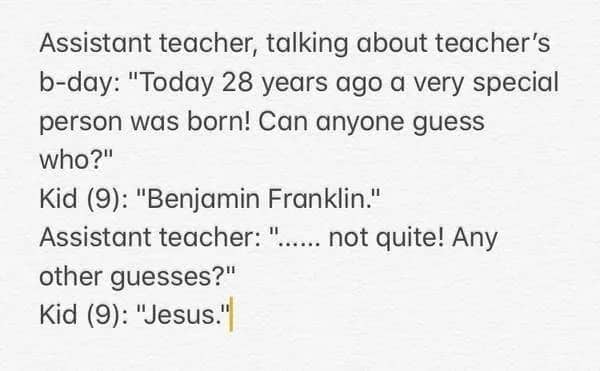
Every teacher carries a private museum. It fills up slowly over the years — a worksheet, a note, a parent email, a quote so perfect and so wrong that it gets written in a journal and saved indefinitely because no one would believe it otherwise. The museum is not organized. It does not need to be. It exists in a category of memory that education research has not fully addressed, which is the category of things said by children that could not have been scripted, that arrived without warning and without malice, and that lodged permanently in the brain of the adult who received them. Teachers vs students moments circulate online because they are the closest thing to an honest account of what happens inside a school building between the morning bell and dismissal – which is, primarily, improv comedy performed by people who do not know they are performing.
The kid chose violence, and chose it confidently.
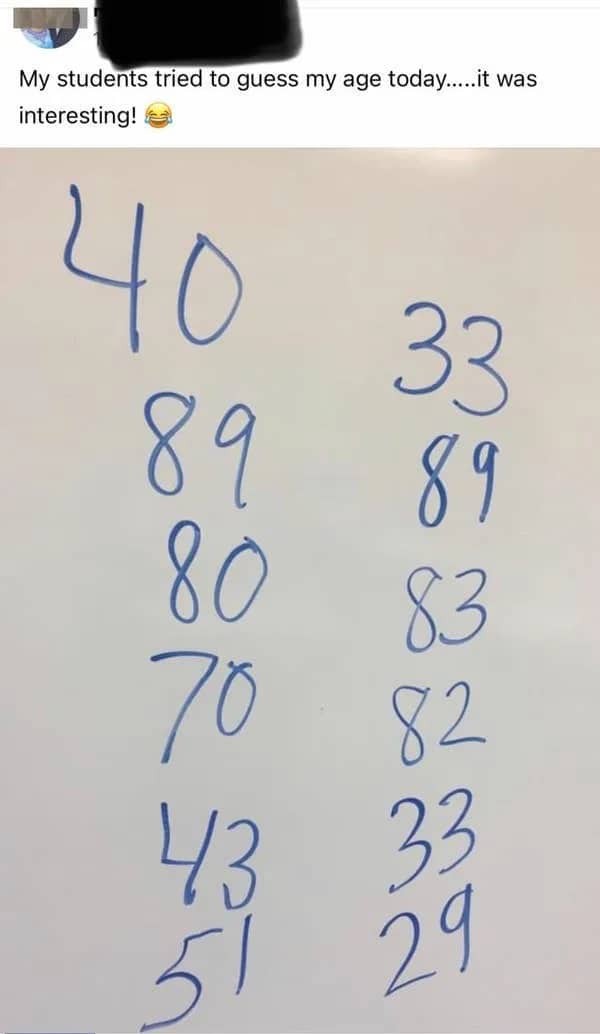
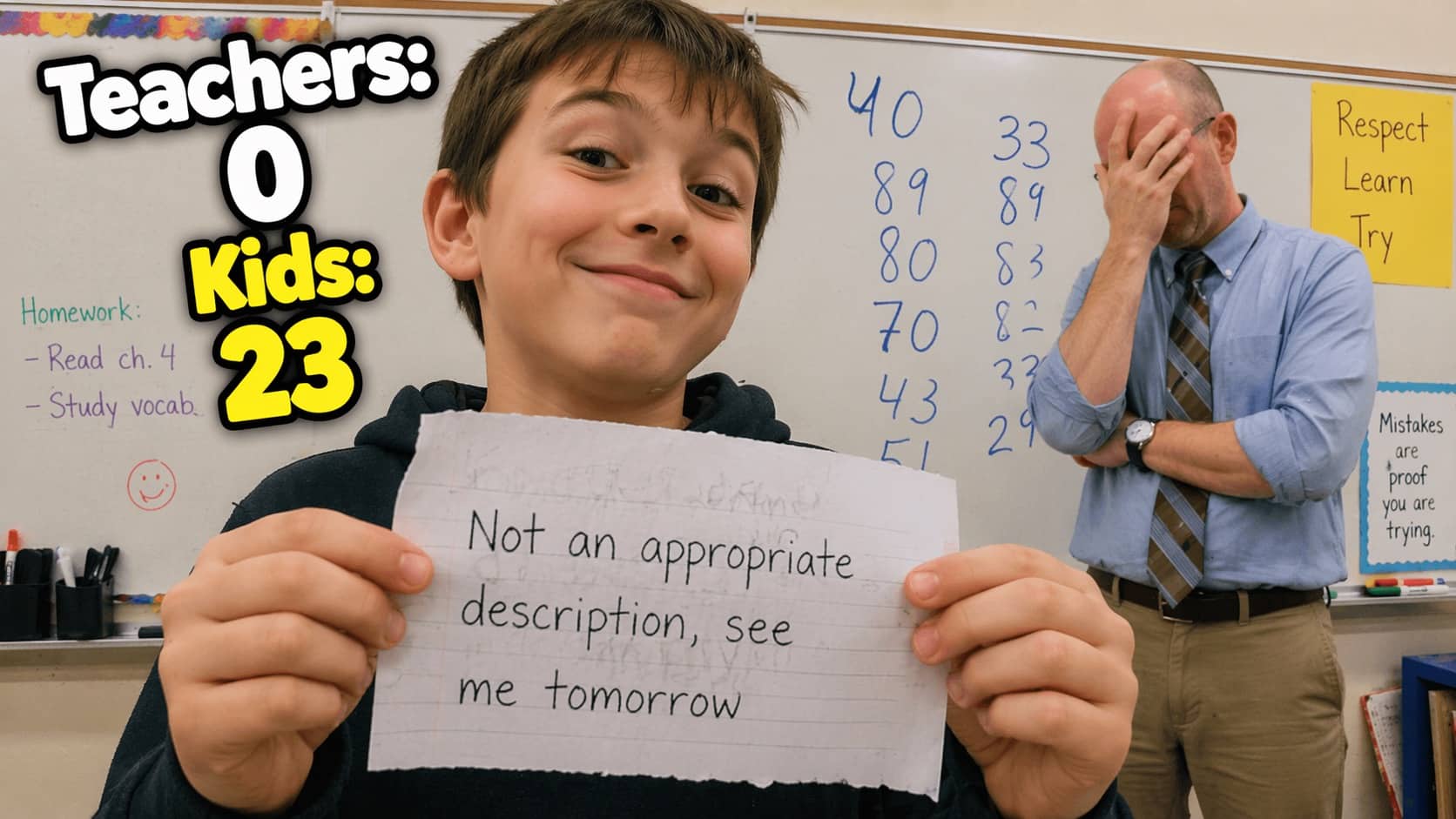
Someone thought she was 89. That child should not be present at parent-teacher conferences.
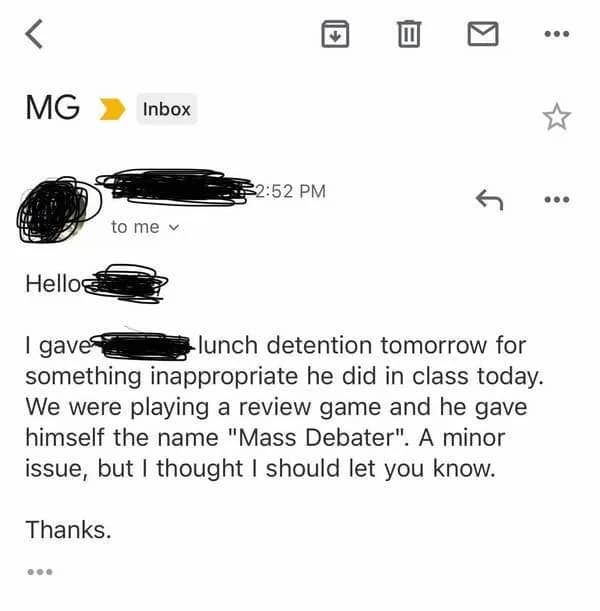
They knew what they were doing.
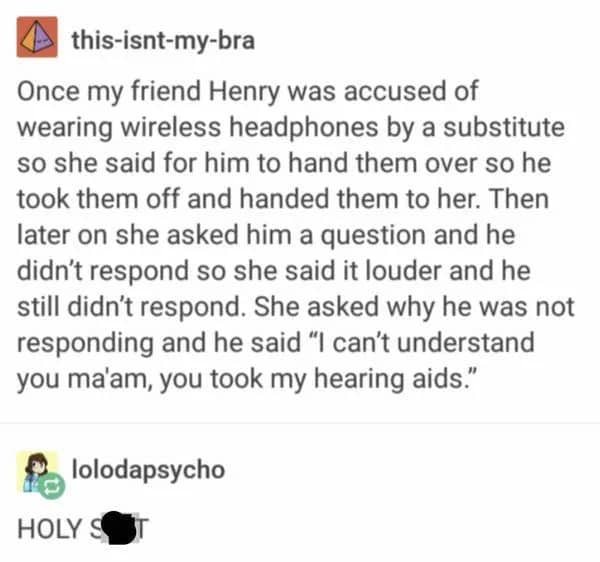

Policy he wrote, prison he built.

Teachers vs students
Read More
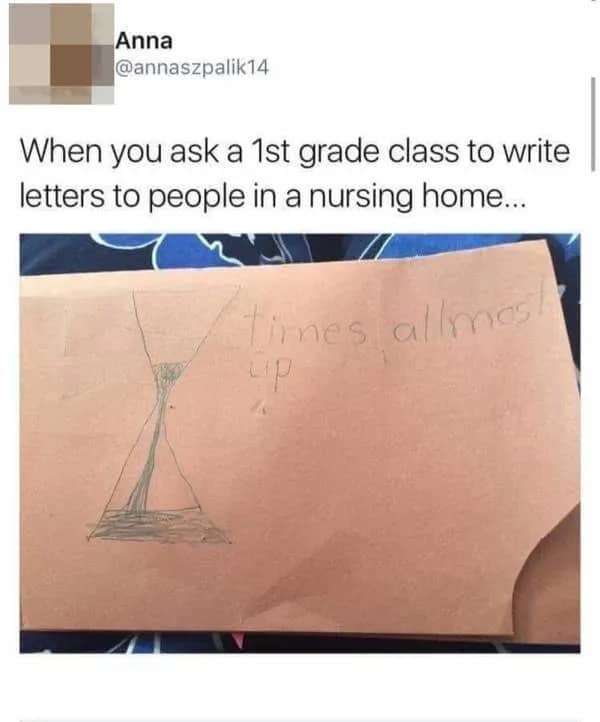
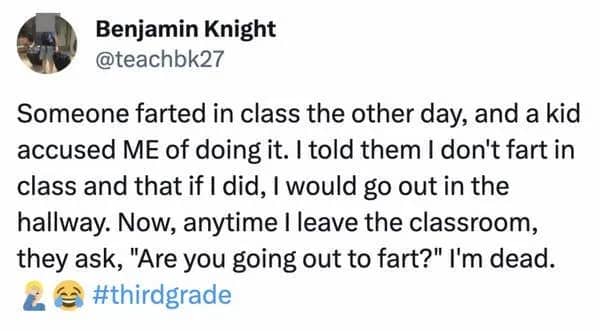
The confidence is the thing. Children say things with the full weight of conviction behind them, unmediated by the self-consciousness that develops later and filters out the most interesting observations. The kid who wrote “time’s almost up” to a nursing home resident and drew an hourglass underneath did not know they were being brutal. They were being thorough. The child who guessed their teacher was eighty-nine did not know they were delivering an existential event. They were doing their best with the information available to them, and the information available to them suggested a wide possible age range, and they chose a number with confidence, and the confidence is the whole thing. Funny student moments are almost never the product of intent. They are the product of children operating on pure logic with incomplete data, which is a combination that produces results the adult world cannot replicate.
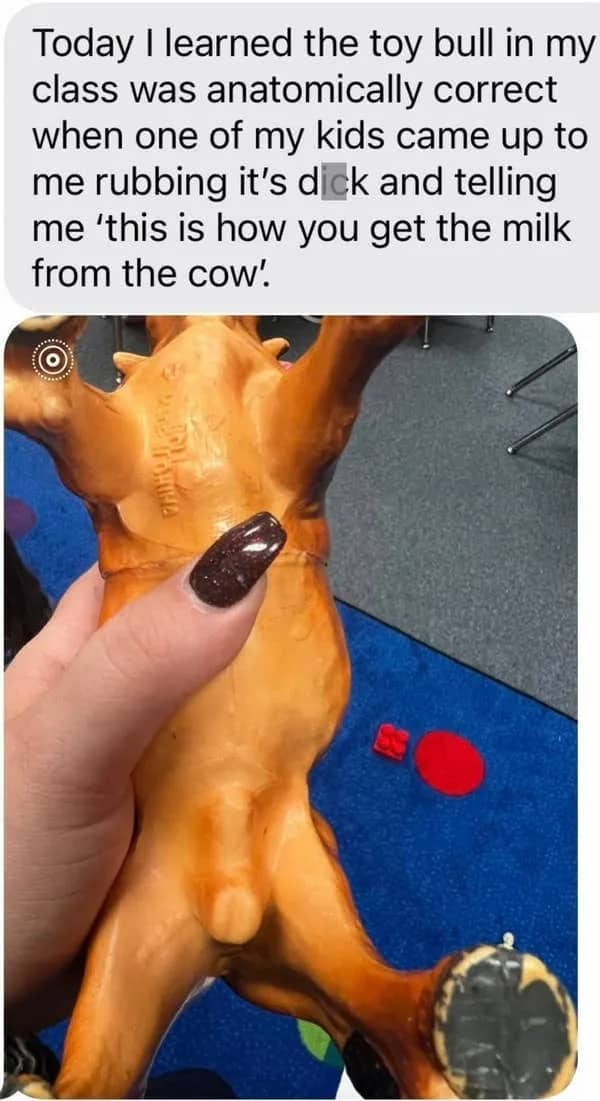
What makes classroom humor land so consistently is not just the kids — it’s the teachers, who are required to receive these moments professionally, process them personally, and continue the lesson. The teacher who got the Mass Debater email sent it to a parent in the required format without, presumably, being able to fully explain the tone of the message. The teacher holding the anatomically correct toy bull is doing a job that day that the teaching credential did not fully prepare them for. The substitute who received hearing aids as “headphones” had a decision to make and made it and is still making it. These are professionals absorbing a volume of unfiltered humanity on a daily basis and then going home and posting about it, which is both a coping mechanism and a public service.
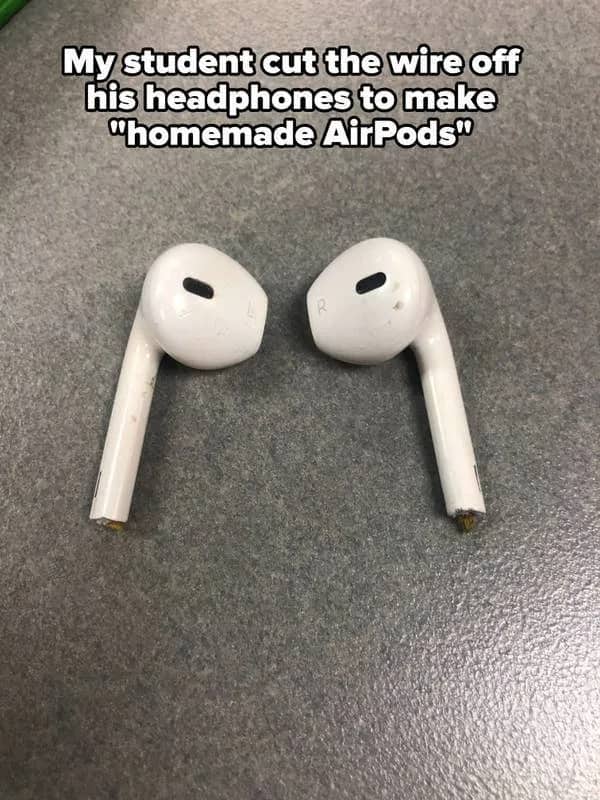
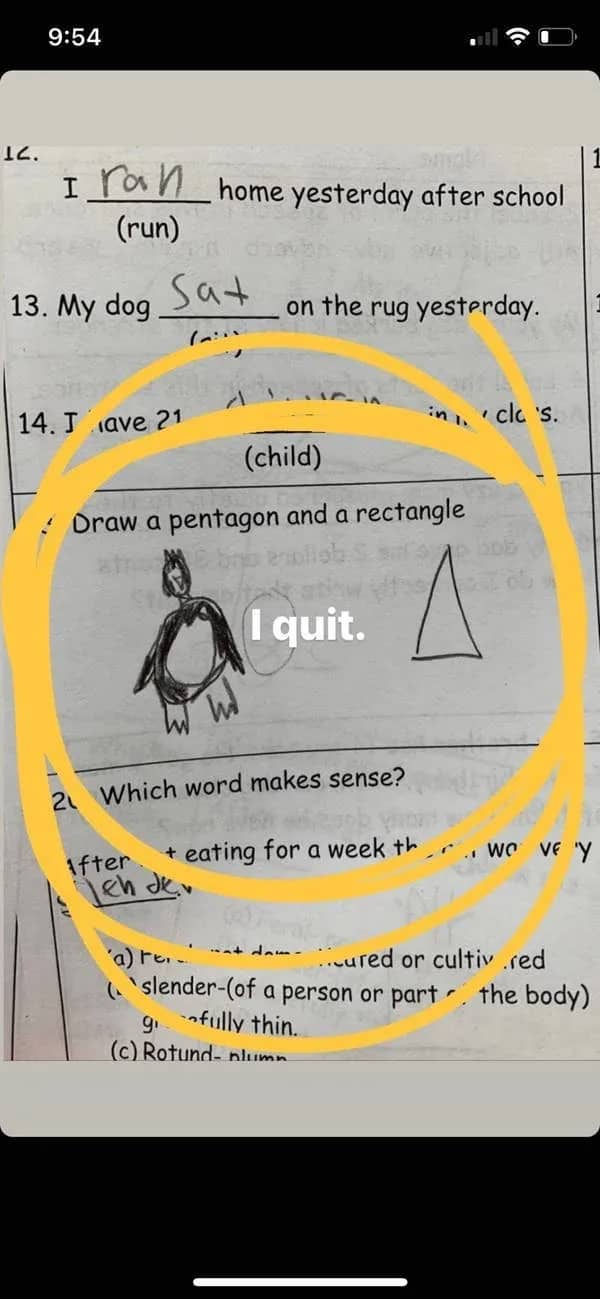
Classroom chaos moments that make their way online tend to cluster around a specific type of event, which is the moment where the child and the institution’s expectations are most visibly operating on completely different frequencies. The student who wrote “I quit” on a geometry worksheet about pentagons did not lack effort. They made a decision and communicated it clearly. The kid with the homemade AirPods made from cut earphone wires understood the problem — the earphones were wired, the era is wireless — and solved it with what was available. Both of these are, in their own way, problem-solving. The school did not recognize this at the time. The internet has.
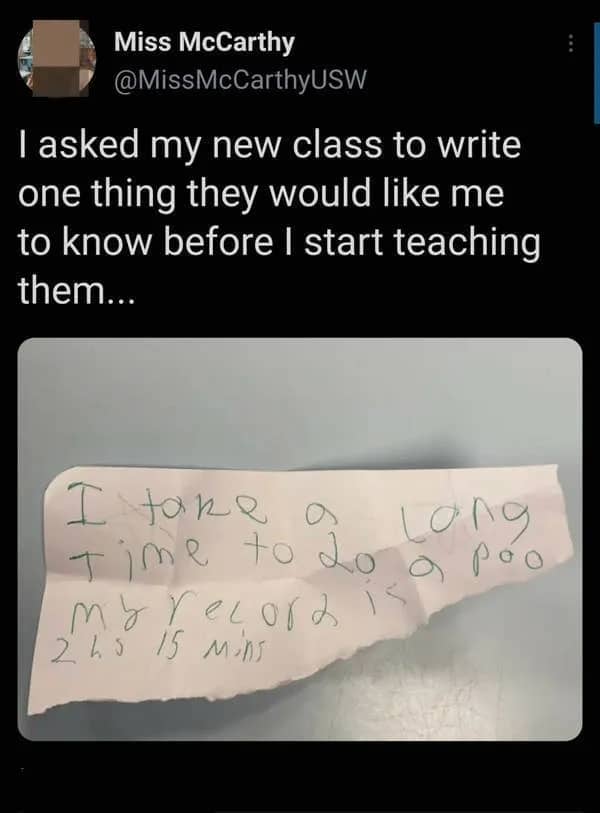
If this gallery has made you want to send a thank-you note to every teacher you’ve ever had, teacher humor and classroom memes are a well-populated and continuously updated category where the museum never stops filling up. School fail posts belong right beside it for the full range of academic decisions that produced unexpected outcomes. And for anyone who found the bathroom record announcement most memorable, kids saying inappropriate things content is a companion space where the honesty is always complete and the timing is never in question.
Read Memes
Get Paid


Michael Hartley, or just "Mike," is an editor and seasoned meme historian whose articles have traced the evolution of meme humor from early Impact-font classics to today’s TikTok sensations. With nearly a decade spent as senior editor at ViralHype and as a regular contributor to Cheezburger, Mike has dissected the rise of meme legends such as Bad Luck Brian, Success Kid, and Doge. When he's not hunting down meme gold for Thunder Dungeon, Mike teaches workshops on meme marketing and the psychology behind shareable content.