
History has a habit of editing itself toward the dramatic and the tidy: the battles, the plagues, the dynasties. What tends to get cut in that process is the genuinely strange texture of daily life, the things that were simply normal to the people living through them and are now either inexplicable or delightfully weird from the outside. Middle Ages facts, the kind that do not appear in the standard curriculum, tend to fall into that second category with a regularity that suggests the medieval period was doing something considerably more interesting than the textbook version implies. These eighteen images are the footnotes that should have made the main text.






Middle Ages facts
Read More
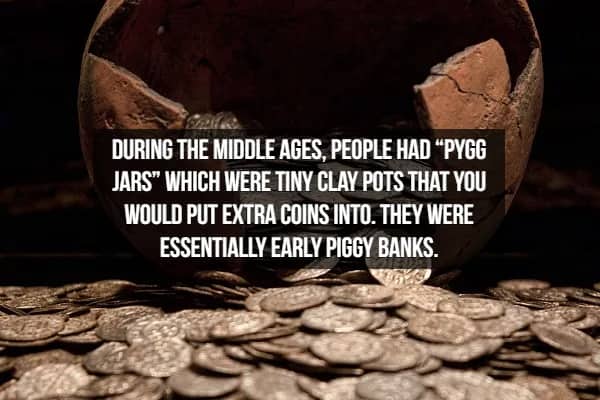
Medieval history facts earn their virality when they reveal that something modern and unremarkable has a deeply chaotic origin story, and the piggy bank is the gallery’s clearest example of this. Pygg was a type of orange clay widely used to make household vessels in medieval England. People stored coins in pygg jars. Over time, by an accident of phonetics and the evolution of the language, pygg jars became pig-shaped. The oinking ceramic on the shelf at every bank is not a design choice. It is a linguistic inheritance from a material that no longer exists, preserved in a shape it arrived at by mistake. No one planned this. It simply happened, and now it is everywhere.
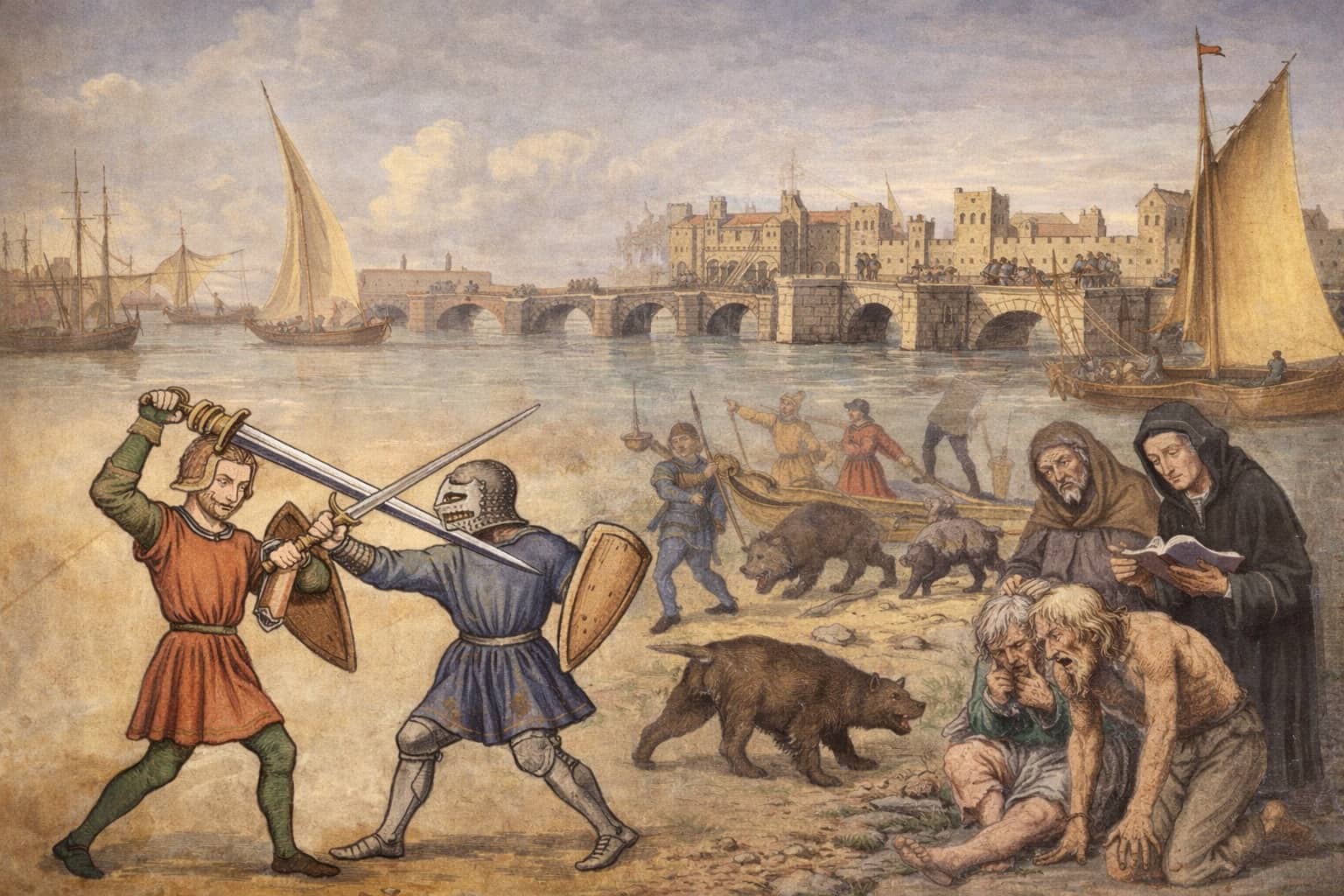
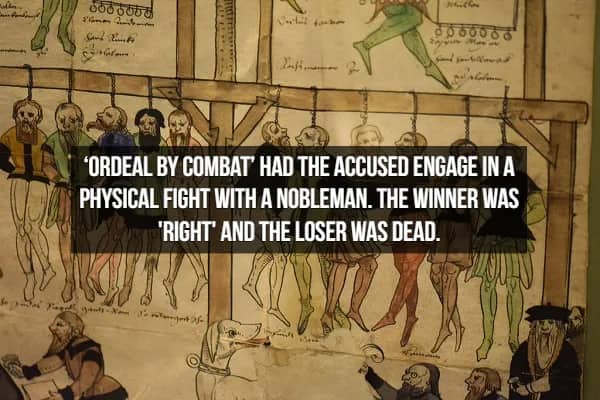
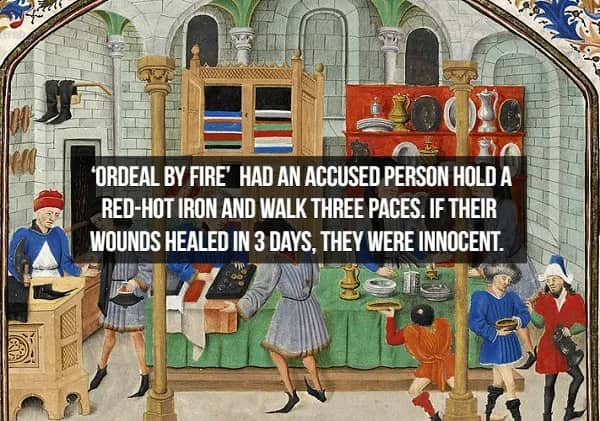
Surprising history facts about medieval justice carry a specific weight because they reveal a legal system that was, in several important respects, operating on logic that was internally consistent even when externally alarming. Ordeal by combat, wherein an accused individual could demand resolution through a fight to the death with a trained nobleman, and the survivor was simply declared to have been correct all along, is not a system without reasoning. The reasoning is just not the reasoning that courts use now. The accused had options. The options were limited and involved significant personal risk, but they were options. Modern procedural delays take on a different character when viewed from this particular historical distance.
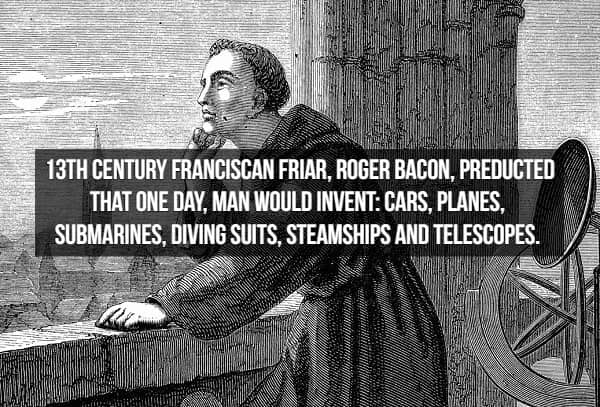
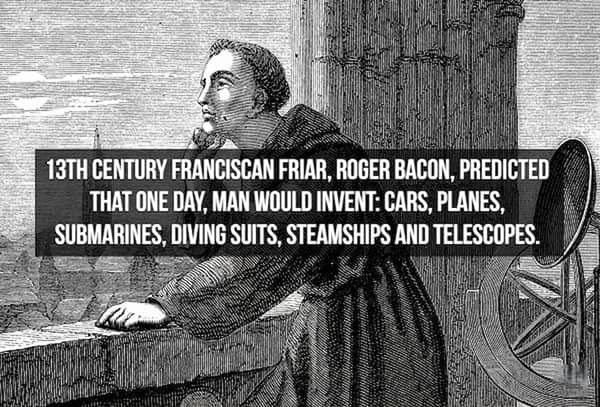
Roger Bacon, a Franciscan friar working in a monastery in Oxford in the thirteenth century, wrote descriptions of carriages moving without horses, flying machines, and devices for traveling underwater, among other predictions that would not be realized for several centuries. He did this without access to any of the engineering that would eventually make these things possible. He was working from logic, observation, and a commitment to the idea that the natural world could be understood and applied in ways that had not yet been attempted. The subsequent history of technology is, in a meaningful sense, a slow process of catching up to what he had already outlined. No notes. Several centuries of notes, actually, but none of them corrections.
The gargoyle entry is the one that tends to produce the most immediate recalibration in anyone who has spent time looking up at cathedral facades wondering about the symbolic significance of what they were seeing. Medieval architects needed to direct rainwater away from stone walls to prevent erosion. They solved the problem by carving open-mouthed figures that functioned as drainage channels. The figures were elaborate because the craftsmen were skilled and because detail was the standard. The gargoyle is simultaneously a piece of engineering, a piece of art, and a drainage solution that has been attributed spiritual significance by everyone who looked at it without knowing it was a gutter. Medieval engineers understood the assignment. The assignment was plumbing.
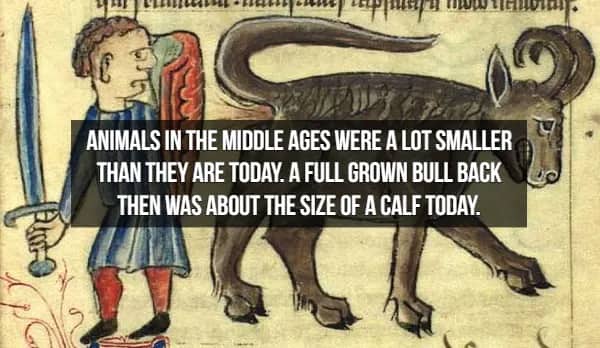
The medieval bull being roughly the size of a modern calf, and the brown bear going extinct in England by the eleventh century only to be reimported for blood sport, are the natural world entries that best capture the texture of a period in which the relationship between humans and animals was conducted at a scale and proximity that modern life has entirely removed. Everything was smaller, everything was closer, and the management of the natural world was considerably more experimental than the current approach, which is itself not without its own problems.
If this gallery has recalibrated the standard historical picture in useful and interesting ways, medieval history content broadly is a rich destination for anyone who finds the period more compelling now than it appeared in a classroom context. Weird history facts are the natural companion category, covering the same “nobody mentioned this” energy applied to every period and civilization that has ever generated documentation. And for the specific angle of scientific and technological history underwritten by individual visionaries operating ahead of their time, history of invention content is waiting with a long and consistently surprising list.
Read Memes
Get Paid


Jake Parker, known around the web as "Jay," is a digital writer with over 10 years of experience covering internet humor, meme trends, and viral content. Before joining Thunder Dungeon, Jay was the lead editor at MemeWire, where he helped curate memes that broke the internet, including coverage on trends like Distracted Boyfriend, Kombucha Girl, and Bernie Sanders’ Mittens. A self-proclaimed "professional procrastinator," Jay spends his downtime scrolling Reddit and Twitter to stay ahead of what's about to break the internet next.