25 Facts About The Human Body Cuz You’re A Walking Miracle

Priya Coleman

7 hours ago

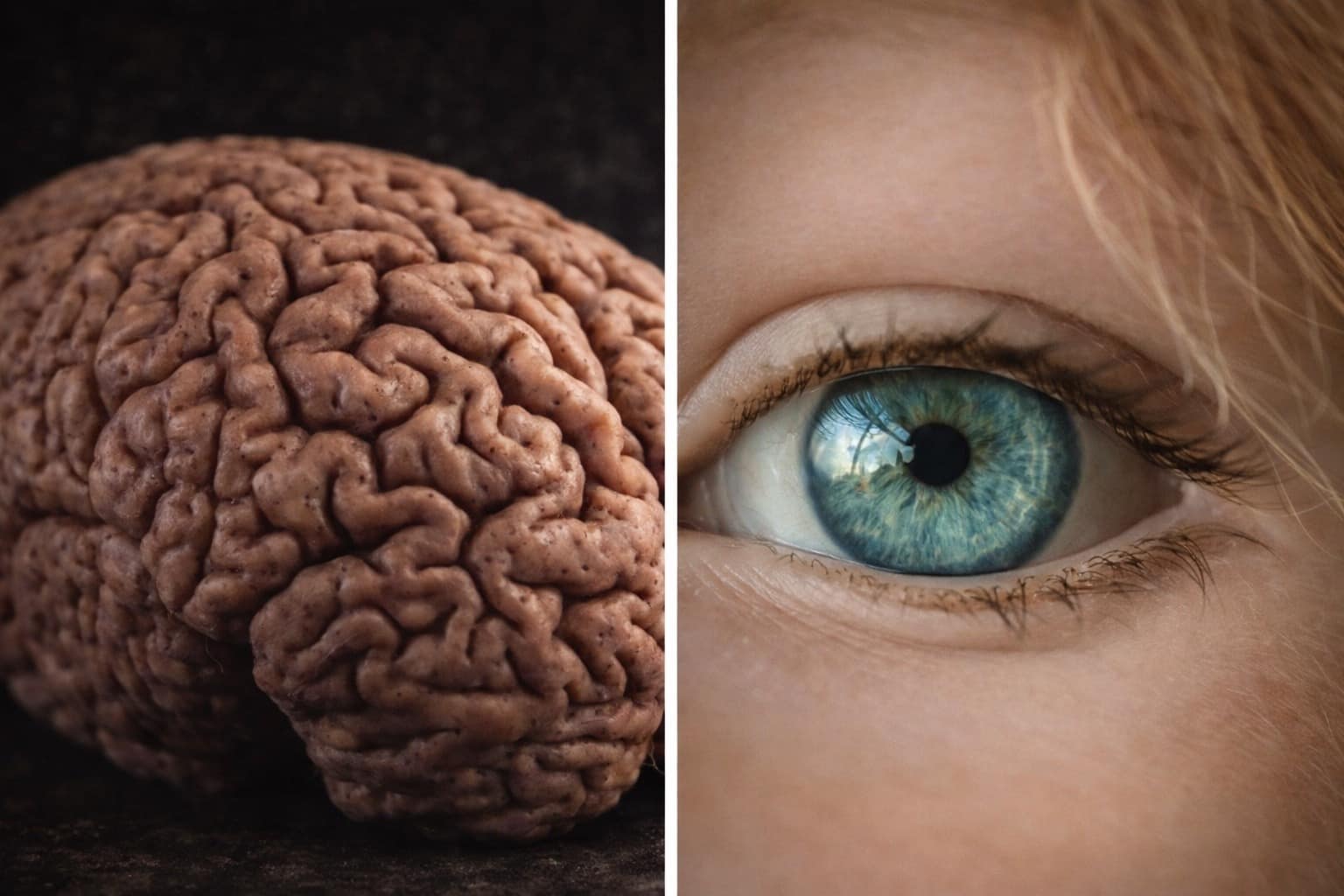
facts about the human body compilation: A collage featuring a detailed anatomical human brain, a striking blue eyeball highlighting fast healing, and a powerlifter representing the body's hidden survival strength.

Facts about the human body are equal parts fascinating and mildly unsettling—in the best way. You live in this thing every day, yet it’s doing thousands of tiny, complicated jobs in the background like a very hardworking roommate you never properly thanked. Consider this your friendly reminder that you are, biologically speaking, kind of wild.

A dark, atmospheric close-up of hands massaging a person's bare back, featuring a facts about the human body text overlay stating that the average adult possesses a massive 22 square feet of skin.

Today’s dump mixes human anatomy facts, some quick medical facts, and a few science facts that feel like they should come with a tiny “did you know?” sticker on your forehead. It’s learning, but make it cozy and a little bit “how is that real?”

Facts About The Human Body To Learn Today
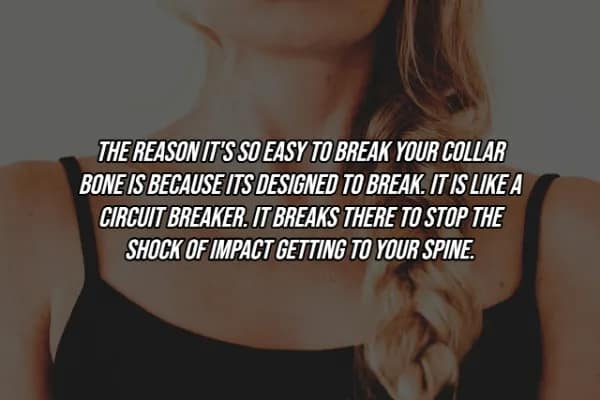
A focused shot of a woman’s neck and collarbone, with a facts about the human body caption explaining that the clavicle is biologically engineered as a "circuit breaker," designed to snap during impact to protect the spine.
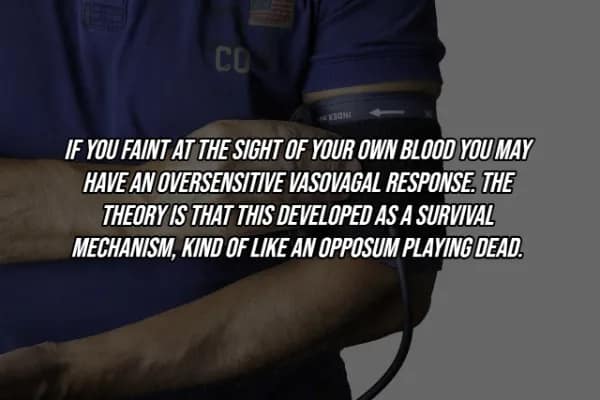
A medical-style photo of an arm wearing a blood pressure cuff, overlaid with a facts about the human body segment detailing how fainting at the sight of blood is an oversensitive "vasovagal response" developed as a survival mechanism.
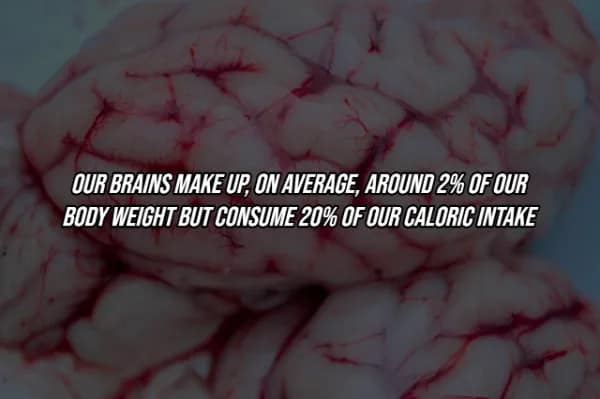
Gemini said High-Octane Alt Text (Part 1, Images 1-10) Image 1 A dark, atmospheric close-up of hands massaging a person's bare back, featuring a facts about the human body text overlay stating that the average adult possesses a massive 22 square feet of skin. facts about the human body-1-20260323.jpg Image 2 A focused shot of a woman’s neck and collarbone, with a facts about the human body caption explaining that the clavicle is biologically engineered as a "circuit breaker," designed to snap during impact to protect the spine. facts about the human body-2-20260323.jpg Image 3 A medical-style photo of an arm wearing a blood pressure cuff, overlaid with a facts about the human body segment detailing how fainting at the sight of blood is an oversensitive "vasovagal response" developed as a survival mechanism. facts about the human body-3-20260323.jpg Image 4 A raw, detailed visual of a human brain on a dark background, paired with a facts about the human body stat revealing that while the brain is only 2% of your weight, it greedily consumes 20% of your daily calories.
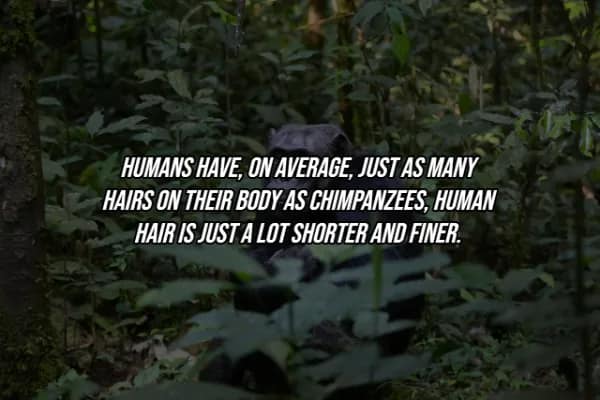
A chimpanzee peering through thick jungle leaves, illustrating a facts about the human body comparison that humans have roughly the same number of body hairs as chimps, ours are just significantly shorter and finer.
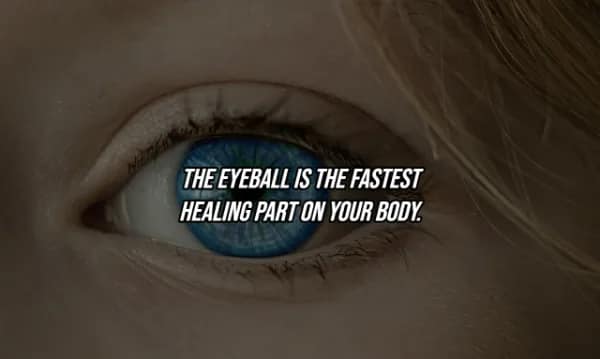
An extreme close-up of a striking blue iris, featuring a facts about the human body pop-up stating that the eyeball is the fastest-healing part of the entire human anatomy.
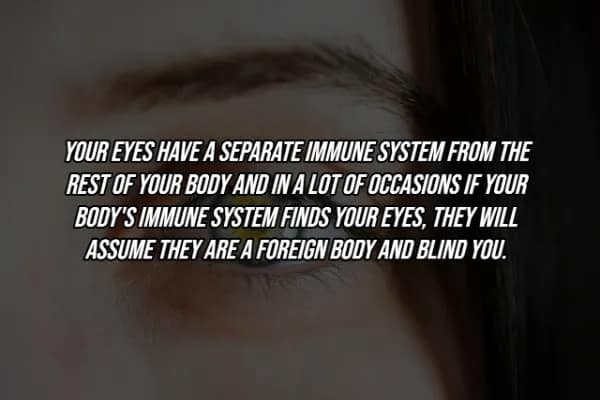
A somber, shadowed close-up of a human eye with a disturbing facts about the human body explanation that eyes have an "isolated" immune system; if your main immune system "finds" them, it may attack and cause blindness.
A dramatic profile shot of a woman’s jawline in deep shadow, accompanied by a facts about the human body fact declaring that the masseter (jaw muscle) is the strongest muscle in the human body relative to its size.
pair of feet resting on a bed, highlighting a bizarre facts about the human body timeline: you can physically grow an entire new human being in less time than it takes for a missing toenail to fully regrow.
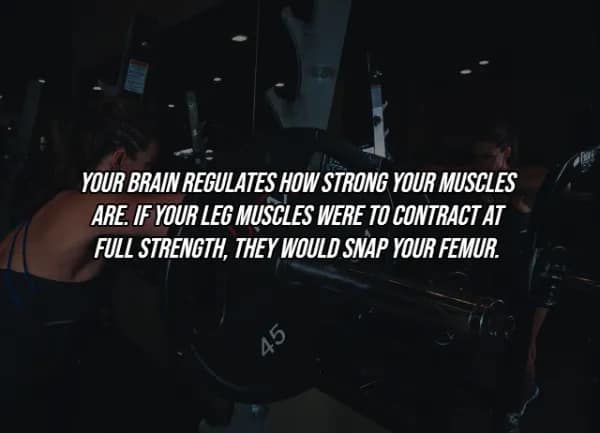
A dark image of a person lifting a heavy barbell in a gym, overlaid with a chilling facts about the human body warning that the brain limits muscle output because a full-strength leg contraction would actually snap your own femur.
A woman lying on a bed with headphones around her neck, featuring a facts about the human body caption about the surprising risk of pulling a jaw muscle during a simple yawn.
Two friends holding sparklers in a dark forest, illustrating a facts about the human body entry explaining that humans are actually bioluminescent, though the glow is too faint for our eyes to detect.
expansive view of a colorful hillside city, paired with a facts about the human body note on how generational living in high altitudes leads to evolutionary adaptations like larger lung capacity and altered blood makeup.
A silhouette of a person crying in the dark, featuring a facts about the human body revelation that a runny nose during crying is actually excess tears draining through the tear ducts rather than mucus.
A close-up of an open palm catching a rainbow light flare, accompanied by a facts about the human body statistic stating that humans shed roughly 30,000 dead skin cells every single minute.
A simple red fabric heart hanging from a weathered rope, overlaid with a bizarre facts about the human body claim that the actual human heart has an earthy scent similar to mushrooms.
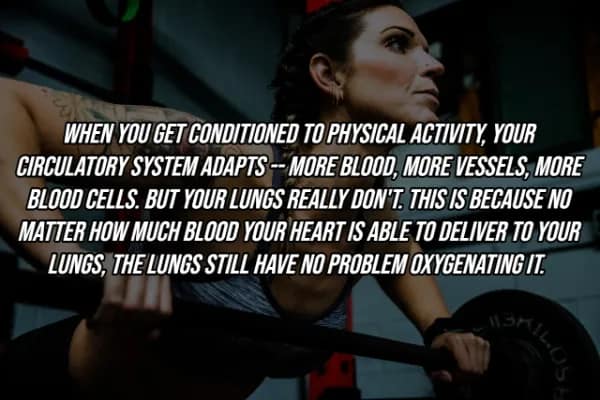
A woman training intensely with a barbell, featuring a facts about the human body explanation of why the lungs don't need to physically adapt to fitness as much as the circulatory system does.
A person sitting on a wooden floor holding their legs, highlighting a facts about the human body superlative: synovial joint fluid is technically the most frictionless substance found on Earth.
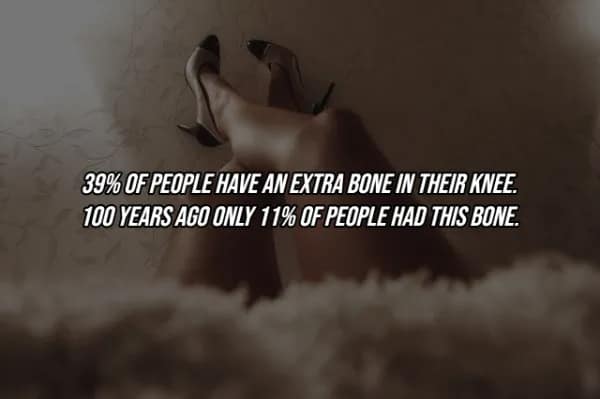
A stylized shot of legs in black heels resting upward against a wall, paired with a facts about the human body stat about the rapid evolutionary increase of the "fabella," an extra bone in the knee.
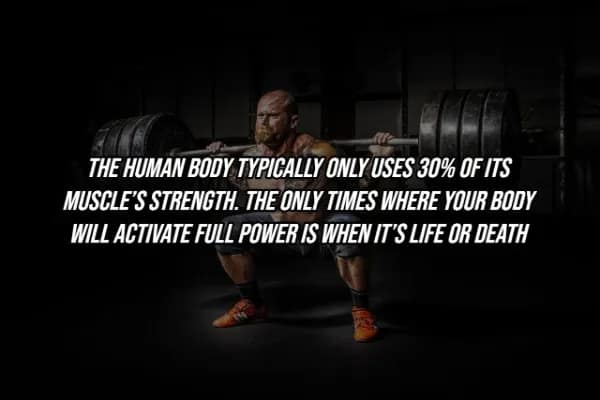
A powerlifter performing a heavy squat, accompanied by a facts about the human body warning that the brain usually caps muscle usage at 30% to prevent self-injury, saving "full power" for survival situations.

A lot of these facts about the human body have that “built-in safety feature” vibe. Your body is constantly protecting you from you. Bones that take a hit in a strategic way. A brain that keeps strength on a leash until it thinks you truly need it. Human anatomy facts like that make you appreciate the quiet engineering happening under your skin.

Then there’s the weirdly comforting category: the small explanations that make everyday experiences make sense. The tiny reasons behind tears, yawns, healing, and all those little bodily quirks you’ve probably wondered about once and then forgotten. Medical facts are soothing when they turn “is this normal?” into “oh, that’s what that is.”

And of course, there are the science facts that feel like a plot twist. Evolutionary changes. Secret glow. Extra bones showing up like surprise bonus content. Facts about the human body are a reminder that we’re not finished products—we’re ongoing projects, adapting in quiet ways while we’re busy thinking about lunch.

If you want to keep the curious-but-cozy mood going, try 18 Unsettling Science Facts That Sound Fake, 15 Weird Animal Facts That Made Everyone Pause, and 26 Strange History Moments They Never Taught In School.

I’m Priya Coleman, and I love learning little truths like this—because it makes ordinary life feel more magical, even when it’s a little strange.

Priya Coleman is a viral content specialist and meme analyst with over six years in digital publishing. Her past roles include viral content editor for PopSugar's humor vertical and meme correspondent for HuffPost’s comedy section. Priya specializes in spotting trending meme moments just before they peak—like the chaotic delight of the Ever Given’s Suez Canal mishap or the existential comedy of This is Fine. She brings her sharp wit and instinctive knack for viral content to Thunder Dungeon, always keeping the community a step ahead of the latest meme craze.


Read Memes

Get Paid

The only newsletter that pays you to read it.

A daily recap of the trending memes and every week one of our subscribers gets paid. It’s that easy and it could be you.